
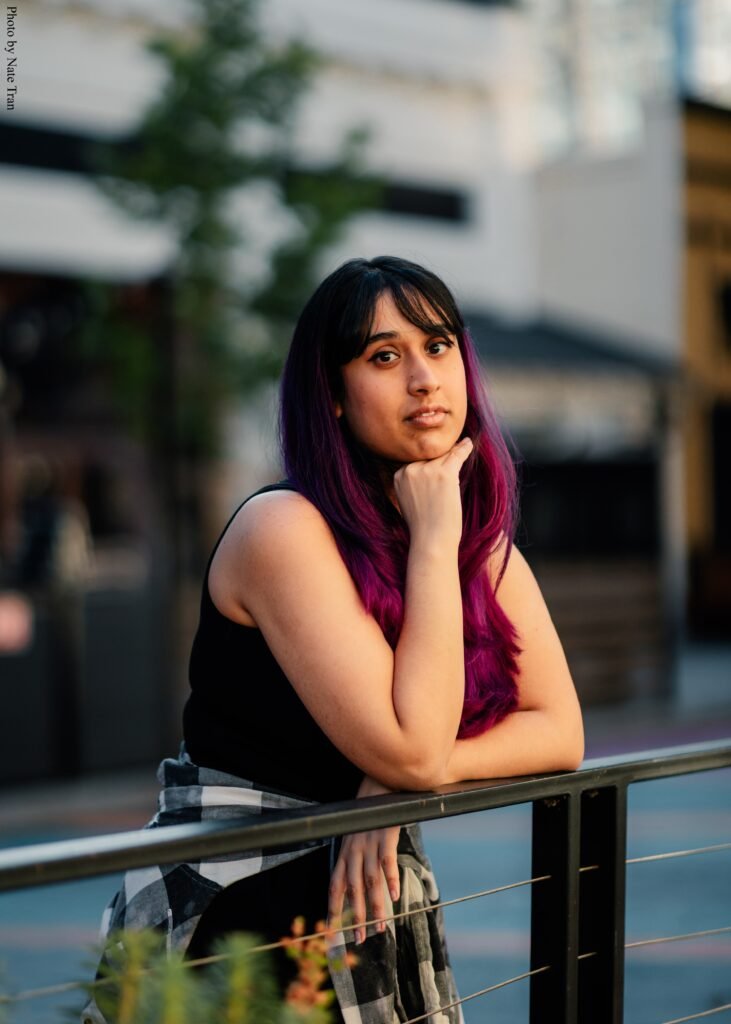
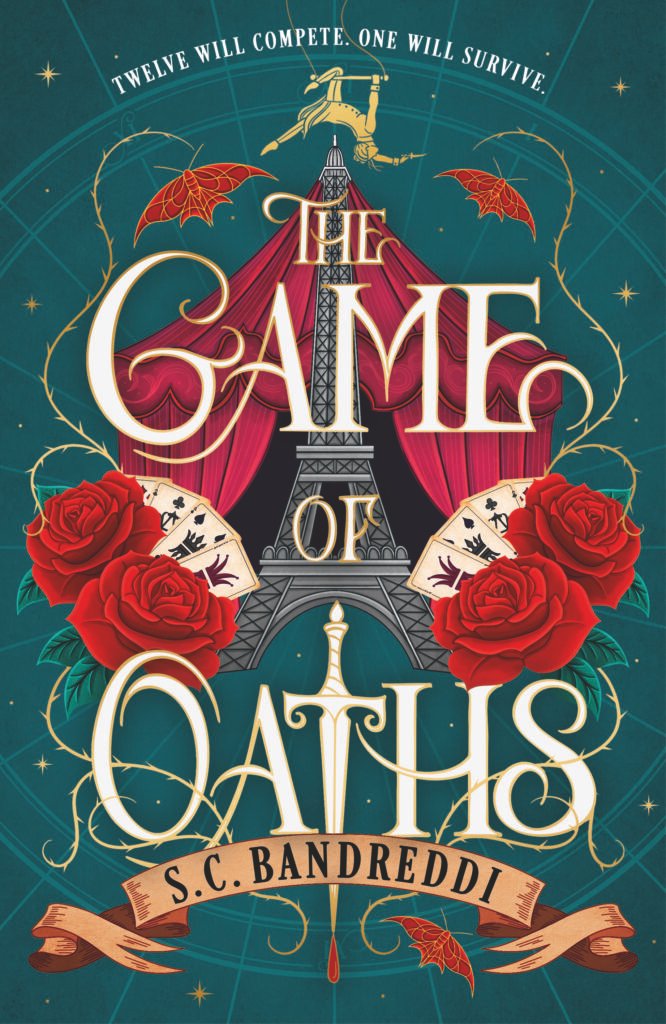
S.C. Bandreddi hails from California’s Bay Area, where she grew up scribbling stories deep into the night and hasn’t stopped since. When she’s not putting words on paper, she’s usually gaming, rewatching her favorite movies, or at an arcade trying to win as many plushies as she can. She is the author of The Game of Oaths.
Falan Sunkara is a morally gray protagonist in The Game of Oaths. What attracts you to morally complex characters, and how did you ensure that readers would understand and empathise with her?
It’s so fun writing morally gray characters! I find the character work super interesting when creating them, which is why I gravitate toward featuring them in my stories. There’s a balance to making a character ruthless and even unlikable, yet vulnerable enough that the audience understands what makes them tick. For Falan, I knew her love for her sister, Lavanya, would be the key to making readers resonate with her. It provides an understanding to her cold personality. One of my favorite parts when creating this book was writing flashback scenes with Falan and Lavanya, because the readers get to see a softer side of her.
The novel is set in Belle Époque Paris and centres on Falan, who is a young South Asian girl. What inspired Falan and the themes of colonialism, class, and belonging within the book?
A lot of my family is from Southeast India, which is mostly the part of India that the French colonized, so I knew about it from a young age. However, this period of colonization isn’t talked about much. When I was starting to write THE GAME OF OATHS, I realized that some people didn’t even know that the French colonized India at all. It really made me think about how much is in danger of being lost to history due to not being explored or shared. The Belle Époque is remembered as a time of indulgence and innovation, but it was brutal for people of color. It’s important we don’t forget that.
As for what inspired Falan, she’s a main character that I would have loved to read about when I was younger and looking for myself in stories. She’s fearless, she’s unapologetic, and she doesn’t let anything stop her. I hope there are readers out there who feel seen and inspired by her. There are so few South Asian main characters in media, and it’s my goal to keep adding more.
In The Game of Oaths, Falan is a trapeze artist. What kind of research did you undertake into trapeze artistry and circus life, and were there any surprising details that ultimately shaped the way you wrote both the action scenes and Falan herself?
The setting of a magical circus fit right into the backdrop of the Belle Époque era, because entertainment and the performing arts flourished during that period. I did research on circuses and trapeze artistry during the time period, reading on what performer life was like and how shows ran. However, I took some liberty with how le Cirque des Ombres operated because it, of course, is not a regular circus! A big part of my research was actually about the gambling side of things (definitely a common element throughout the book, down to the deck of cards motif), and I did a good amount of reading on the history of casinos in France.
The loss of Falan’s sister fuels every decision she makes in the book. Sisterhood is often less explored in fantasy than romantic relationships. What drew you to make sisterly love the story’s central emotional force?
It was important to me to show why Falan is so intent on getting revenge, so I put a lot of the spotlight on how her sister affected her life. A big part of Falan’s character is that she feels alone in a cruel world, even if she won’t admit or show it. She puts up walls and genuinely believes that she doesn’t need anybody. Her sisterly relationship with Lavanya added a complexity to her character, something that was interesting to explore as a writer. It gave Falan a more vulnerable side where she actually cared about somebody and even felt understood—before the one person she loved was ripped away from her.
Female rage is a powerful undercurrent throughout The Game of Oaths. What did you want to explore about female rage, and why was it important to allow Falan tobe angry without immediately softening or apologizing for that anger?
I love writing angry characters, and Falan is no exception. We need more stories featuring unapologetic female rage from authors of color. What becomes evident throughout THE GAME OF OATHS is that Falan is not only angry at the ringmaster of the Cirque and the supporters of the Game, but she’s angry at the oppressive system that’s allowing it to happen. This fury has been building up for a long time, even before her sister’s death, and she wants nothing but destruction. The other points of view throughout the book show how the other main characters each view her mindset and their own emotions about it, something I believe adds another layer.
You’ve described yourself as someone who enjoys writing perilous worlds and morally gray characters. What was your process like when creating a world as intricate as The Game of Oaths, and which aspects of the book proved the most challenging to get right?
It took a lotttt of drafts to create THE GAME OF OATHS because all the different aspects took multiple tries to get right. For the actual Game of Oaths tournament, it was about making each round as unique and gripping as I could. One of the rounds I had to rewrite entirely. It was also a priority to create a sense of setting and really draw readers into the magical circus.
There was also a lot of historical research done, of course. Lots of reading about the Belle Époque, seeing where everything would take place throughout Paris, making sure there was nothing that was inaccurate to the time period. I recall using the word “adrenaline” in a number of drafts before suddenly stopping and wondering if adrenaline was even a word during that time, only to find out it wasn’t! So there were lots of checking moments on all the historical details up until the final product.
But I would say the most challenging part of the book had to be the world building. Figuring out how the magic system worked, how this alternate Belle Époque Paris functioned with it, the history of magic in this society. When I fixed one plot hole, I found another! I think that’s a rite of passage when writing a fantasy, though. I also learned there is such a thing as getting too detailed in world building, as I occasionally found myself obsessing over small things instead of looking at the big picture. It’s sometimes best to just let things be.
INTERVIEW: YA SH3LF