
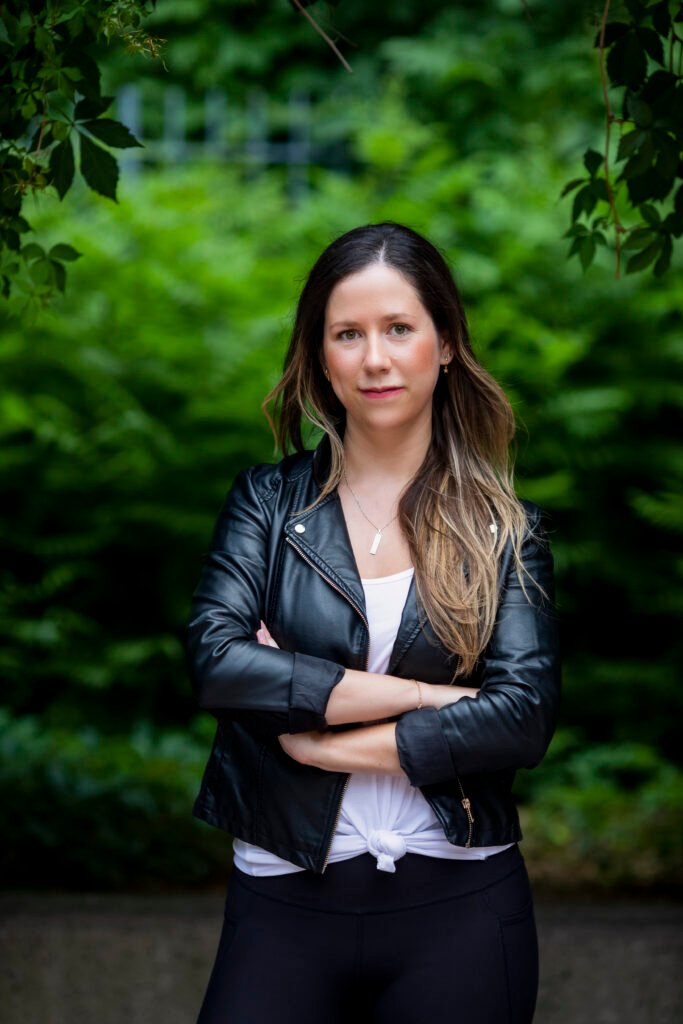
Amanda Connolly is an award-winning Canadian journalist and the Managing Editor of Politics & Breaking News at Global News. Known for her expertise in Canadian politics, foreign policy, national security, and defence, she has spent more than a decade reporting on the issues shaping Canada’s place in an increasingly complex world.
Throughout her career, Amanda has earned recognition for her investigative reporting and in-depth political coverage. Her work has contributed to national conversations on military accountability, government policy, and international affairs, while her extensive use of access-to-information laws has shed light on the inner workings of diplomacy and decision-making. Prior to joining Global News, she covered defence and national security for iPolitics and worked as a reporter with CBC in Calgary.
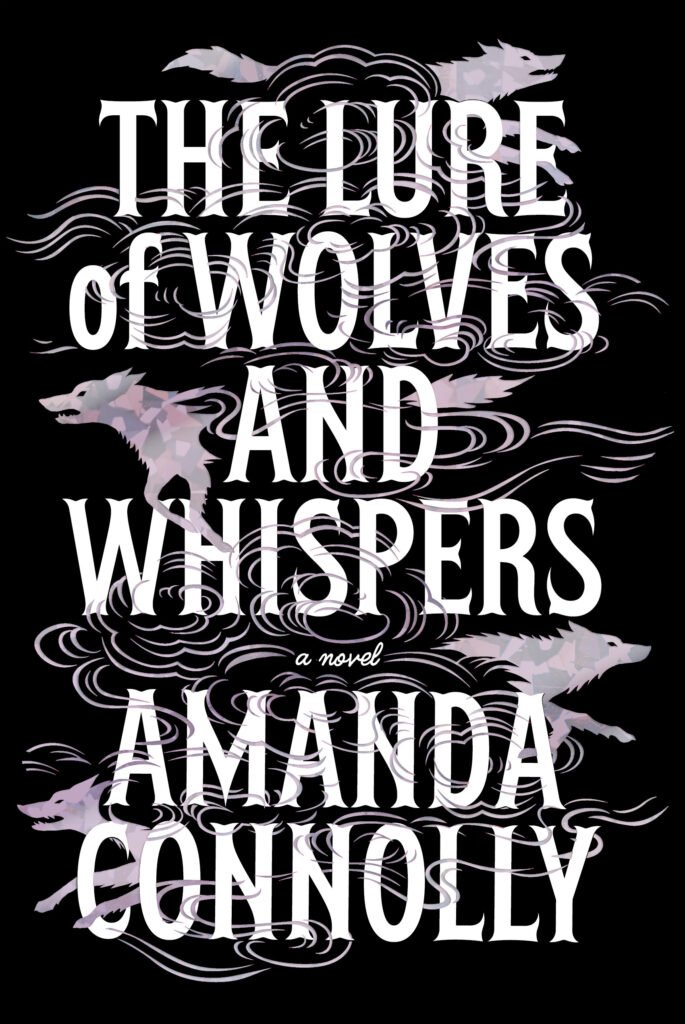
The Lure of Wolves and Whispers is Amanda’s debut novel.
The Lure of Wolves and Whispers opens in a brutal world where magic has been outlawed and survival often comes at the cost of morality. What first inspired the Isle of Eireann and this idea of magic as both salvation and political threat?
Like so many authors, I have a career in addition to publishing – for me, that’s been a career of nearly 15 years working as a political journalist, largely focused on covering defence, foreign policy and national security, and gender equality. While I’ve always been drawn to darker fantasy and high stakes worlds, I also think there’s something very realistic and grounding in recognizing that there is no one political silver bullet for the challenges facing us or our characters. When I wrote the first draft of this book in January 2024, I was – like many people – grappling with trying to understand what could be looming politically. I wanted to explore how basic human dignity and the rights to make decisions about our own bodies and futures could be seen as a threat to some, and how those in power react when their grasp on control is threatened, even the smallest bit, by people fighting for dignity in a system that was never built for them. Making magic into something that is salvation for Maeve – while being incredibly dangerous to reach for – and at the same time is seen as a mortal threat by those in power – who seek control above all else – felt deeply realistic for where we are as a world right now, and I think that fantasy is at its best when it holds up different facets of our world to the light and asks: how can we be better?
Maeve enters the deadly Assay not out of ambition, but desperation – to save her sister and ultimately challenge the High King’s regime. How did you approach building a protagonist whose emotional motivations are rooted more in love and sacrifice than in destiny or prophecy?
I deeply dislike the concepts of destiny and prophecy, both in books and in life. I’ve always felt that way, even as a young reader, and it was really important for me to build a character and a world that is based on choice above all else. Maeve isn’t motivated by power or ambition or greed – she is motivated by love, and a deep sense of justice and morality that is driven by her internal compass even when it’s out of sync with the laws of her world. Love is the most powerful thing we can do as humans, especially in dark times. People make the most incredible and enduring sacrifices not out of hatred or greed or ambition but from love, and knowing what is truly right. It’s the choices we make every day in our communities and homes that shape the world we live in, not any predetermined fate or destiny, and I wanted this – despite it being a dark book – to be a story that inspires hope that anyone can create change by standing up for what is right, and acting out of love.
The novel blends familiar romantasy elements – deadly trials, forbidden magic, enemies-to-lovers tension – with strong political undercurrents and Irish-inspired lore. How did your own connection to Irish history and mythology shape the atmosphere and mythology of the story?
I’m incredibly fortunate to have grown up in a family with deep connections to our roots. I’m also fortunate to be a dual citizen of both Canada and Ireland, and to have been surrounded by stories and conversations around the legacies of what Ireland has faced over the years in its own struggles for freedom. From a young age, I was raised with stories of the courage of our family members – both paternal and maternal sides – who left Ireland determined to build a better life during incredibly difficult times. And hearing about their strength only deepened my fascination with learning about Irish lore and history and language. While I can’t speak Gaeilge (Irish) myself – I speak English with functional French, which are Canada’s two official languages – I’m so inspired by the new wave of young influencers revitalizing Gaeilge on social media and wanted to weave my deep admiration and desire to learn this language into the etymology of Eireann, along with the incredibly cool ogham alphabet – it’s real, and readers might find little hints and easter eggs sprinkled throughout if they do linguistic research, too.
As well, I’m so fascinated by the legend of St Patrick banishing the snakes, because there never were snakes in Ireland. I’ve always wondered where that element of the legend originated, and I wanted to twist that on its head in this series to ask two questions. First, what if the person doing the banishing wasn’t good? And second, what if the one being banished isn’t entirely good, either? Who can you trust as you try to understand your own story and claim your power?
Readers and early reviewers have praised the book’s dark atmosphere and gradual world-building, particularly the way information unfolds organically rather than through exposition. What does your writing and revision process look like when constructing such a layered fantasy world?
That is such a wonderful compliment – it means the world to hear that from readers, because I really thought carefully about how I wanted this world to unfold. Because this story is in first person point of view, I knew from the start that the reader can only know what Maeve knows … and without spoiling anything, let’s just say this is a story where everything you think you know will be turned on its head repeatedly. I’ve never had any formal creative writing training, but as a journalist, we’re trained to let people speak for themselves and only base your writing on what’s right in front of you rather than trying to paraphrase or make assumptions about what might be in someone’s head, and I tried to bring that approach to fiction writing as well. We only know what is said to Maeve, and Maeve’s understanding of what she’s grappling with changes enormously as she adapts to the new information that gets put in front of her. She’s constantly having to pivot and reassess what she thought was fact, and I really love that in the stories I gravitate to as a reader. This is an enormous world that was always bigger than three books in my head when I first envisioned it – I had actually pitched it to my agent originally as four books in the core series, but she very wisely advised I make it three as a debut author – and we learn so much more about it in Book 2 as Maeve does, but all the building blocks readers need to understand the coming twists and turns are on the page in Book 1. They’re just … hidden.
The relationships in the novel seem deliberately complicated – Maeve is torn between loyalty, survival, rebellion, and romantic tension with characters who may all be hiding secrets. When writing emotional dynamics like these, do you begin with plot structure or with the psychological motivations of the characters themselves?
They are VERY deliberately complicated! Coming from a journalism background, I’m very aware of the fact that even the people you think you know have secrets and other versions of themselves that they keep hidden. Even the people you think you know can shock you, in both the best and the worst possible ways. When I write, I’m deeply focused on character and psychological motivations – what makes someone tick, and what is driving them in doing what they do? I heard a podcast years and years ago, and I can’t for the life of me remember who said this so I never want to take credit for it, but they had described writing characters as “braiding roses.” And that’s such a visual way of describing the approach I take with crafting and developing my own characters – I’m always looking for the thorns as their stories twine together, and where their flaws and secrets can prick at each other.
Before publishing fiction, you built a career as an award-winning political journalist covering issues like national security, foreign policy, and power structures. Did that background influence the way you wrote political oppression, rebellion, and control within The Lure of Wolves and Whispers – and what kinds of stories are you most excited to explore as this trilogy continues?
My career as a journalist is irrevocably woven into my work as a writer. I am permanently both shaped and scarred by some of the stories I’ve been trusted with covering over the years, and the ones that have been most rewarding are always the ones that grapple with the same themes I’m drawn to deeply as a writer. Abuse of power. Corruption. The uphill battles faced by women and LGBTQ people in pushing back against systems of power that were never built for us … and how vicious the blowback becomes when those in power start to feel their grasp slip, even a little bit. I wrote this book back in January 2024 and we were in edits with my publishers in early 2025, when annexation threats were being made against my home – Canada – by the United States. And while the annexation angle was always part of this story right from the start, it absolutely sharpened during edits against that political landscape playing out in the real world. This story and this series are my attempt to reckon with what haunts me: the human cost of conquest, the inherent frailty of tyrants, the importance of standing together, and the cost of survival in a world determined to crush you. I’m particularly excited to deepen these themes throughout Book 2 and Book 3 … and similar themes are taking shape in a separate project I’m working on for fun right now, too. The one constant? Dark worlds with hope, fiercely courageous FMCs, aching romance and yearning GALORE.
INTERVIEW: YA SH3LF