
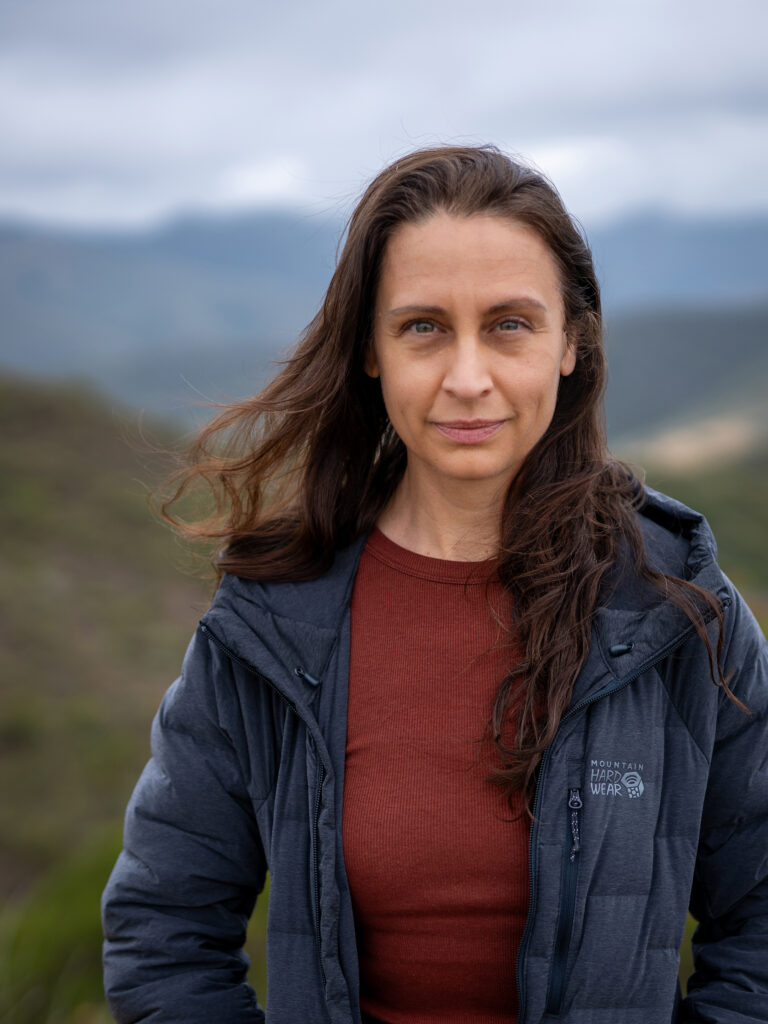
H.D. Carver grew up in North Texas. A reluctant reader, she didn’t fall in love with books until she was eighteen, when her senior year English teacher reached out with the right one. She now lives outside Los Angeles in the wildland-urban interface with her family of artists. When she isn’t writing, she can be found wandering trails, bookstores, or the stacks at her local library, always in search of the magic that comes from getting lost—either in a book or in nature.
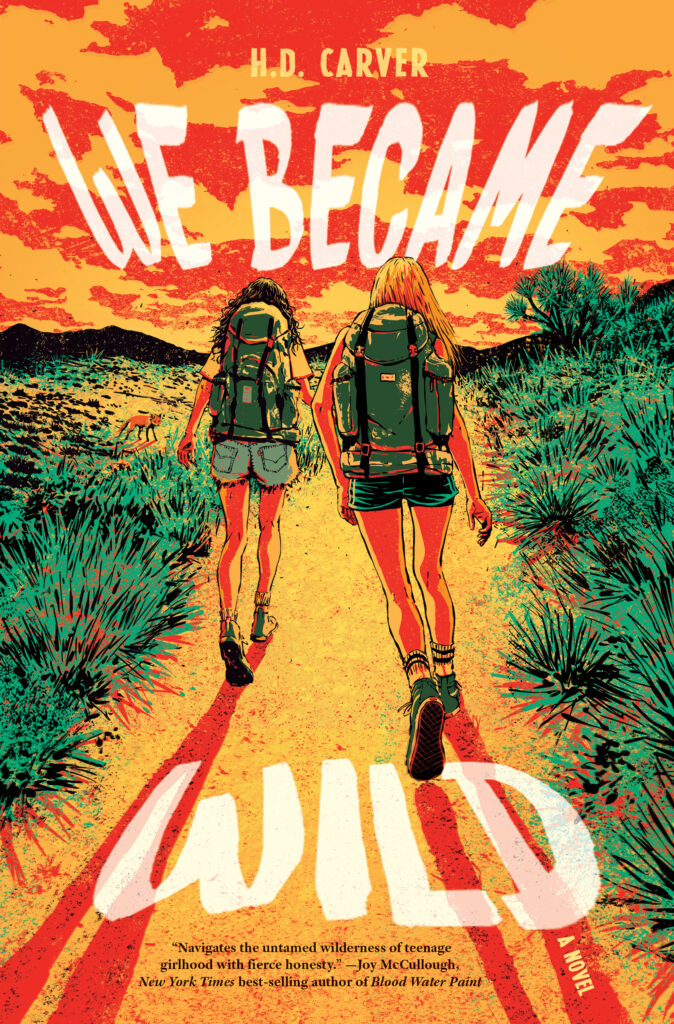
We Became Wild is a gripping, feral story about grief, friendship, and what it means to be a woman alone in the world.
We Became Wild follows two girls hiking the Pacific Crest Trail with their friend’s ashes while carrying guilt and secrets about her death. What first inspired the idea of pairing a grief-driven story with such a physically demanding wilderness journey?
I think grief is definitely a part of it, but for me the story is really about the kind of reckoning that comes when you’ve done things you don’t know how to forgive yourself for.
I was working through some of my own experiences, and I’d just read Wild and was backpacking more, so a trail adventure in Southern California was very much on my mind. I wanted to pull these characters as far out as I could from the world, because the wilderness just strips everything away, and there’s nowhere to hide from yourself. That makes it a dangerous place to be if you’re trying to forget something you’ve done.
Both Lottie and Messina are flawed, complicated characters—Lottie wrestling with guilt and Messina fleeing an abusive home. How did you approach writing such morally complex protagonists while still keeping readers emotionally invested in them?
I’ve always been drawn to messy, morally gray characters, probably because I’ve had a lot of moments where I haven’t liked the person I saw in the mirror. It’s a hard thing to sit with when you feel alone in it. I think a lot of us need stories that reflect that struggle – of trying and failing, of not liking yourself, of making bad choices and wishing you didn’t. The first time I connected with an unlikeable character in a story was one of the first times I felt deeply understood, like someone knew my secrets. I knew I wasn’t alone.
That gray space is where characters feel real to me, where I find connection. I tried to make Lottie and Messina as honest as possible in that way. I know not everyone will connect with them, but I hope some readers will find pieces of themselves in them, and that they’ll feel a little less alone.
The wilderness setting plays a huge role in the novel, from the harsh desert terrain to the looming threat of fire season. Did your own experiences with hiking or nature shape the atmosphere and realism of the story?
My experiences definitely influenced it. I’ve lived in Southern California for almost fifteen years now, and I spend as much time as I can on the trails. It’s a super unique place that’s shaped by all these really diverse microclimates. Fire season stretches longer every year now.
When I started the story, I initially tried to stick as close as possible to the details of the PCT, but it was pulling the story off track. The girls’ emotional journey needed to drive the story, rather than the map. So I allowed myself to veer off from the reality of the trail in spots, so it’s definitely not a literal version of the trail, but it’s rooted in what it feels like, and how quickly things can turn.
The story explores the intensity of teenage friendships, especially when grief and secrets threaten to tear them apart. What drew you to examine female friendship in such a raw and unfiltered way?
Growing up, I was surrounded by a lot of relationships where people either walked away or checked out when things got hard. Both of these girls have had their families turn their backs on them, and I wanted them to choose something different for themselves and for each other. Their bond runs deep, and I wanted them to hold onto that, even when it feels like the hardest thing in the world.
Those hard-won, found family relationships are how I survived the hardest times in my life. I wanted to show how meaningful those can be, even when they’re imperfect, and how learning to trust the right people with the messy and broken parts of yourself, even when it’s terrifying, can be lifesaving.
Many readers have described the book as both “feral” and deeply emotional. During your writing process, how did you balance the physical survival narrative with the internal emotional journeys of the characters?
I think the two really go hand in hand. What Lottie and Messina are dealing with internally is just as harsh and unforgiving as what they’re facing on the trail. They’re trying to figure out who they are, and that feels just as terrifying as the wilderness around them.
That’s where that feral feeling comes from, because part of their arc is allowing themselves to become wild out there in this place where everything is stripped down, and it gives them the space to question what they’re carrying emotionally, and whether it actually belongs to them or if it came from others.
At its core, the novel seems to ask what it means to grow into adulthood while carrying guilt, grief, and responsibility. What do you hope readers—especially young women—take away from Lottie and Messina’s journey by the end of the story?
I think a lot of young people are carrying some version of these feelings, even if it doesn’t look exactly like Lottie and Messina’s story – a lot of people are carrying things they feel like they can’t talk about. I definitely was as a teenage girl, and I felt so alone in it, which was only made worse by my instinct to shut people out and hide what I was dealing with.
So for me, it’s about pushing back on those voices that tell you you’re alone and that you need to hide whatever parts of yourself you think are ugly. It’s about letting people in, even when you’re at your worst. Because there’s a really beautiful kind of love that comes from that, both for ourselves and for each other, and in knowing that we can be a mess and still deserve that love.
More about We Became Wild HERE
INTERVIEW: YA SH3LF