
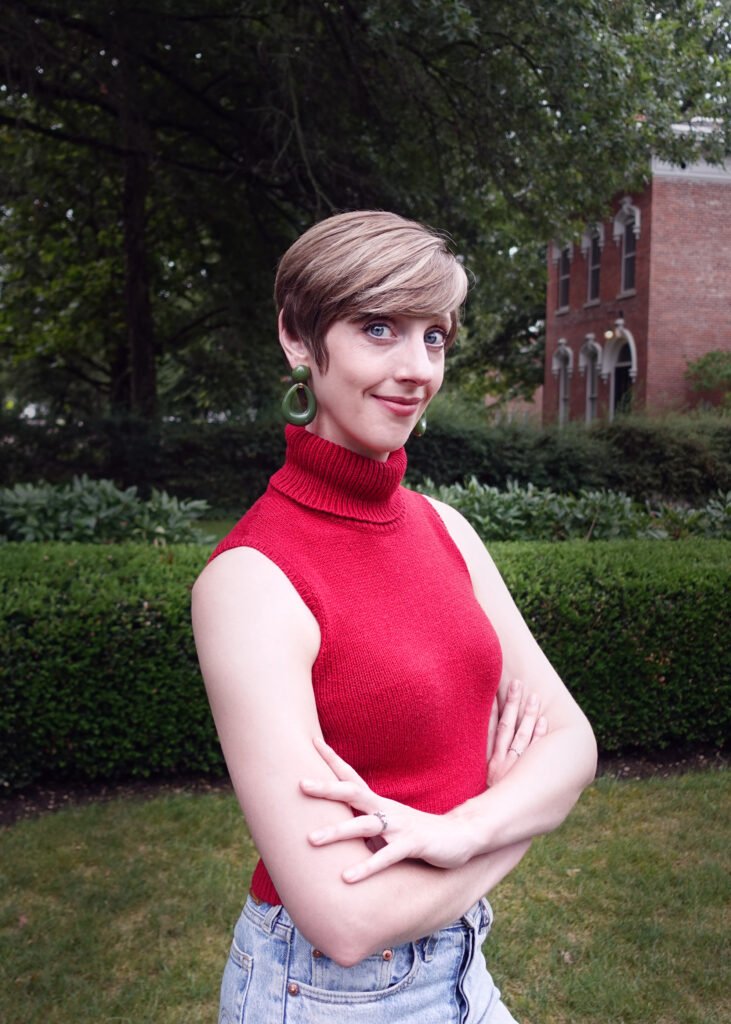
Rachel Peterson graduated from Miami University of Ohio with a degree in English and creative writing. Born and raised in Ohio, she started her career in advertising before spending nearly a decade in New York City as a marketing executive for technology companies. An avid traveler, Rachel now splits her time between Manhattan and the Midwest, where she lives with her husband, Ken; their dog, Olive; and horse, Hope.
“Killing Sadie” begins with a tragic night at a barn party – the murder of Sadie Cooper and the death of her killer. What inspired you to write a YA thriller around aftermath of such a violent event, and why did you choose to tell the story through multiple unreliable narrators than a “single truth”?
The inspiration for Killing Sadie started by exploring the ordinary layers of my experience growing up in a small Midwestern town, and then stretching certain elements and characters to the extreme – almost a personal reflection on norms, expectations and the pressures all teens face, but then flipping the circumstances from ordinary life to the most dramatic version. Although the book is centered around a violent moment in time, the characters and their lives and dialogue take center stage, allowing for glimpses of lightness and everyday life that I think readers will relate to.
Telling the story from the perspective of multiple unreliable narrators felt natural with these characters and this story. Each one has their own selfish motivation and desire to be seen in a certain way, yet they’re trying desperately to connect in spite of themselves. Playing with truth is also a very natural and intriguing thing to me as a writer. Who are my characters in this very moment? Are they being truthful to themselves, to the people around them? How is it that multiple people can be in exactly the same set of circumstances, yet see the situation in totally different ways? I think we can all relate to some of the feelings these characters are going through, which are constantly in flux and beyond fun to explore!
The novel alternates perspectives among Sadie’s twin sister Jayne her boyfriend Ben, her best friend Liz, and eventually Sadie herself in the days leading up to the party. How did you approach giving each character a distinct, believable voice – and what were the challenges of weaving together their conflicting memories and motivations?
I love this question! The differences between Sadie Cooper and her twin sister, Jayne, may be a perfect example of this coming to life. We learn about their motivations, frustrations and even where they see themselves after high school, which all contribute to their unique voices. I wanted each character to have insecurities and vulnerabilities just like I had as a teen, while also having readers fall in and out of love with our characters as the story progresses. Picking out certain “favorites” for my characters helped a lot in their development – a favorite movie, or favorite sport or hobby, and then building out more of their quirks around that.
Funny though it seems, the biggest thing that helped was having different Spotify playlists for each character! From country (hello, Ben) to post-punk (hello, Jayne) to pop (totally Sadie). Setting the character mood before digging into a new writing session was definitely inspiring!
Personally, the challenges of weaving together conflicting memories and motivations for Killing Sadie was keeping the smallest details straight. I’ve always been more of a broad strokes over details person, so this was very tricky for me. As my fearless copyeditor can attest, we had some amusing conversations unpacking a few discrepancies, most memorably the number of times a certain character apparently already showered or still had to shower within a single act!
“Killing Sadie” touches on themes of grief, betrayal, memory, and the dark side of teenage social life. What message or emotional experience do you hope to impart to readers, as they follow the unravelling mystery and these complicated relationships?
My message would be to let yourself connect with the characters, but know that with each page (similar to teenage life), relationships and identity are ever-evolving, as are the stories we tell ourselves and others about who we are. And that’s okay! Part of the fun of writing the most extreme version of teenage life is that, ironically, it can give us a safer place to explore big questions in a way that’s a little more removed from our daily lives.
Finding a way to have agency is also a key message, which for teens navigating social and home life, is complex and messy. We seek approval or permission one moment, and agency and independence the next. This is especially true for teen girls. There are some moments in the book that really highlight the frustrations and anger that can come with being treated as a child when convenient for the adults in your life, but then suddenly being expected to act like an adult the next moment. That whiplash is real, and seeing how our characters manage it is something that I hope readers connect with in a big way.
But even with all those heavier themes, there is balance! Escapism, fun and total immersion in Sadie’s world is still very much the vibe and experience I want readers to have with this book! Hunt for clues, fall in love (or not) with the characters, and find out what really happened at the McClain family farm.
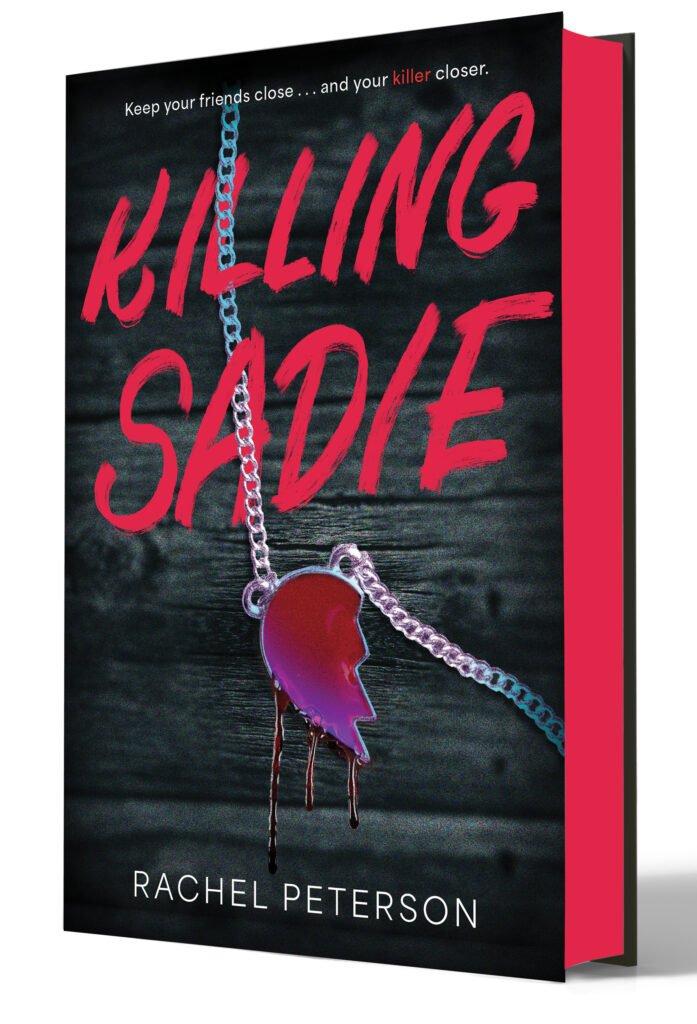
As your debut novel, what made you decide to dive into thriller/mystery rather than contemporary YA or another genre? How did your background – from studying English and creative writing to working in advertising and marketing – shape you approach to this story?
Rather than genre hunting, thrillers may have found me. Frenetic pacing is my best literary friend! I love tension and I love writing stories that are time-boxed, where the shot goes off and the countdown clock starts – that style of storytelling also matches my writing style, which tends to be fast and furious. The idea that a single moment can change everything is fascinating to me, and that makes thrillers and mysteries a perfect fit.
I was also thinking back to the books I loved as a teen – stories that kept me up late into the night, obsessively turning the pages. Thinking out loud, humor is a really important element for my writing, and something I want to see more of in the YA thriller space. Have a laugh, rip through pages, gasp out loud.
On a professional note, studying English and creative writing in college gave me the confidence to set my true-north toward writing, and I had a handful of wonderful professors who believed me when I shared my dream of becoming an author that really made a difference along the way. I took a winding path to get here, as most authors do, and I am so grateful for it! My background in marketing and living and working in New York City has been a gift, giving me a toolbox that I reference literally everyday, especially public speaking.
Mysteries often hinge on pacing, misdirection, and carefully placed clues. Without spoiling anything – what was your process for plotting and balancing truth vs. deception, especially given that so much depends on unreliable narrators and conflicting testimonies?
The process came from getting to know these characters versus pre-determined clues. I can honestly say that aside from a loose outline, every writing session surprised me! A great example is the character Detective Sloane Budd, who, giving Jessica Beal cool aunt energy, connects with the teens on a different level than the local detectives, which adds a fun layer of discovery. Sloane was a surprise addition to the book (a character who was missing from the original outline), but once I started writing her, she ended up changing the story and bringing the teens to life in a really interesting and authentic way.
After the book’s release, what kind of reactions or conversations do you hope “Killing Sadie” will spark among readers – about trust, memory, teenage relationships, and accountability?
Above all, I want readers to get lost in the world of Sadie, and find moments they can connect with and relate to – I feel like the best stories give us a sense of “Other people feel this way? I thought I was the only one!” which can be such a massive relief.
Yes, this is a twisty and dramatic story, but my belief is that thrillers should be enjoyed with the same wink and nod as other genres. With thrillers and mysteries, sometimes escapism – or suspending reality – comes in the form of a worst case scenario, which is comforting in its own right because when the book ends, you can safely close the door. I want readers talking about the twists and turns, of course, but also about the moments that made them feel seen and the character behavior that either wildly frustrated them or surprised them. And honestly, our reaction to character behavior can often be a mirror of our reactions to our own behavior or the behavior of people around us. That’s what makes a good story so compelling and delicious!
Read more about Killing Sadie here
INTERVIEW: YA SH3LF