
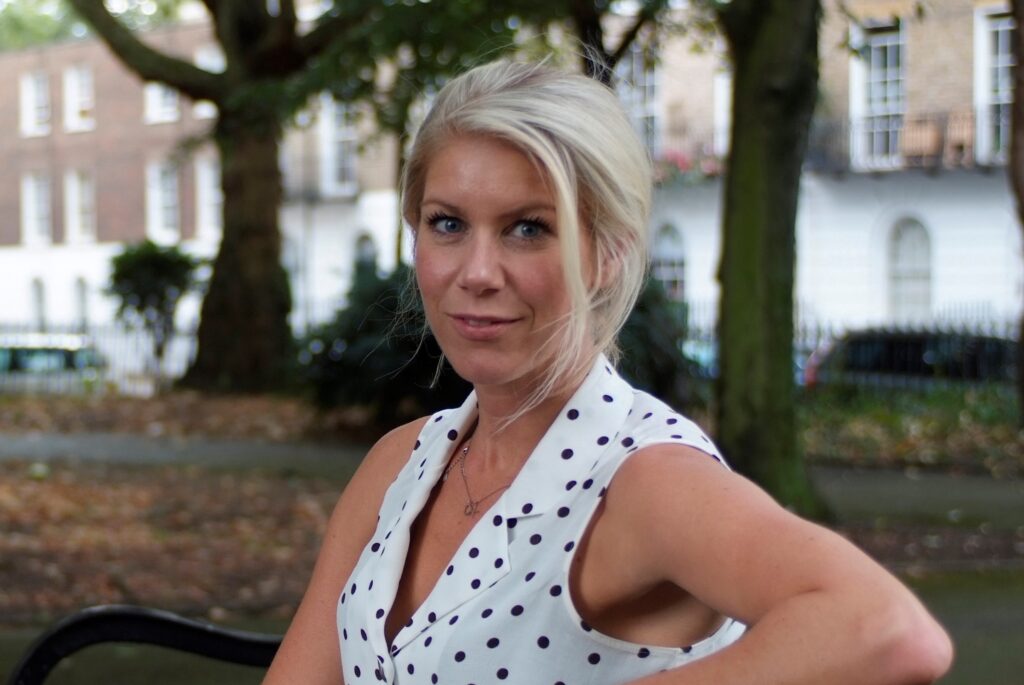
Jennifer Pearson is a former teacher and author who lives in the northeast of England with two energetic boys and her somewhat energetic husband. She’s the author of several middle grade novels, writing as Jenny Pearson, and has been short-listed for the Costa Children’s Book Award and the Waterstones Children’s Book Prize, and was the winner of the Lollies (Laugh Out Loud Book Awards). When she’s not writing, Jenny can either be found doing something sporty or binge-watching true crime documentaries while eating astounding quantities of cheese.
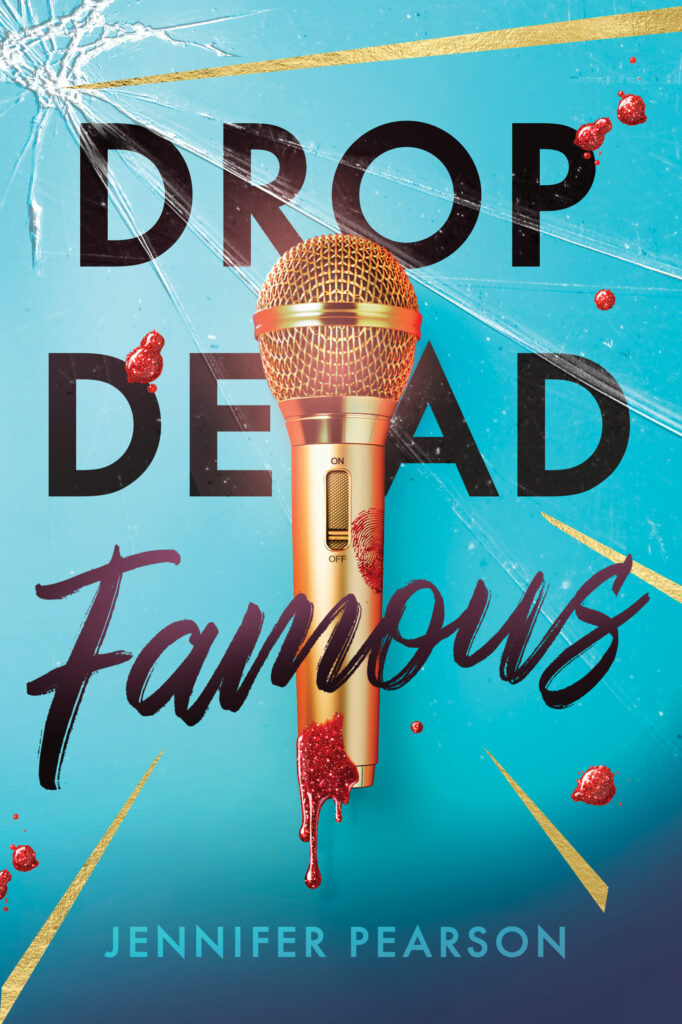
“Drop Dead Famous“ begins with the shocking murder of a pop-star sister just before her hometown concert – what inspired you to take a story rooted in fame and celebrity and turn it into a YA crime thriller?
The original spark came from watching the intensity of modern celebrity culture, especially around huge global stars like Taylor Swift, and thinking, what if? What if something unthinkable happened at the height of that kind of fame – in the middle of the noise, the adoration, the obsession, the pressure? I was fascinated by how enormous and emotional those fandoms are, and how strange it is that someone can be loved by millions and still be deeply, dangerously vulnerable and alone.
I wanted to take a world that looks glamorous from the outside: the sold-out concerts, the screaming crowds, the glittering image, and collide it with something dark and destabilizing. Turning that setting into a YA crime thriller allowed me to explore what happens when the fantasy of fame shatters, and the people closest to it are forced to confront the truth underneath.
By placing the murder just before a hometown concert, the story becomes both intimate and public at the same time. It’s a sister’s tragedy unfolding in front of a watching world. The contrast between spectacle and grief, and between image and reality, is what made the thriller structure feel like the right vehicle for the story I wanted to tell.
The protagonist, Stevie, embarks on a dangerous investigation to uncover her sister’s killer – how did you approach writing a teenage detective story while balancing grief, trauma, and emotional stakes?
When I approached writing Stevie’s story, I knew I wasn’t just writing a YA thriller; I was writing about grief and trauma, with a mystery as the structure holding it all together. The investigation gives the story its momentum, but the emotional engine is Stevie’s loss. She doesn’t investigate because she’s naturally logical or fearless; she investigates because she can’t live with the not knowing of what happened, especially after not finding out what happened to her niece, Mia. Every clue Stevie follows is really a question she’s asking about her sister: Why did this happen? Could I have stopped it? Who even was Blair?
I used the mystery framework to externalize her grief. Each new piece of evidence doesn’t just advance the plot, it shifts Stevie’s emotional state—sometimes toward anger, sometimes toward guilt, sometimes toward hope. This allowed the emotional stakes and the ‘detective stakes’ to rise together, so the danger never feels separate from what she’s carrying inside.
Stevie doesn’t solve the case instead of grieving; she solves it through her grief. That balance between investigation and emotion is what shapes the heart of the story. At least, that was my aim!
Fame, media scrutiny, and the “dark side” of stardom seem central to the novel. What commentary and its effects on identity and relationships did you hope to explore through this story?
When writing Drop Dead Famous, I wanted to explore how fame, celebrity culture, and media scrutiny can distort someone’s identity and their relationships with others. The story examines what happens when a person’s life stops belonging only to them, and how that loss of ownership affects both their sense of self and their connections with the people closest to them.
When someone is constantly being watched, judged, and rewritten by headlines and online narratives, it becomes difficult to know where the public version of them ends and the real one begins. Stevie feels this acutely and she believes she lost her sister to the world. As her investigation unfolds, she begins to question whether she ever truly knew who Blair was.
In Drop Dead Famous, fame is tied to exploitation, drug use, emotional isolation, and manipulation by powerful figures who control careers and images behind the scenes. I hoped to show that fame is not just a spotlight, but a weight.
You previously wrote MG novels under the name Jenny Pearson – how was the transition from MG to YA crime thriller with “Drop Dead Famous”? Were there new challenges or freedoms in writing for an older teen audience?
Moving from MG to YA with Drop Dead Famous was both challenging, exciting, terrifying and freeing! Writing middle grade taught me a lot about pace, voice, and emotional honesty, but stepping into YA allowed me to explore much darker themes with more complexity and nuance. I suddenly had the space to write about grief, trauma, identity, power, and the realities of the adult world as teens experience it, without having to soften the edges. I enjoyed telling a more morally complicated story where I could deepen character psychology, slow moments down for emotional impact, and let the consequences of actions linger. Teens are already navigating complicated emotional landscapes, and writing for that audience meant I could meet them where they are. I didn’t have to simplify the world but reflect its complexity back to them.
Mysteries and thrillers often come with unexpected twists, hidden secrets, and moral ambiguity. Without spoilers – what writing strategies or ethics guided you when deciding what secrets to reveal and when, and how to keep suspense without betraying character realism?
This is a great question and it’s something that I learned through writing Drop Dead Famous. I was very aware there is a lot of pressure to have THE BIG TWIST or even twists in a YA thriller, so I worked out a very comprehensive chapter-by-chapter plan, with the reveals and twists neatly plotted before I started writing.
I honestly thought I’d stick to that plan religiously, but I quickly realized that you can’t force something onto a character or make them behave in a manner that isn’t realistic.
So, my guiding principle became character first. I didn’t want a twist to exist just for shock value (or because that’s where my plan said it needed to be). Every reveal had to grow organically out of who the characters are, and what they were doing at that moment. If a secret didn’t deepen the emotional truth of the story or complicate the characters’ relationships, it didn’t belong there.
In terms of structure, I was very deliberate about when and how information was released, and I do think my plan helped with this. But I learned to treat each reveal as an emotional turning point, not just a plot one. When Stevie uncovers something new, it shifts her understanding of the people around her and of herself, so the suspense comes not only from what the truth is, but from what it will cost her to learn it.
Moral ambiguity is a main theme of the book. Real people make compromised choices, especially under pressure, and I wanted the story to reflect that complexity. Rather than drawing clear lines between heroes and villains, I focused on motivation and consequence—hopefully the readers will wrestle with the uncomfortable spaces in between.
Ultimately, I learned that suspense comes from restraint. Holding back information, trusting the reader, and allowing tension to build slowly creates a far more powerful experience than rushing toward a twist. By staying grounded in character realism, the secrets feel earned, the surprises feel honest, and the story (hopefully) remains emotionally true even at its most dramatic.
What do you hope readers, especially teens, take away after finishing “Drop Dead Famous”? Are there themes about truth, trust, justice, or family that you hope linger with them after the final page?
More than anything, I hope readers have a fun time reading Drop Dead Famous, but I also hope they may come away thinking about how complicated truth can be and how brave it is to go looking for it anyway. Stevie’s journey isn’t just about solving a crime; it’s about learning that the people we love are often more complex, more flawed, and more human than the versions we hold in our heads.
I hope the story leaves teens reflecting on trust; how easily it can be broken, how difficult it is to rebuild, and how necessary it is to choose who and what we believe in. There’s also a strong thread of justice running through the novel, not only in terms of the crime itself, but in the idea that everyone deserves to be seen, protected, and valued, no matter how powerful the people around them might be.
Family is at the heart of the book, too. It explores how loss can fracture a family, but also how love can survive even the most painful truths. By the final page, I hope readers feel that although the world of the story is dark and dangerous, there is still space for hope, healing, and resilience and that sometimes the hardest truths are the ones that ultimately set us free.
More about Drop Dead Famous HERE
INTERVIEW: YA SH3LF