
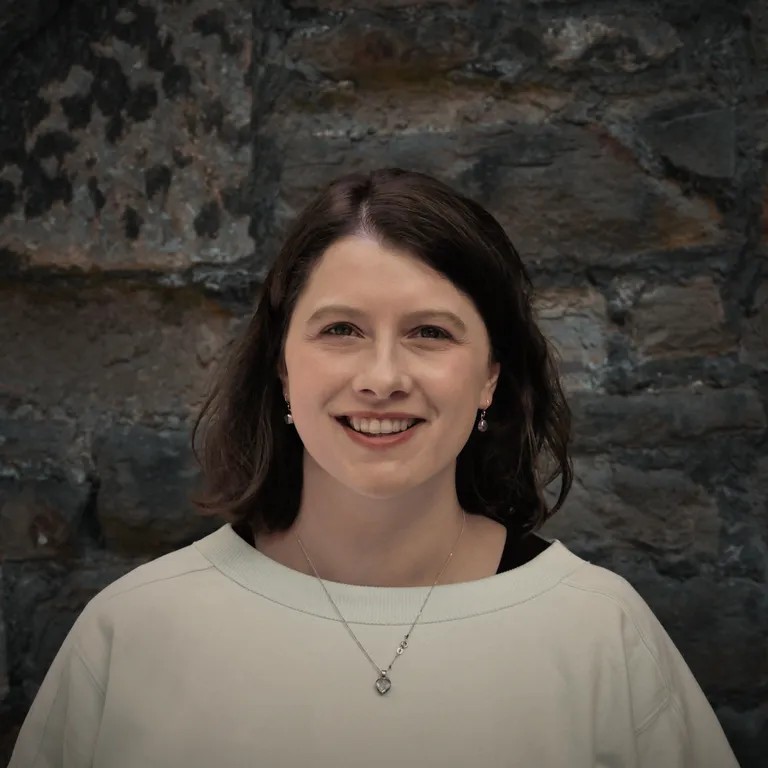
Ellen grew up in Sheffield on the border of the Peak District and still misses the moors. As a child, she spent a lot of time writing long, rambling stories, which somehow over the years have evolved into proper books. These days she lives in Bristol with her young family and you can find her writing around the edges of life. Ellen’s debut YA novel THE SEEKER AND THE SHADE will be published by Guppy Books in May 2026.
The Seeker and the Shade follows Connie, a determined girl who dreams of becoming a caster, and Jasper, a privileged boy training to be a seeker, as they are forced to work together to battle the deadly Shade. What inspired the idea of pairing two characters with such different backgrounds and personalities in a high-stakes magical partnership?
Forcing two unlikely people into volatile proximity and watching their potential slowly unfold, in my opinion, is always story magic! But I was also fascinated by the unusual mechanics of the partnership. I wanted to explore two people who are not just mutually dependent in terms of decision-making, but also physically dependent in a way that leaves them uncomfortably vulnerable to each other. They are obliged to reach some kind of understanding, because the strength of that connection will ultimately determine whether they live or die. But at the same time, their difference is actually what makes their pairing unusually effective – it’s often the unexpected combinations that produce the most interesting outcomes.
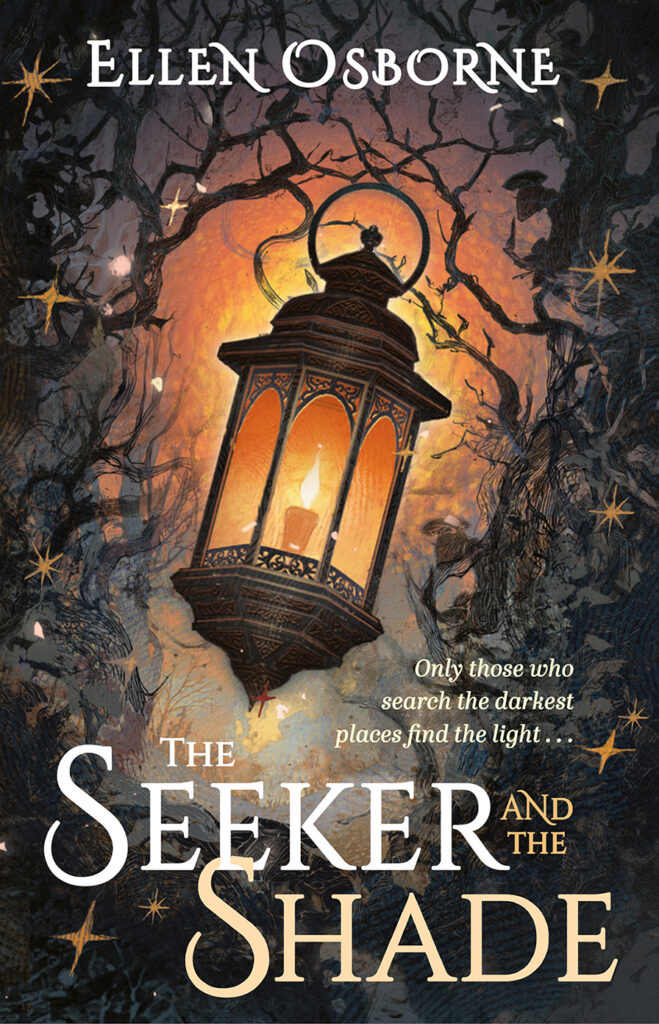
The bond between a caster and a seeker — symbolized by oath lamps and shared vows — is central to the story. How did you develop this magic system and the idea that survival depends not just on skill, but on trust and conviction?
I was playing around with the ideas of light and dark, and specifically with the concept of the consuming dark, the Shade, I wanted to explore the boundary. When you’re in the light, you’re perfectly safe from the surrounding darkness. Nothing can touch you. But that led naturally to wondering what might happen if the source of that light was something fragile that required attention. We understand the power of a promise in real life – we know when we make a commitment to somebody, the strength of it lies in our intent and our ability to keep that promise. I found it such an intriguing idea to translate that concept into the physical space of light and dark – what if your promise actually powered that safe circle of light? What if your commitment to somebody else determined what you were capable of? That was an intriguing enough premise to form the backbone of the story.
Connie and Jasper begin as reluctant partners who struggle with mutual dislike, but the story hints at a slow-burn connection between them. What drew you to the “enemies-to-lovers” dynamic, and how did you ensure their relationship grows naturally within the larger fantasy conflict?
The setup always suited a love story, and I knew early on that I wanted the romance to be one of the central story threads. Connie and Jasper come to Blackwood for opposite reasons, and they draw out a very different side of each other. That’s what makes them a dynamic pairing – they challenge and redefine one another’s assumptions. One of the core themes of the story is that working together builds power and resilience in a way that working alone was never meant to. In their own way, both of them are locked in a struggle between their preconceptions of what is possible, and what they truly want. The push and pull of a love story was a perfect vehicle for exploring how each of them ultimately tackles that.
The Shade is a mysterious and advancing threat that endangers Connie’s village and the wider world. When creating an antagonist like this, how did you balance the sense of external danger with the characters’ internal battles and fears?
There is a close connection between the mental and the physical in the story concept. The emotional connection of a pair ultimately impacts on how well they can walk the darkness of the Shade – so the internal struggle for confidence and clarity unfolds side by side with the external battle to claim outposts. I was keen to keep the Shade as an ambiguous yet terrifying presence in the story – it can be analogous for so many things, but for the characters, it is an ever-present force lurking in the background, even when they are technically ‘safe’. All their insecurities about who they are and why the fight is worth it play out against this uncertainty – which is I think not unlike how we all experience the world. Ultimately, to have any hope of defeating the Shade, the characters need to overcome the turbulence in their minds.
Your novel won the Guppy YA Open Submission Competition before publication. How did that experience influence your writing journey, and what revisions or discoveries did you make while developing the manuscript into the final book?
I was so thrilled to win the YA Open Submission – it was the breakthrough for my writing journey. I have written for a long time but only ever shared my work with a handful of key people, so the prospect of editing the novel with professionals was an intimidating one – but honestly, it’s been a joy, and such a learning experience to work with the exceptional Guppy team. I would liken the process to fine tuning an instrument; dialling moments up, bringing certain characters into closer focus, and adjusting the pace where needed – all of it with the final reader in mind. You definitely need another set of eyes to spot these things when you’ve been so close to a story. My piece of advice to any aspiring writers reading this is to get your work into the hands of other people as often as you can, for exactly that reason! You learn so much about how to properly translate what’s in your head onto the page.
At its heart, The Seeker and the Shade explores courage, partnership, and the struggle against darkness both literal and personal. What do you hope young readers take away from Connie and Jasper’s journey by the time they reach the final page?
My answer to this will probably change depending on when you ask me! For today, I would say that I hope the central metaphor – of oath lanterns burning bright enough to hold back the darkness – is a vivid representation of how the good forces in our world; love, loyalty, empathy, compassion, to name a few, are unassailable by the dark, no matter how powerful they might seem. Yet we cannot take those forces for granted, just as the lanterns need constant renewal. We must fight for them, and it may cost us – as anything worth so much does. I hope that imagery will stay with young readers long after they’ve read this story.
The Seeker and The Shade by Ellen Osborne | 9781916558724 | £8.99 | Age YA | May 2026
INTERVIEW: YA SH3LF