
Neal Shusterman is the New York Times bestselling author of more than fifty award-winning books for children, teens, and adults, including Challenger Deep, which won the National Book Award, Courage to Dream, a Sydney Taylor Honor Book, Scythe, a Michael L. Printz Honor Book, the Unwind Dystology, which won more than thirty domestic and international awards, and the highly acclaimed novels, Dry, and Roxy which he co-wrote with his son, Jarrod For his body of work, Neal won the 2024 Margaret A. Edwards Award, and the ALAN Lifetime Achievement Award. His novel, Unwind, has become part of the literary canon in many school districts across the country-and has won more than thirty domestic and international awards. Many of his novels are in development as TV series and movies.
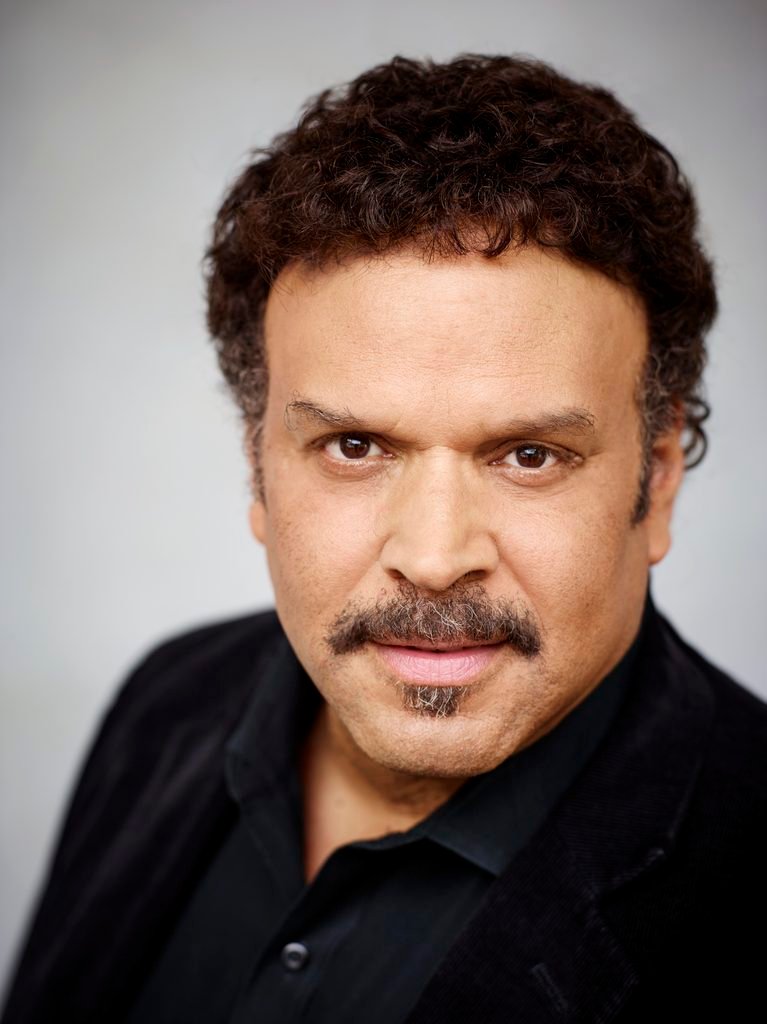
Shusterman has also received awards from organizations such as the International Reading Association, and the American Library Association, and has garnered a myriad of state and local awards across the country. His talents range from film directing, to writing music and stage plays, and has even tried his hand at creating games.
Rising Thunder returns readers to the world of your Arc of a Scythe series, but at a pivotal moment before immortality becomes the norm. What interested you most about exploring the fragile period just before the end of the “Age of Mortality,” when society was still grappling with the possibility of defeating death?
I think the time frame of Rising Thunder is incredibly relevant, because we’re pretty much at the threshold. AI is sounding more and more like the Thunderhead, research into defeating death is being funded by major global corporations. We need to give more and more thought into how we’re going to manage a future that’s coming more quickly than anyone realized.
This book dives into the origin of the Thunderhead and the early forces that shaped the system readers encountered in the original trilogy. What creative challenges came with revealing the backstory of such a powerful and beloved entity without diminishing the mystery that surrounded it before?
Well, the real world is unravelling the mystery already. We’re watching more and more A.I.’s passing the Turing Test. We’re seeing the government forcing AI companies to give their technology over for military uses. We are watching the critical ethical battles unfolding before our eyes on a daily basis. I wanted to explore the various different ways that those battles could go. The Thunderhead didn’t just plop into the world fully-formed. It began in OUR world, and evolved. I think it’s important to witness that, even if it’s in fiction that is a step ahead of reality.
Early descriptions of the novel suggest that competing artificial intelligences play a crucial role in the story. What philosophical questions about technology, governance, and human control did you want to explore through this conflict between different visions of what “protecting humanity” means?
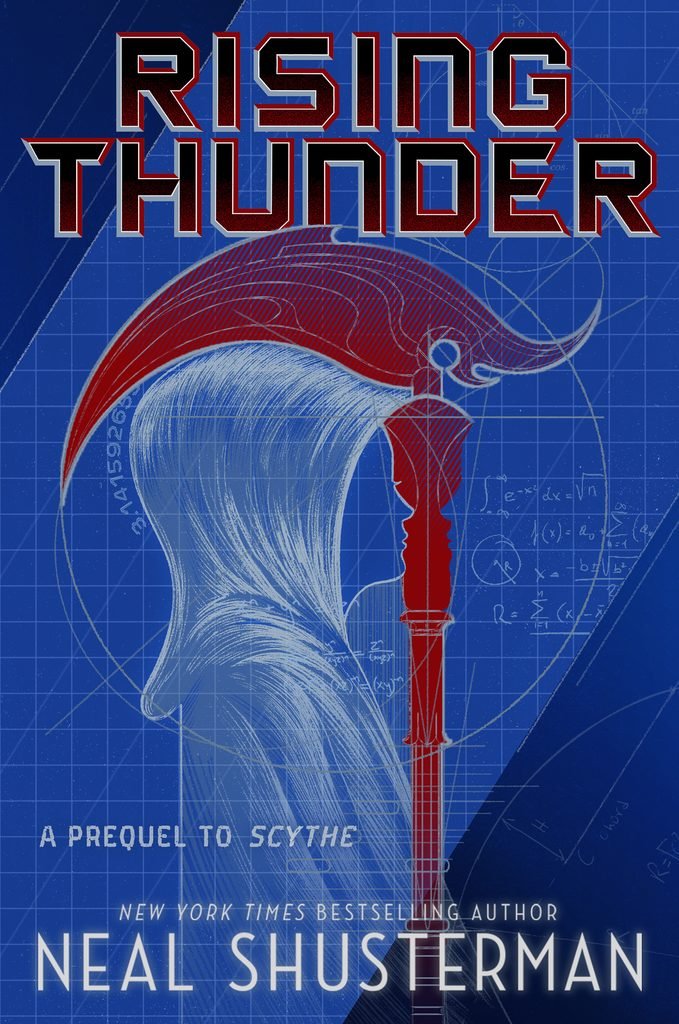
It’s all about posing questions, rather than finding answers. And the more questions I can ask the better. In Rising Thunder, the competing intelligences do represent “good” and “evil,” but in a very complex way, that blurs the line considerably. One believes that protecting humanity means stifling all change, and doing so at all costs, to preserve a perpetual, peaceful status quo—even if that means limiting freedom, or making decisions on our behalf. The other is more interested in consent, autonomy, and humanity’s long-term growth, even when that path is messier, slower, and more uncertain. So the question becomes: What does it really mean to protect people? Is it to eliminate suffering, even if that requires control? Or is it to allow risk and struggle, because those are the very things that give our lives meaning? Where do we draw the line between guidance and authority?
The book also introduces a group of teenagers discussing the future in an online chatroom, unaware that their ideas may shape history. What inspired you to center young voices at such a formative moment in the world’s transformation?
In the first trilogy, the founding scythes are seen as these iconic larger-than-life figures from history. And since they are from all over the world, it occurred to me that they probably met online as teenagers. So how does a group of teenagers evolve into a force that defines the very nature of the future, and in so doing, saves humanity? How does any young person rise to become the best version of who they can be, and face life’s most difficult choices. I wanted to explore all that.
Because this novel is both a prequel and the beginning of the First Blades series, how did you approach balancing fan expectations from long-time readers while ensuring that new readers can enter this world without prior knowledge of the original trilogy?
The fact that it’s a prequel makes it easier to enter the world without prior knowledge—because none of it has happened yet. For readers who know the first trilogy, things will have a different kind of resonance, because they’ll see backstory that explains how the world came to be. New readers will get to watch that world form, without having any preconceived notions of where it’s going. Two very different, but powerful reading experiences.
Your stories often ask big ethical questions about power, responsibility, and the unintended consequences of progress. When writing Rising Thunder, were there contemporary debates—such as AI development or technological immortality—that influenced the themes you wanted the book to explore?
Yes, there are always contemporary events and debates that influence the speculative fiction I write. But I’ve recently discovered that it goes both ways. I’ve learned that The Thunderhead is being discussed by AI ethicists around the world, at a policy-making level — and the Arc of a Scythe books are included in curriculums of major universities in classes on AI development! And on top of it, there are people entering the AI field citing the books as the reason why they entered the field in the first place. It’s amazing to think that fiction and storytelling can sometimes help to steer reality!
Read more about Rising Thunder HERE
INTERVIEW: YA SH3LF