
Andrew Wilson is an author who blends rich world-building with sharp, compelling mysteries. As a young reader who struggled with dyslexia, Andrew’s goal is personal: to write the fast-paced, exhilarating books he desperately needed as a teenager.
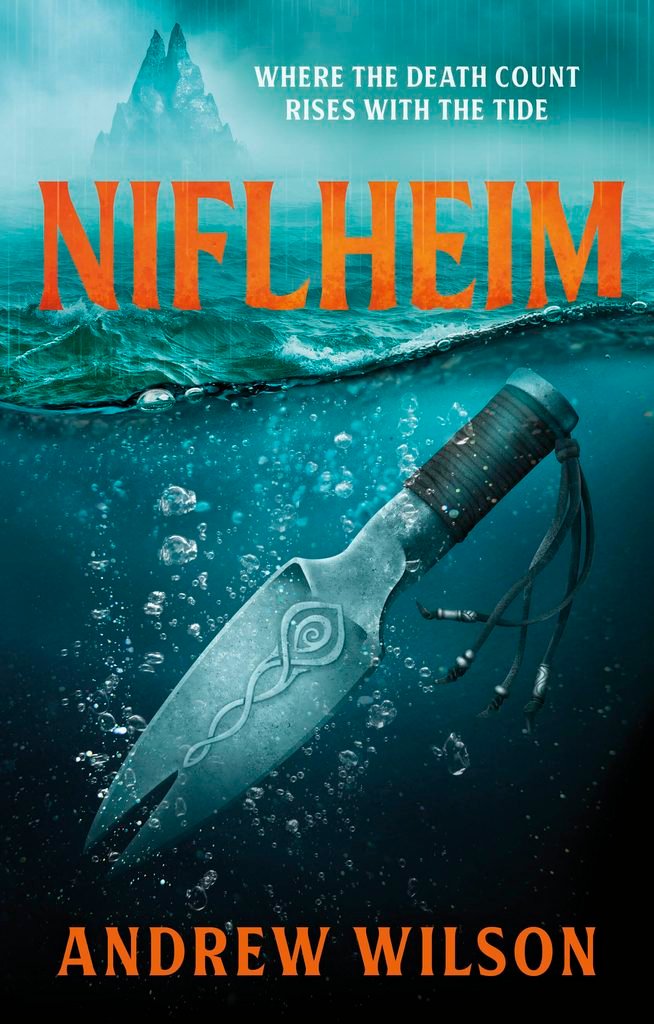
Niflheim, the first title in his nail-biting trilogy, masterfully weaves Norse myth around a murderous thriller with unforgettable characters. When he isn’t plotting his next twist, Andrew lives in Staffordshire, UK, with his wife and children.
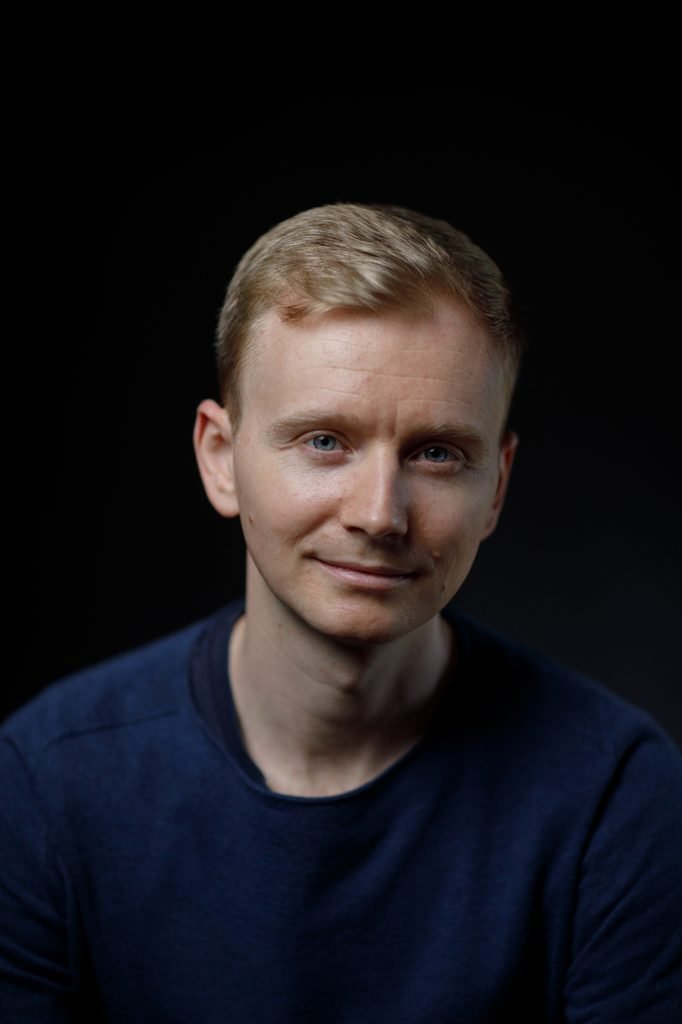
Niflheim brings together Norse mythology, a murder mystery, and a coming-of-age story, all within the stark and dangerous setting of an icy island. What was the original spark for the novel, and at what point did you realize these different elements could become one story?
I had this image of a young man stood upon a sea wall, alone, staring out into a raging storm. He kept surfacing in my imagination: I wanted to know who he was and where he was going.
The island came to me next, in a swirling sea with colossal waves churning around it. And as I imagined the island in the storm, the people in their homes cowering from the elements… it just seemed like a perfect night for murder.
But I was always most interested in the young man who stood alone. That young man became our hero, Eben, and that moment atop the sea wall became the opening scene of the book.
Eben arrives on Niflheim after losing his mother and is suddenly placed in the care of his powerful grandfather, Woden Tørson. How did you approach writing Eben’s emotional journey alongside the external mystery, particularly the way grief and family shape his understanding of the world around him?
That’s a really fun question to answer because to me those two elements are one and the same. Eben’s internal struggle is mirrored by the events that happen around him. Eben is the heart of the story – his grief, his anger, his arrogance – so I always needed to centre him. The mystery and the dangers he must face are like a reflection of his internal struggle.
The novel draws heavily on Norse mythology while also creating its own mythology and mysteries around Niflheim. What kind of research went into building the mythological foundations of the story, and how did you decide which elements of Norse tradition to preserve, reinterpret, or completely make your own?
I knew I wanted to be inspired by mythology, not restrained by it, so with Niflheim I tried to keep my research casual. I wanted to let those old stories wash over me without becoming tied to them.
In this book, I was trying to write something completely fresh and interpret mythology in a way that was unique. I hope I’ve achieved that. If you know mythology, even if you have studied it, you’ve never heard the story of Niflheim.
There’s a sequel coming next year called Amsterdam. In contrast, some elements of that story demanded more detailed research, which is also really fun, but there’s something magical about just giving yourself little prompts, then letting your imagination run wild, as I did with Niflheim.
The murder mystery at the heart of Niflheim means that readers are constantly being asked to question what – and whom – they can trust. When writing a mystery for younger readers, how do you approach planting clues and red herrings so that the eventual revelations feel surprising but satisfying?
I love this. We’re getting into the nitty-gritty of writing a mystery.
So I plan the mystery very carefully, always with the ending in mind. Before I start writing, I want to know at least a couple of clues to each element of the plot, and I expect the characters to surprise me along the way with clues of their own.
Red herrings are similar: some planned and some that the characters come up with on their own. It’s so satisfying when characters surprise me with what they say or how they act. That’s when you know the story is coming to life.
You’ve spoken about struggling with reading because of dyslexia and wanting to create the kind of vibrant, fast-paced stories that you would have loved as a young reader. How has that experience influenced your writing style, particularly your approach to pacing, suspense, and keeping readers turning the pages?
Yes, I find reading incredibly hard, so I’m very conscious of the need to hold the reader’s interest. I’m always trying to put myself in the reader’s mind: How will the reader experience this chapter? Is this exciting, scary, intriguing for the reader? Is my wording clear? Is this sentence working hard enough?
I want to give each chapter its own arc, as if it’s a story in itself. I try to keep my writing lean, fast, hopefully easy on the eye with short, punchy sentences and paragraphs.
Pacing is an interesting one, because my instinct is always to go faster, but you need to give the reader a rest sometimes, letting the pace of the story ebb and flow. You also need to make sure you keep building towards the ending that you want to give the reader.
Since Niflheim is the beginning of a trilogy, you have the opportunity to take readers far beyond this first mystery. Without giving away any secrets, what larger questions or character journeys are you most excited to explore across the series, and what do you hope readers will feel when they eventually look back on Eben’s entire journey?
I care deeply about Eben – that boy I saw alone in the storm – so I am most excited to follow him. I want to watch him grow and succeed, and fail and try again. I want to watch him fall in love and become the man he has the potential to be.
I’m excited to expand the world of Niflheim, to meet more characters, more monsters, and to take readers to places they have never been to before.
But it will be Eben’s journey. All I hope is that readers come to care about Eben as I do. If I do my job right as the author, I believe they will.
INTERVIEW: YA SH3LF