
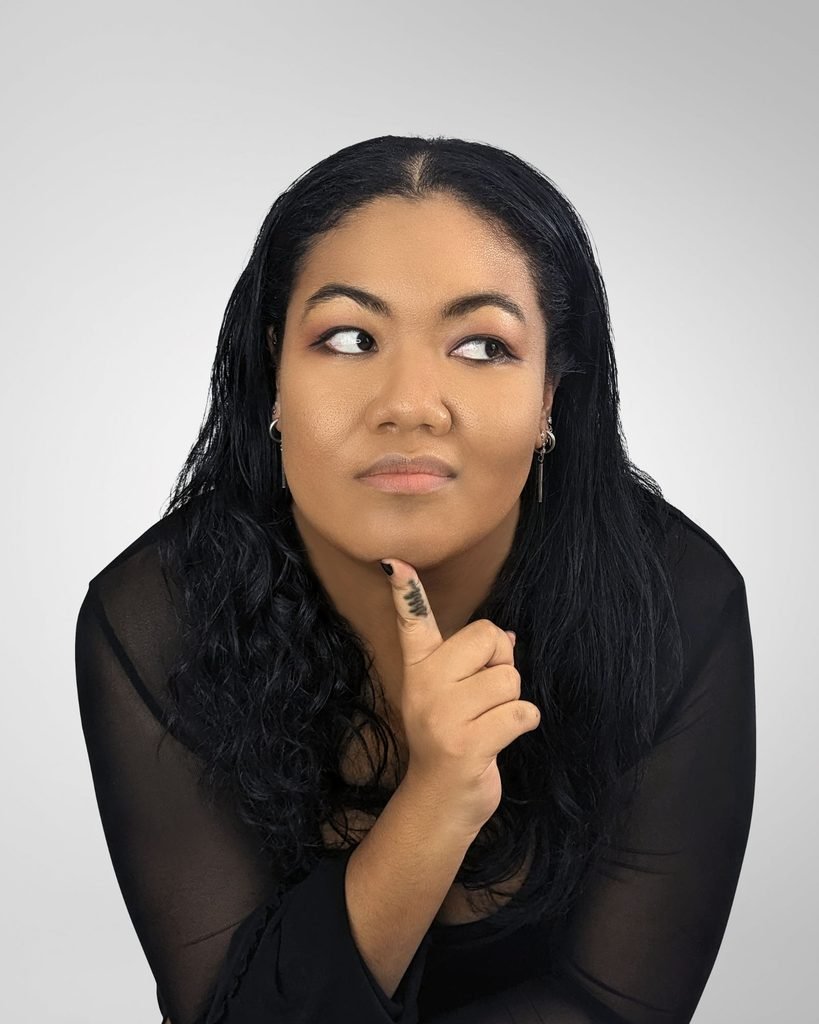
Talia Tucker (she/her) is a young adult author who has spent her life investigating how identities shift and change between geographies, time, and cultures. Her Jamaican and Korean heritages inspire her to build worlds highlighting multiracial, queer, and neurodivergent characters of color within narratives that emphasize joy, something not typically centered in marginalized stories. She enjoys writing about messy women, soft boys, family, food, and trying to navigate the world as a child of multiple cultures.
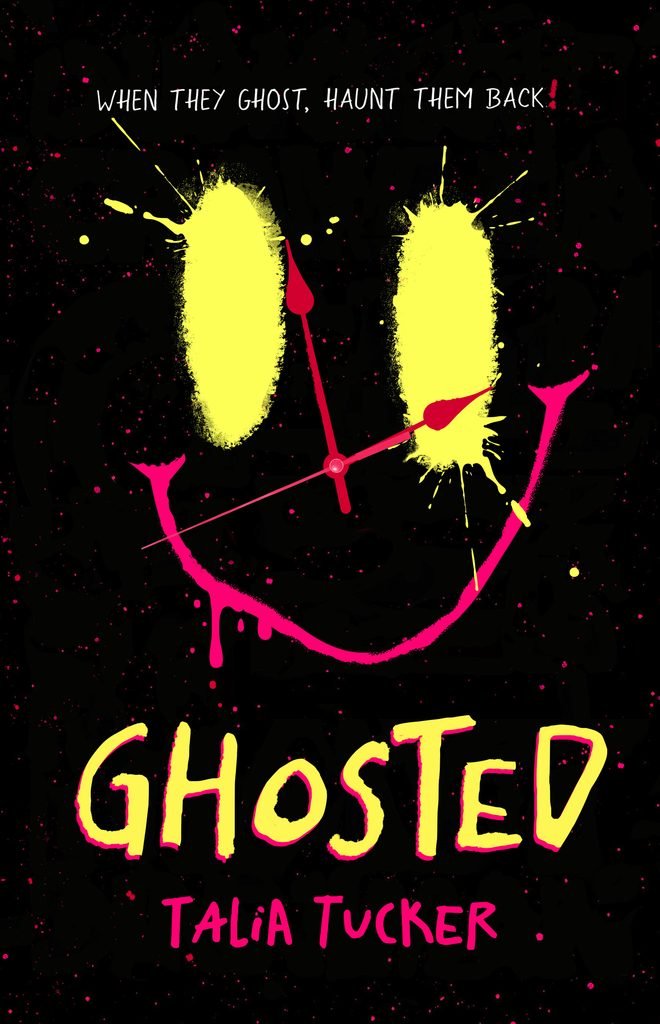
Ghosted blends paranormal elements with a revenge-driven rom-com, following Keziah as she deals with both a sleep paralysis demon and very real heartbreak. What inspired you to combine supernatural horror with contemporary dating culture, especially the idea of being “ghosted” in both literal and emotional ways?
I think Keziah’s journey speaks to the time we’re in. She’s juggling family issues, burnout, mental health, and everything else against the backdrop of high school. At a moment like this, any institution can feel a little scammy and dystopian because it’s unclear what even comes after high school anymore. So, when she meets a boy and lets herself have a crush, she sort of subcontracts her happiness to him for a brief moment. She projects a lot onto him, so when he does the slightest thing to offend her, even though he’s basically a stranger who owes her nothing, it triggers this deep-seated hurt she chooses to blame him for. She doesn’t even know his real name. She literally just calls him Guy. But to her, he represents something we’re told we can and should want, and that we’ll get if we just “put ourselves out there.” However, most people are short on resources these days, whether mental or financial, and acknowledging that can feel cynical. Keziah is actually fairly well-adjusted when she’s single, but when her best friend pushes her into dating, that’s when things start to unravel and she becomes dysregulated. I think society normalizes pushing people beyond what they’re capable of and writing it off as just a normal stage of life, and as a thirty-something who’s constantly asked why I don’t have children, it really feels like a horror story. You’re almost constantly haunted by the life you could have or should have had.
Keziah is already used to living with a sleep paralysis demon, which adds a darkly humorous twist to the story. How did you approach writing that relationship – was it more rooted in horror, comedy, or even emotional companionship?
I used a more Eastern interpretation of a sleep paralysis demon, where it’s generally referred to as a ghost or spirit rather than a demon. So, for Keziah, who has dealt with so much abandonment in her life, Steve is sort of an amalgamation of all the people who’ve left her behind. He’s essentially the “ghost” that lingers and haunts you after someone you love is no longer in your life, torturing your thoughts long after they’re gone. While he’s a pretty scary character, I think naming him Steve and making a bit of a joke out of him is really on brand for younger people. A trauma response is to joke about things, make a meme out of them, trivialize them, and hope they’ll go away. Unfortunately for Keziah, Steve doesn’t.
At the heart of the novel is a revenge plot after Keziah is ghosted by someone she thought she could trust. What drew you to explore revenge as a central theme, and how did you balance it with humor and character growth?
I think a lot of people are having trouble connecting with others right now, and feelings of isolation are pretty commonplace. Keziah’s attachment to the boy who eventually ghosts her is less about him and more about the fact that she feels connection for the first time in a long time. Maybe she was starting to feel incapable of that, and after a while, it’s hard not to internalize those feelings and wonder if something is wrong with you. So even though the connection she had with this boy wasn’t particularly deep, it triggers long-standing insecurities. She thought they had a genuine moment, and getting the rug pulled out from under her feels like a betrayal. Not so much by him, but by her own feelings because she allowed herself to believe in them. At the same time, Keziah is surrounded by hypocrisy from the adults in her life, her best friend, and even her mother, all people she sees as performative or dishonest. She knows her revenge plot is wrong and unfair to this boy, but she doesn’t care because at least she feels like she’s acting from a place of honesty. While that setup lends itself to funny moments, it also leads to deception, self-denial, and hypocrisy, which are the very things she’s rebelling against. That’s where her growth comes in.
The story also includes a queer romantic arc as Keziah begins to connect with a girl who helps her along the way. How did you approach writing this relationship alongside the chaos of revenge and paranormal interference?
Keziah had been performing a lot in her life. She and her best friend Jessica had become pretty popular at school, even on Homecoming court, and on paper they were doing high school right. But Keziah had started to break from Jessica in that she was tired of the performance, the fakeness, and the hypocrisy. For a while, she was very much just going through the motions of the life and persona she had built. When she first decides to go after Guy, the boy who ghosts her, it’s the first time in a while where she just acts without caring about the consequences. In that moment, she meets Gigi, her love interest. Meeting in such a compromising, vaguely illegal situation, and with Gigi being a girl, Keziah doesn’t expect anything to come of it. But Gigi embraces her, and she finds someone she can be herself around, for better or worse. However, that doesn’t mean all of Keziah’s old habits, insecurities, or Steve disappear. The relationship is troubled, but it was important for her to have at least one person she could trust within all the chaos.
Your previous books, like Rules for Rule Breaking and Solo Stan, lean into contemporary romance, while Ghosted introduces stronger horror and paranormal elements. How did your writing process evolve when stepping into this darker, more genre-blending space?
With Solo Stan and Rules for Rule Breaking, I really tried to keep some distance between myself and the characters. There are shadows of me in them, but for the most part they’re separate from me. With Keziah, though, she’s the first character I wrote in first person, so it automatically felt more intimate. I wouldn’t say she’s like me, but she’s more like an embodiment of every petty thought I would never act on. If you’ve ever had an argument with someone and later that night, lying in bed, thought of the perfect comeback and then spent the next week annoyed you didn’t say it, that’s Keziah to me.
Your journey into writing began with fanfiction and a spontaneous decision to pursue storytelling more seriously. Looking at Ghosted, how has your personal creative journey shaped the way you develop voice, humor, and bold, unconventional story ideas?
Fanfiction is such a lawless section of the internet, so I think it was a good place to start my creative journey. It was something I clung to for fun and entertainment, so when I decided to write more seriously, that same instinct was still there. It wasn’t until I got my agent and things started to move quickly that I got more serious. Because I came from such an unconventional writing background, I don’t think I ever felt too beholden to rules or trends, especially since I wasn’t a huge novel reader either. When I was a teen, there weren’t many books by or for people who looked like me and BookTok wasn’t a thing yet, so I just didn’t read much. That meant I was largely outside of the literary world prior to entering publishing, so I just ended up doing my own thing. I actually wrote Ghosted years ago, before my second novel Solo Stan. It just happens to be coming out third, so in a way it reflects that same sense of freedom, because I hadn’t debuted yet when I wrote it. Now, a few years after debuting, I’m curious to see how my writing has shifted. I can see my voice and humor changing across projects, and I’m not sure if that’s just me getting older or a reflection of the times we’re in, but I think my style and ideas always shift with the moment.
INTERVIEW: YA SH3LF