
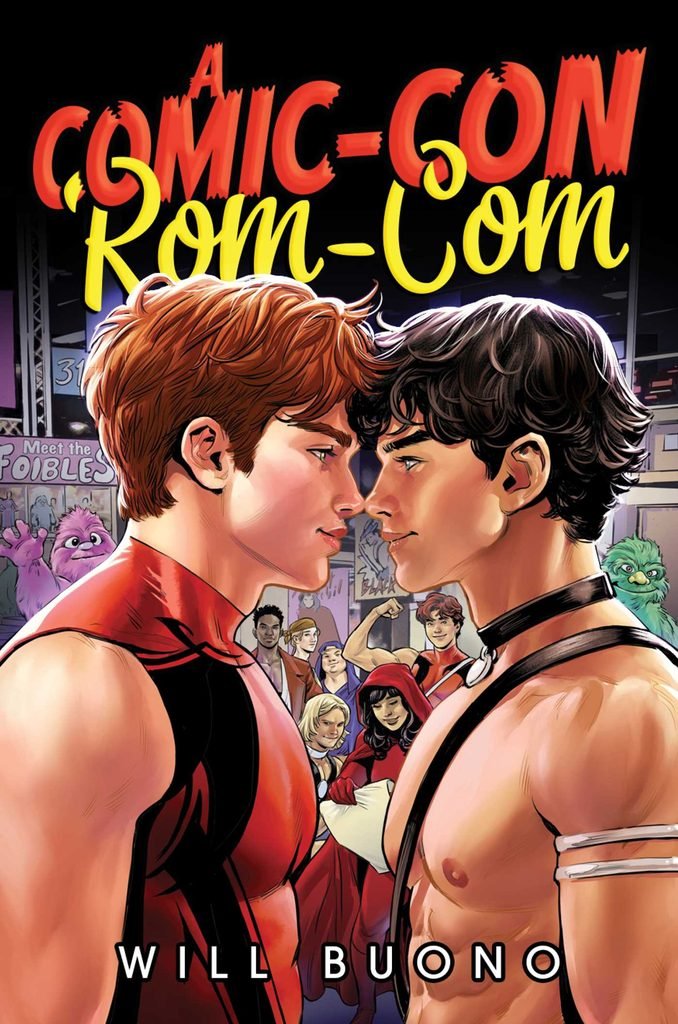
For Will Buono, comic books, video games, and Comic-Con conventions are more than just hobbies – they’re part of the world that inspired his debut novel, A Comic-Con Rom-Com. Writing under a pen name, Buono brings his love of pop culture, humor, and queer romance together in a young adult story about first love, unexpected connections, and finding the courage to embrace who you are.
Currently living in New York City but dreaming of making San Diego his home, Buono has spent plenty of time exploring the world of comics, gaming, and fandom. His debut novel, set against the colorful and chaotic backdrop of San Diego Comic-Con, is scheduled for release on May 4, 2027, from Simon Pulse.
A Comic-Con Rom-Com brings together two things that clearly mean a lot to you: geek culture and queer romance. You’ve described yourself as someone who has attended countless Comic-Cons, read plenty of comics, and spent endless hours gaming. What firstinspired you to turn those passions into a love story, and was there a particular experience at a convention that sparked the idea for the book?
About a decade ago at San Diego Comic-Con, one of the movie studios was promoting some fantasy movie or TV show of theirs and they had actorsin their booth dressed as some of the characters. I don’t remember the show or the studio, but I do remember two young guys dressed as medieval heroes in pretty revealing costumes. And while the crowd couldn’t take their eyes off them, the two actors couldn’tkeep their eyes off each other. It was a germ that stuck in my head and ultimately grew into A COMIC-CON ROM-COM. I also work behind the scenes in the world of pop culture. The opportunity to reveal some of the distinctly unmagical—and often unintentionallyhilarious—aspects of this business was one I couldn’t resist!
Bailey and Griffin’s first real encounter is anything but romantic, and their disastrous moment at Squidlandia Water Park sets the entire story in motion. Whatdrew you to this wonderfully awkward beginning for their relationship? How did you approach developing their chemistry, especially when Griffin initially sees Bailey as the reason everything has gone wrong?
San Diego is as much a character in this story as my two teen protagonists and there’s something about the prevalence of water parks, as well as just the outdoor culture in general in San Diego, that struck me as both the perfect setting for Bailey and Griffinto first meet, as well as providing the opportunity for it to all go wrong in an epic fashion. It also didn’t hurt that it’s a setting wardrobe-wise that leaves very little to either boys’ imagination! Because the initial spark for both of them is their physicalattraction. For Bailey, that’s a definite positive. For Griffin it’s just the opposite—it’s a threat to the façade he’s built around himself, and it causes him to lash out. But once they finally get to know each other they both begin to realize the thingsthey have in common, and even more importantly, the many ways in which they’re opposites. That’s where the deeper chemistry gets kindled and sets the framework for an even greater connection to grow.
Griffin is dealing with financial pressure at home while also struggling to acknowledge his attraction to Bailey. I find that contrast particularly interestingbecause the story promises plenty of humor, but his personal circumstances bring a more vulnerable side to the romance. How did you approach writing Griffin’s emotional journey, and what was important to you about portraying the complicatedprocess of understanding and accepting your own feelings?
I knew from the start that one of my characters would have already accepted his gay identity and be perfectly comfortable with it while the other would begin the story in complete denial. And yes, one of them is the teenager I wanted to be, while the other isthe teenager I actually was! As a result, Griffin has far more of a growth arc than Bailey does. It’s the barriers he keeps creating for himself and having to battle through—sometimes on his own, but often with the help of Bailey, as well as other friendsand allies—that drive both the emotion and a lot of the humor. Teenagers have always come of age having so many unfamiliar and complex things being thrown at them as they try to navigate the path to their future, but I hope I show that all of those thingsbecome easier to tackle if you learn how to first be honest with yourself. The one area of their relationship that I purposely made angst-free and uncomplicated, however, was the sex. I left that natural, spontaneous, and joyous—as it should be.
Comic-Con is a fascinating setting for a romance because it’s a place where people can dress up as someone else while also feeling free to express parts of themselvesthey might normally hide. Did that contrast influence the way you wrote Bailey and Griffin’s relationship? What did you want to explore about identity, confidence, and the difference between the personas we present to the world and who we really are?
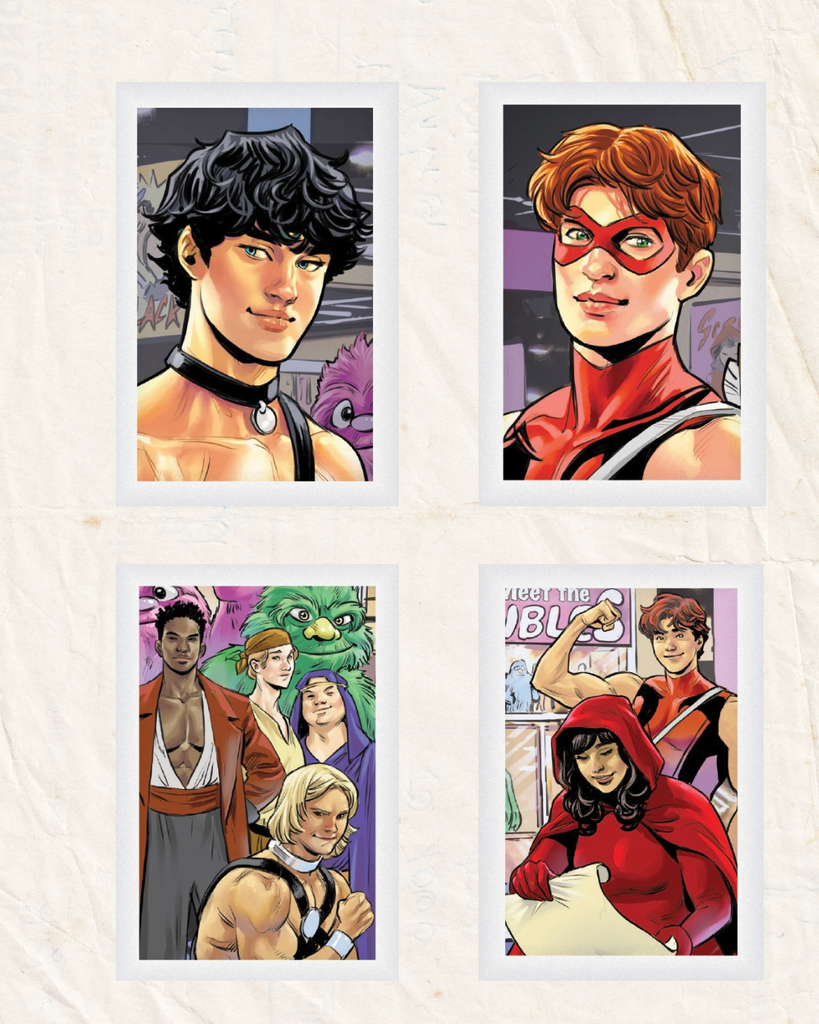
Absolutely. Despite his resistance initially, it’s donning a costume that first gives Griffin the mental permission he needs to start stepping out from who he’s always thought himself to be. Bailey, on the other hand, is a hot dog. Whether in or out of costume, he’s stillBailey. He may be taken aback at first at how revealing the outfit is that he’s been hired to wear, but, as he does throughout the story, Bailey embraces each new thing that’s thrown at him with gusto. It’s just one of the parts of Bailey’s personality thatGriffin has fallen in love with, as well as the example that helps him find his own way.
The novel seems to embrace the chaotic, funny, and occasionally embarrassing moments that come with falling in love for the first time. When you were writingit, how did you balance the comedy and romantic tension with the more emotionally significant moments? Are you someone who carefully plans the progression of a romance, or do you prefer to let the characters surprise you as their relationship develops?
I really tried hard to balance both the “Rom” and the “Com” of the story. First love by its very nature is super-serious to the participants, and I didn’t want to deny that fact for any of my characters who are having the thrill of experiencing it. But to thoseof us observing it, elements of it can be downright hilarious. The Comic-Con setting was a huge factor in maintaining both these aspects without infringing on either of them. As for the writing process, I’ve always begun stories with a rough framework of whereI want the plot to go. I generally know how it will start and how it will end and what some of the stops and set pieces will be along the way. But to me, the most exhilarating aspect of writing is to just let it go where it wants to go. Characters surpriseme—sometimes becoming someone I never expected—scenes develop from nowhere; plots veer off unexpectedly. And it almost always results in something far better than I ever could have planned for.
Your author biography is wonderfully funny and personal, particularly the way you describe your love of Comic-Con. With A Comic-Con Rom-Com, you’re bringing a joyful queer love story into a world that has clearly been important to you. What does writing this book mean to you personally, and what do you hope young LGBTQ+ readers, especiallythose who are still figuring themselves out, will take away from Bailey and Griffin’s story?
First and foremost, I wanted a story that would be fun, funny, sweet and steamy. It should be a breezy read that leaves the reader entertained and wholly satisfied. I had a blast writing this book and I hope it’s as much fun to read as it was to write. I haven’tforgotten the fun and freedom of summer as a teen, or the angst and excitement of being in love for the first time. Imagining what that might be like growing up in San Diego, and amid the craziness of Comic-Con, was irresistible. Comic-Con itself has alwaysbeen the epitome of the term ‘non-judgmental’. It’s a world that accepts everyone being exactly who they want to present themselves as being. That was the goal of this story. Bailey and Griffin’s romance is only ever judged by characters whose own moral failingsare manifest. To everyone else in the story it simply is what it is and worthy of celebration on its own terms. It’s probably the most important lesson Comic-Con can teach us and one that I hope young readers can take from the story and embrace.
INTERVIEW: YA SH3LF