
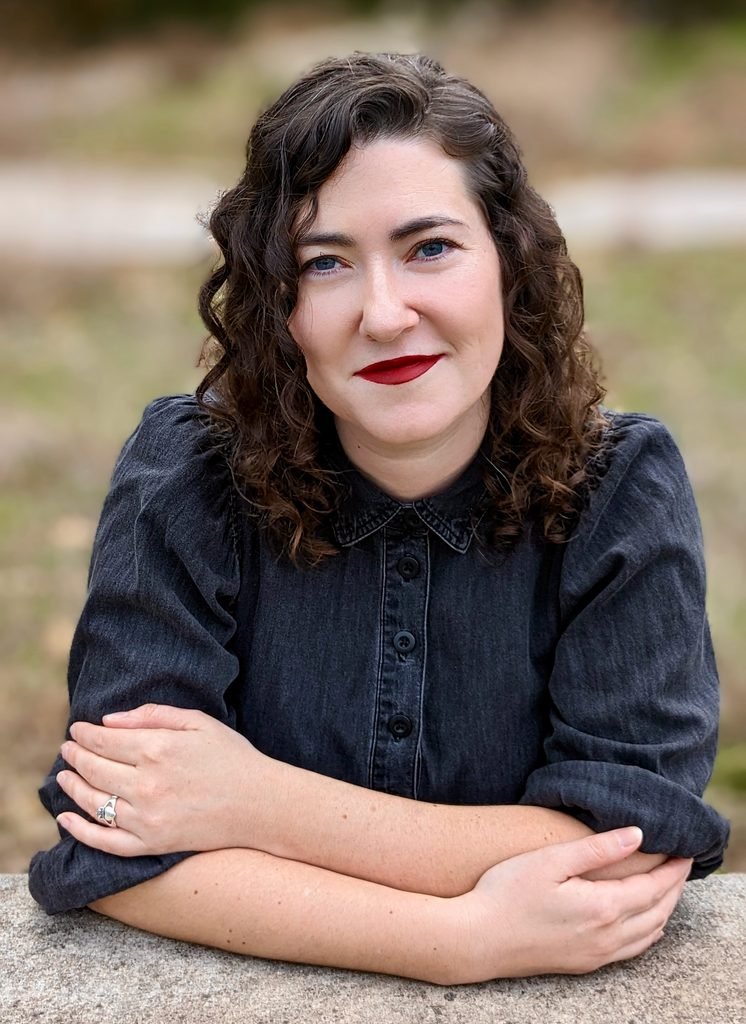
Erin Cotter writes young adult fiction. Originally from Buffalo, New York, she currently calls Austin home. When not writing, she spends time with her partner and pets, eating tacos, and searching for Golden-cheeked Warblers in the Texas Hill Country. Her books include By Any Other Name, A Traitorous Heart, and A Dangerous Bargain.
A Dangerous Bargain reimagines Renaissance Florence as a city where artists literally bargain with angels for talent. What first inspired this fascinating premise, and what drew you to explore the relationship between artistic genius, ambition, and the price people are willing to pay for greatness?
Wow, I love this question! The premise was inspired by AI. I was sitting in the airport traveling to promote my second book when I learned from the Atlantic LibGen database that my book had already been pirated to train AI less than two weeks after its release. I was incandescent with rage. I was also heartbroken. What’s the point of writing a book without doing any of the labour of it? How could anyone call themselves an artist when they were skipping the creative process? I began to wonder if bygone artists would be as pissed about this as I was, and this turned into imagining what an age of AI would’ve looked like during the Italian Renaissance—one of my favourite time periods—and A Dangerous Bargain came from there.
Virgil is racing against time after sacrificing years of his life to an angel, while also searching for his missing brother. How did you approach balancing the novel’s mystery with such deeply personal emotional stakes, ensuring that the story remained as much about family as it is about magic?
It was challenging! Virgil blames himself for his brother’s disappearance which is such a terrible, overwhelming weight. I knew this guilt would be the lens through which he saw everything, and I let this guide pretty much every aspect of the story. Keeping Virgil’s guilt in mind while I wrote was the only way I could do the emotional stakes of the story justice while not getting lost in the plot. Even then, I’d say the arc of Virgil and his brother was the hardest one to get right and the one that came together last.
Leonardo da Vinci appears not simply as a historical figure but as Virgil’s rival, reluctant ally, and eventual romantic interest. What kind of research went into reimagining such an iconic person, and how did you find the balance between historical inspiration and creative freedom?
I was reading a biography about Leonardo da Vinci that said the artist didn’t create anything of note until he was 30. This genuinely shocked me! Like, there’s no way Leonardo da Vinci would’ve been on Forbes 30 under 30 list. I know our modern society really closely associates genius and youth, but reading that Leonardo didn’t find success until he was older (and also likely had ADHD) made him feel human to me, like he could just be a boy who struggles to turn in his homework with a terrible crush on an emotionally unavailable co-worker. Focusing on a young Leonardo gave me a ton of creative freedom with his character because there’s not a lot if information on him as a young man: all I knew was that he was queer, neurodivergent, and an apprentice in Andrea del Verrocchio’s workshop. It was really fun to explore this historical figure in such a new way.
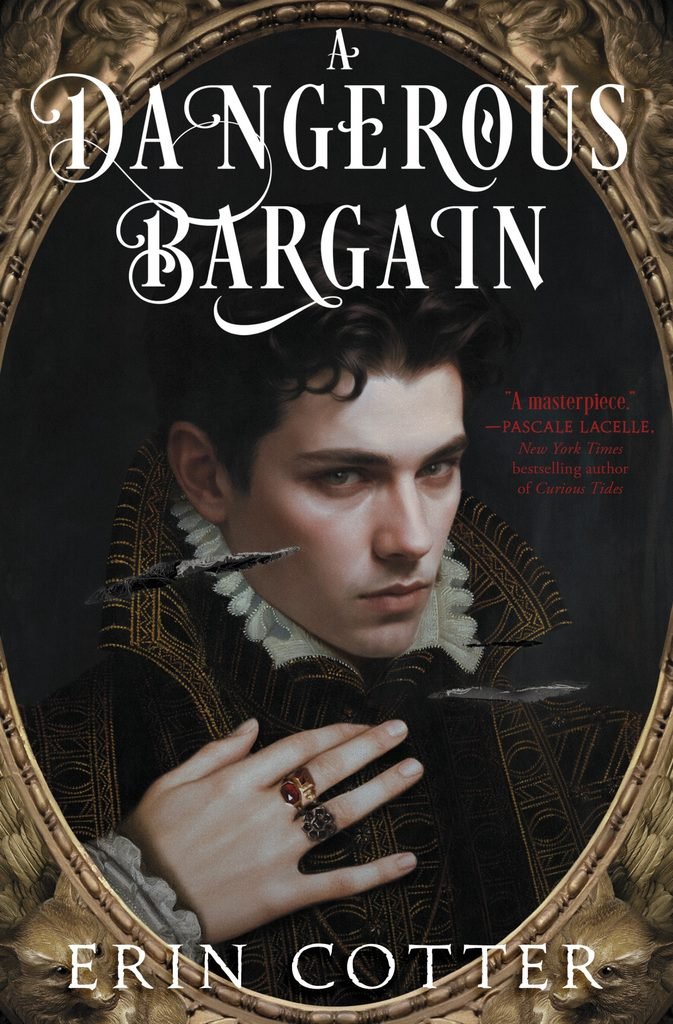
The Renaissance setting feels inseparable from the novel’s themes of art, faith, politics, and power. During your writing process, what aspects of fifteenth-century Florence fascinated you most, and were there any historical discoveries that unexpectedly changed the direction of the story?
I’ve been fascinated by Florence for years! I studied abroad there in college and had an unforgettable experience. The fact that the city was so small but so absurdly rich and powerful (both the Kingdom of England and the Papacy were massively in debt to Florentine banks), really drew me into its history and all the thorniness that came with it. There’s an undercurrent of darkness to the capitalism back then that reminds me of our current times. In some ways, I think of A Dangerous Bargain as an allegory for what happen when capitalism gets tangled up in creativity. This isn’t a historical discovery per say, but I vividly remember the feeling of walking into the Florence Cathedral for the first time and feeling like there was something divine in the air, something magical. I’ve written straight-up historical books before, but I knew a book about Florence would have to have this magic in it!
Your novels often feature protagonists forced to question the cost of loyalty, love, and sacrifice. When writing Virgil’s journey, how did you develop his moral dilemmas so that readers could empathize with his choices even when he ventures into morally uncertain territory?
We all want to imagine we’re morally upright people, but I believe there’s something or someone everyone will bend the rules for. I’m a former academic and while teaching, I felt like I spent a lot of class time with my students deciding what books got wrong, or why they were problematic. This never quite sat well with me, because the truth is everyone is a little problematic in some way, and fiction is a place to explore those grey areas without causing harm. For YA books in particular, there’s a pressure to model “right” behaviours and I knew I wanted Virgil to challenge that. My other protagonists really grapple with deciding whether or not they’re a good person, while Virgil knows he can be a bad person, and doesn’t feel a ton of remorse about it! To me, Virgil is the realest character I’ve ever written, and it was really freeing as an author to let his chaos and inconsistencies spill across the page.
At its heart, A Dangerous Bargain asks whether extraordinary talent is worth sacrificing pieces of yourself to obtain it. After living with this story throughout the drafting and revision process, what do you hope readers take away from Virgil’s journey, and what did writing this novel teach you about creativity, ambition, and the true value of art?
I hope readers take away that sacrificing what you love for what you want isn’t a bargain worth striking. There are hidden costs to creative ambition whenever capitalism gets involved, and I don’t think we do a good job talking about them. What makes art valuable isn’t the art itself, but how we felt when we created it, and how it makes other people feel.
Read more about A Dangerous Bargain here!
INTERVIEW: YA SH3LF