
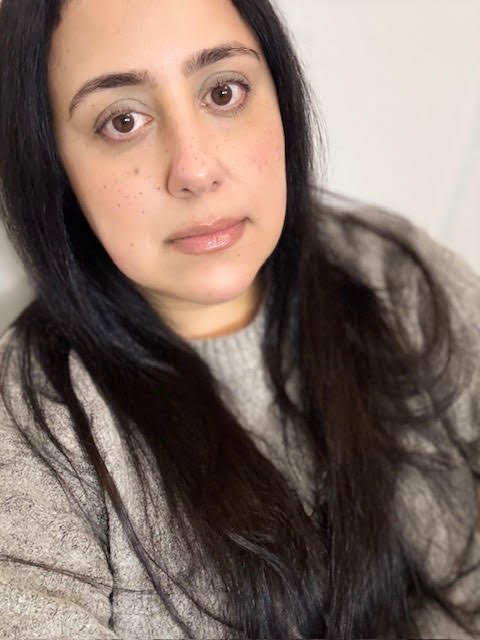
JACKIE KHALILIEH is a Palestinian Canadian writer with a penchant for Samoyeds, to-do lists and staying up way too late. She is passionate about positive representation within her writing.
Something More, her debut YA novel, was shortlisted for the Ruth & Sylvia Schwartz Award, the Amy Mathers Teen Book Award, as well as the Snow Willow Award, and was selected for several Best of 2023 lists, including the New York Public Library and Audible Books Canada among others.
She resides just outside Toronto, Canada, with her husband and two daughters, continuing to complain nightly about having to cook dinner.
Everything Comes Back to You follows Lennon over the course of four transformative years of high school as she struggles to reconcile her own dreams with the expectations placed upon her by family, culture, and religion. What inspired you to tell this story across such a significant span of adolescence, and what did that broader timeline allow you to explore about growing into yourself?
This story was written originally as an adult romance novel with two POVS (John and Lennon’s) as well as two timelines. So the versions of John and Lennon as high schoolers always existed, and as a result, I got to witness them grow and evolve through the years. When I made the decision to rewrite the book into a young adult novel with just Lennon’s point of view, I knew immediately it had to cover all four years of high school because there was just too much story to tell. Another reason I made that decision was because when I was originally drafting Something More (my debut novel) I envisioned it as a series and that we’d get to follow Jessie through all four years of high school. While that didn’t pan out, I was able to explore the full high school timeline in Lennon’s story.
I think who we are as ninth graders is so vastly different than who we become by the time we graduate high school and often we only get to visit characters through one moment in their lives. I often think about a show that impacted me greatly throughout my life: My So-Called Life. That show only had one season and as powerful a season that was, we only got to be with those characters for one year of their lives. It was such a great challenge to be able to show Lennon’s evolution through those pivotal teen years and not just a pocket of time in her life.
Lennon is an autistic Palestinian Canadian teenager navigating first love, family loyalty, and the pressure to be the “good daughter.” How did you approach writing these intersecting identities in a way that honored the complexity of her experiences without allowing any single aspect to define her?
Everything Comes Back to You is my third YA novel featuring an autistic main character, and as I’ve been able to step back and zoom out on my previous books, I’ve realized that each story/character has reflected me and where I am on my autism journey.
Something More: I received my diagnosis while already a few drafts into that book. Once I received my diagnosis, I wanted to weave it into Something More (since Jessie was already a character that felt very similar to my own experiences at that age). As a result, I got to process my diagnosis through Jessie and had a second coming of age experience while working on that book.
You Started It: I thought I was writing a main character this time who wasn’t autistic because I didn’t want to be pigeonholed into only writing autistic characters (this was still early on in my self-acceptance journey) but what I realized once early readers got access to You Started It is that you cannot outrun yourself: Jamie was very clearly autistic. She just didn’t know it yet. I had chosen to write about living with anxiety disorder (a very common comorbidity of autism) and I think through that, I was able to sort of understand where a lot of my anxiety stems from and how living most of my life undiagnosed autistic affected my anxiety.
By the time I started drafting the YA version of Everything Comes Back to You, I had fully accepted my autism diagnosis and was also quite vocal about being a late diagnosed woman. As a result, Lennon is my most unabashedly autistic character yet. And for that to feel authentic, I had her receive her diagnosis a lot younger in life, so that by the time characters meet her, she’s had years to process it and also understand why she thinks or behaves in certain ways.
I’ve been very vocal about the fact that I don’t write young adult novels to educate readers. If that’s something readers want, they can find a non-fiction novel. For me, I want to tell stories featuring main characters like myself living through the everyday, evergreen teen experiences, since that wasn’t something I got to see growing up.
I think the best way to show the complexities of intersectionality is to just…show characters living their lives on the page. I don’t ever want to explain why my characters are responding a certain way or point of microaggressions or outright racism. Every reader comes into a book with a lifetime of their own experiences and beliefs. I cannot control how they perceive something I write or my intentions behind it. This was a hard lesson for me, and one I’m still trying to remind myself of daily when I feel misunderstood.
I just have to put faith and trust into the fact that I wrote the best, most honest book I could with the skills and knowledge I had at the time. Once the book is released, she’s no longer mine and I cannot control how other people interact with it.
Much of the novel revolves around the tension between personal happiness and familial expectations, particularly as Lennon falls for someone her father would never approve of. What conversations about identity, autonomy, and intergenerational love were you hoping to invite through her journey?
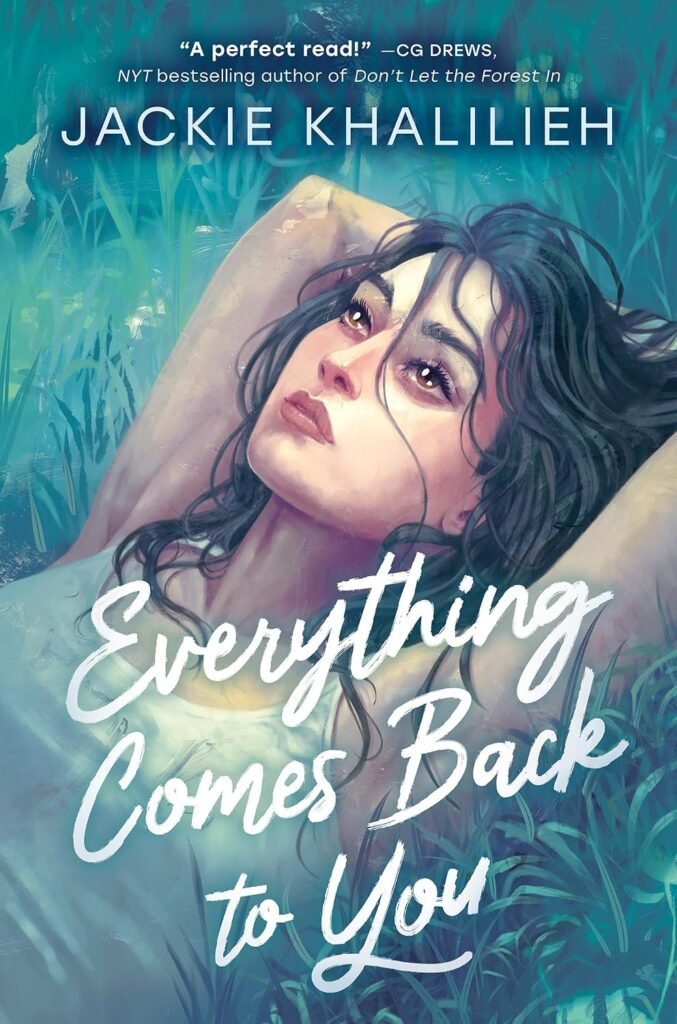
When I originally drafted the adult version of this book, Lennon was a 39 year old mother of two reflecting back on her life and the choices she had made, wondering how life may have looked differently if she had made more of those choices for herself and not to make her father happy. And so that was always in the back of my mind while writing Lennon as a teen. I wanted to make the adult version of her happy. I wanted her to look back on her younger years with the least amount of what-ifs possible and in order for her to do that, she had to confront the expectations that not only her father placed on her, but her religion, culture and society, living as a Palestinian Canadian autistic girl. Because of this, I do think adult readers, especially first-generation daughters, will be able to take away something from this story. For myself, it was very healing. When you’re young, you don’t realize that you have choices, options, autonomy and for a lot of us that realization comes to us when we’re much older and our decisions affect more than just ourselves.
Your previous novels, Something More and You Started It, have been praised for portraying autistic teens with warmth, authenticity, and emotional nuance. As a writer, how has your creative process evolved while writing Everything Comes Back to You, and were there new emotional or narrative challenges that pushed you outside your comfort zone?
My first two novels, while very light-hearted, also tackled some heavier themes, but I did so with a very soft touch. This novel is a lot rawer and more vulnerable, and I was less afraid of writing characters or situations that I knew would be uncomfortable, polarizing and would trigger specific feelings in certain groups of people.
As an author, I have been shamed for writing FMCs that are “boy crazy” or boy centered, and while there was a part of me, as a baby author, who wanted to prove those critics wrong by writing a character who didn’t want to fall in love or think about boys, instead I doubled down and wrote the most love obsessed character to date. Because that’s how I was and it’s how so many other teens are, whether it’s cool to admit or not. My hope is for readers to feel seen in my stories, to talk about the things most people are too afraid to put into words, and if that means that I continue to get shamed for these choices, then so be it. I mean if I’m being honest, the shame I experienced while publishing my first two novels is a big reason why shame is such an integral part of Everything Comes Back to You.
I also am aware that many of the choices I made for this novel will lead to more shaming (such as showing characters who not only talk and think about sex but also have sex). Teens deserve a safe place to go to with their questions about evergreen issues, like sex. Adults are so afraid of handing teens a book where characters openly discuss sex, yet they don’t seem to have a problem handing them a cell phone which has access to much more inappropriate and violent things. A book like this would have meant so much to me growing up. Not because I wanted to see teens having sex in a book, there are enough movies and shows that show that, but I wanted to know how they felt after the fact, or leading up to it. What their questions were. The embarrassing things they’re too afraid to ask or admit to wanting to know about.
Every time I come across a post on social media about “clean” or “safe” books you can give your teen, my eyes roll so far back in my head, I fear they might get left behind.
Although the novel explores difficult subjects – including shame, cultural expectations, and complicated family dynamics – it also celebrates friendship, first love, and self-discovery. How do you find the balance between writing emotionally honest stories and ensuring they ultimately leave readers with a sense of hope?
People are complex. No one is all good or all bad. Life isn’t all good or all bad. And I try to show that on the page. Hope is a common thread in all my stories as it’s been a consistent thread in my own life. No matter how hard things get, if you have hope, there’s always a reason to keep going, to keep waking up, to keep striving for something better. When you’re a teenager with big emotions, everything feels huge and catastrophic. I want my teen readers to see that those big feelings are okay and that things will get better!
Your novels consistently remind readers that understanding yourself is often a lifelong journey rather than a single defining moment. After spending years with Lennon’s story, what do you hope readers take away from Everything Comes Back to You, and what kinds of stories or themes are you most excited to explore in your future work?
I think sometimes my books make some readers uncomfortable, and what I wish is that instead of those readers conflating discomfort with a story not well told, they instead sit with that discomfort and turn inwards, asking themselves what about this character, this plotline, this story is making me feel this way. To me, that is an opportunity for growth. To learn not only about another person, a person who is unlike you (due to race, religion, ability, sexuality, etc) but also about yourself and at the very least, how you can move through life extending empathy where maybe it didn’t exist before.
INTERVIEW: YA SH3LF