
Taylor Grothe is an author whose writing feels both haunting and deeply human. With Hollow, her debut novel from Peachtree Teen, Grothe brings a lyrical and eerie voice to young adult fiction – blending themes of grief, identity, and the supernatural into a story that lingers long after the final page.
Known for her evocative prose and atmospheric storytelling, Grothe crafts worlds where beauty and darkness intertwine, and where every line hums with quiet emotion. When she’s not writing, she’s often exploring folklore, mythology, and the hidden spaces where fear meets wonder – the same liminal ground that makes Hollow so captivating.
The synopsis describes Cassie Davis as recently diagnosed autistic, returning to her hometown and being drawn into a community of outcasts hiding sinister secrets. How did you approach writing an autistic protagonist in the context of horror – what challenges or responsibilities did you feel in portraying neurodiversity authentically?
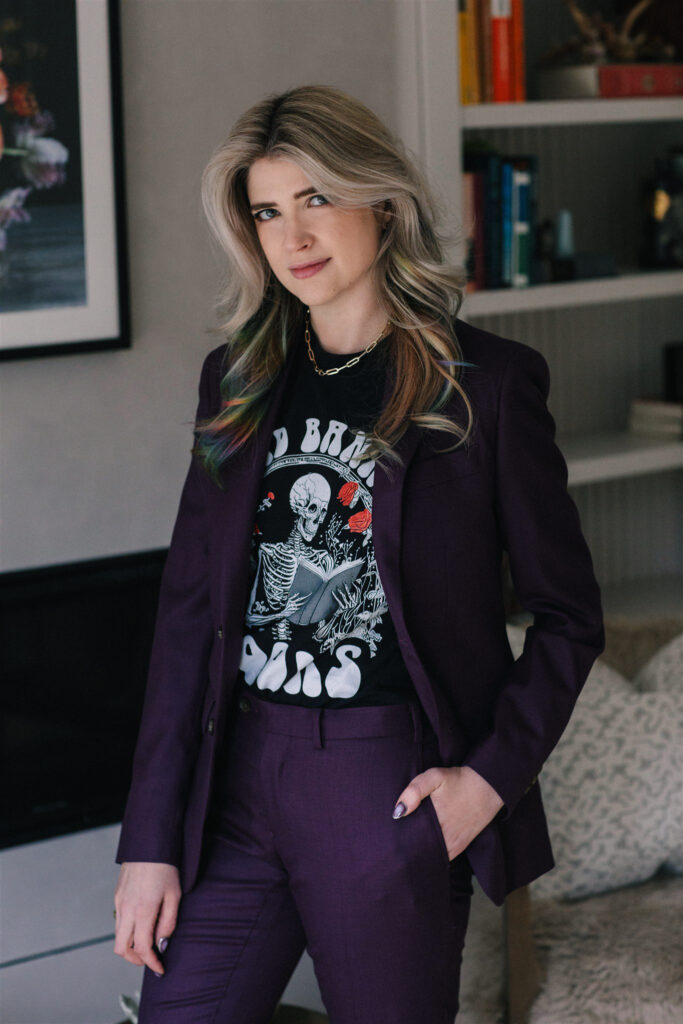
As an autistic person, I personally feel a calling to try and write representation in every possible genre—but horror most especially. A lot of autistic kids grow up feeling like outsiders; the world is horror to people who don’t fit in, often. Ostracization, gaslighting, ridicule…these aren’t only features of a horror novel. They’re lived experiences. So the goal was to discuss autism with nuance and clarity. Of course, too, Cassie needs feel like a living, breathing human being, so Hollow couldn’t moralize or infantilize. I took Cassie’s portrayal very seriously—I like to joke that she’s basically a self-insert—because I wasn’t only writing for kids with autism but every other allistic person for whom reading Hollow might be one of their only nuanced touch points to understand the alienation of autism in our society.
The setting shifts from a backpacking trip gone wrong to an off-grid compound called “The Roost” where Cassie begins to feel belonging – but things aren’t what they seem. What inspired this layered setting of wilderness + cult-like community, and how did you balance the real fears of isolation and belonging with the supernatural horror elements?
Oh, what an amazing question! So I needed an environment that Cassie felt at home within: the wilderness. As a hiker, Cassie would naturally feel as though she fit into Hollow Ridge and hiking. But the goal was to make it insidiously wrong—getting lost, being torn away from her friends during a freak storm, dying crows and whispers through the trees—that would automatically put her on the back foot even before she got to the Roost. That way, even though the Roost was also wrong feeling, the idea of trying to run back into the forest was not as appealing. The goal in any horror setting, I think, is to make the main character adrift, scrambling for handholds of normalcy.
There’s also the separate environment of the Roost: Cassie needed to at first feel as though she was safe there (tucked away from the horrifying forest) even though the members of the Roost were gaslighting her. There’s a tipping point in most stories featuring isolation, where safety flips to terror. The challenge was to make it creepy enough for the reader that they knew something was wrong, even as Cassie didn’t see it coming.
Queer representation features in the story: Cassie is pansexual, there’s romantic tension with Jac who is queer, and the novel explores identity, masking, and belonging. How do you weave the queer romance and horror together so the emotional stakes matter as much as the thrills?
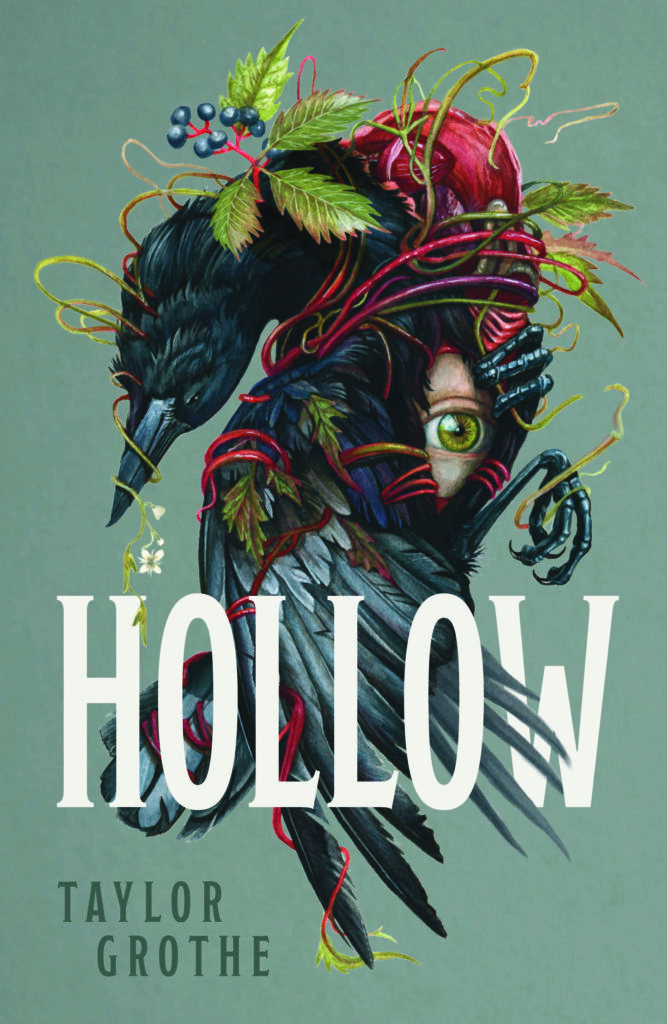
This was maybe the hardest part of writing Hollow for me in some ways. Of course, the characters are queer, whether the story centers on their relationships or not, but I wanted Cassie and Jac’s rekindling relationship to feel just as natural as the horror elements did. I tried to build the romance as a counterpoint to the main story line.
In an interview you mentioned you moved from “pantser” to “obsessed with writing outlines and perfecting the pitch before diving in.” Could you walk us through your process starting from the pitch, to outlining, to first draft, to editing for Hollow? Were there any surprising discoveries or changes along the way?
My journey with Hollow was very different than the rest of my books! When I initially wrote my book, it was pantsed: I knew I had a general story I wanted to tell, but I told it by the seat of my pants so to speak, and it came out a little jumbled—there was a lot of rewriting involved. When my agent pitched it to my now-editor, she had a lot of changes she wanted me to make, rightly. So even before Peachtree acquired Hollow, I wrote them a new pitch and outline, plus the first few chapters, to make sure we were all in agreement. That was the last time I ever pantsed anything! Alas, I am truly a reformed writer. Turns out, plotting actually helps you have a plot!
Hollow went through substantial changes, but the villain has always been the villain, and the final plot twist has always followed a similar thrust. We took out a bunch of things: there was a whole German-language element to Hollow before, and a god in the forest, too! Mainly my work was streamlining.
Horror and “folk horror” are described as influences for Hollow, combined with the coming-of-age, neurodivergent protagonist and queer identity. How did you focus or refine your narrative voice – for example in building atmosphere, managing pacing, delivering scares, while also giving space for character interiority and growth?
It is such a hard balance to strike, but I think it really comes down to how YA narratives are conceived currently. Cassie’s growth and acceptance of her autism diagnosis are intrinsically linked to the way the plot unfolds: we begin with what she initially perceives as the greatest horror of her life, returning to an old friend group after her diagnosis, but the climax has to do with something altogether different, that forces her to come to a place of understanding and reflection (and that is, I hope, even more terrifying). And because Cassie is and always has been queer, it was a process not of adding in complications so to speak but of helping show them. Stories like this are like turning a prism: you see different things as the light passes through. It was just my job to try and turn it just so, so that readers see and feel what I do for these characters.
INTERVIEW: YA SH3LF