
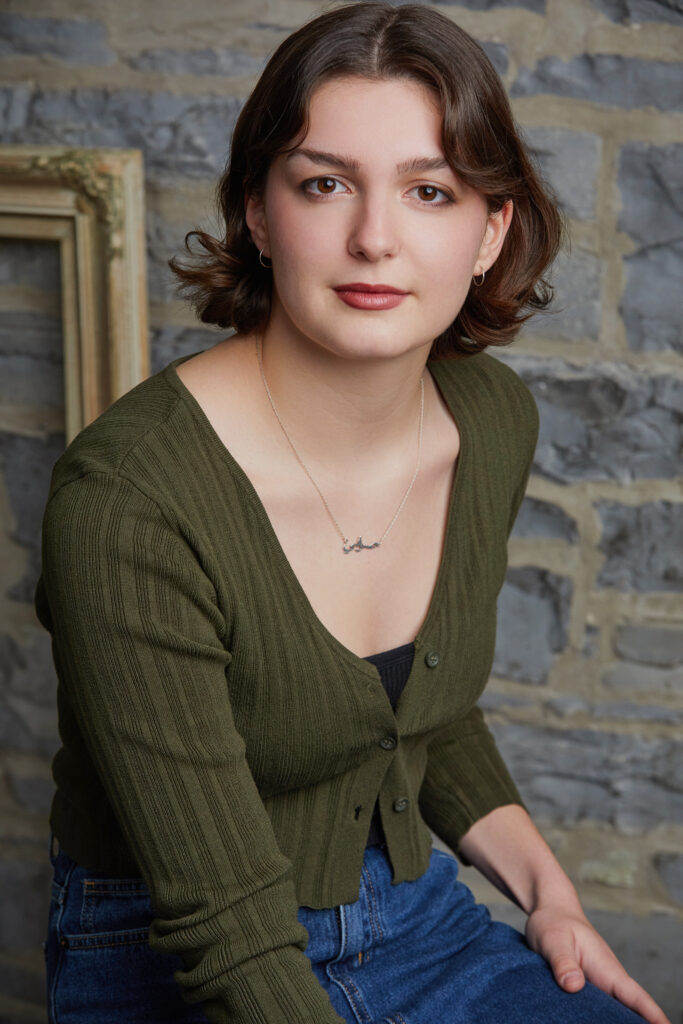
Sophia Hannan is a Canadian author of YA and Adult fiction. When she’s not writing about ghosts and the girls they haunt, she can be found studying English literature and forcing her friends to watch horror movies with her. Her debut novel, We Were Never Here, comes out in 2026 with Simon & Schuster Books for Young Readers.
We Were Never Here follows the remaining members of a ghost-hunting show who must return to a haunted manor after a tragic night that left one of their own dead and Georgia with no memory of what happened. What inspired you to blend gothic horror, paranormal mystery, and a YA coming-of-age story in this novel?
When I first started thinking about We Were Never Here back in 2021, I had just read and loved House of Hollow by Krystal Sutherland and The Haunting of Hill House by Shirley Jackson, both of which were my first forays into YA horror and gothic horror respectively. So, despite the fact that those are very, very different books from We Were Never Here in a lot of ways, I knew from the get-go that I wanted to try my hand at horror, which has a lot of overlap with paranormal mystery to begin with—characters who need answers, that eerie atmosphere where something is vaguely wrong, ghosts. The works! That combination made sense to me right away and it’s definitely something I had in the forefront of my mind while working on this book.
In terms of the coming-of-age, coming out, coming into yourself plotlines, those definitely seem like more secondary plots—at least, they did to me when I first began writing We Were Never Here. But as I started editing and picking it apart, it became clearer to me that there’s a lot of overlap between those more classically YA subgenres and horror. I would even say that gothic horror and coming-of-age stories have secretly been about the same things all along: holding onto a past you can’t return to and being forced to look towards a future that terrifies you.
Georgia and her friends are not just paranormal investigators — they’re also co-hosts of a popular YouTube ghost-hunting show and amateur art thieves. How did you approach writing the dynamics of internet fame and parasocial audiences alongside the haunting and emotional stakes of the story?
What a fantastic question. This was actually one of my favourite parts of the book to write! Sort of like the subgenres we already talked about, I initially thought I was writing a book about parasocial audiences and, separately, ghosts, but somewhere along the line I figured out that those are just different versions of the same haunting.
I wanted both to be pressing in on Georgia in really similar, inescapable, claustrophobic ways. I was also really interested in the parallels between how paintings—even (especially?) the creepy ones—and internet personalities are observed, perceived, and consumed by audiences. I think the question I was ultimately playing with was which watchers are more terrifying—the living or the dead ones?
The novel deals with grief, trauma, and memory loss as Georgia struggles after losing her girlfriend Jules and avoiding her old life. How did you balance the emotional depth of her personal grief with the supernatural suspense that drives the plot?
Grief is one of those things that feels so different to everyone but is also universal, so it can be really tricky to write about in a way that feel real to readers, especially in genres like YA and horror. I think I was able to strike that balance mostly due to the fact that grief, for me, can only be explained by the supernatural and speculative. It’s such a strange emotion—I probably couldn’t have written a contemporary novel about it, although there are many that I love dearly (Hi True Love and Other Impossible Odds by Christina Li).
For Georgia, understanding ghosts is the only way for her to understand what she’s feeling, especially given the way Jules died and her previous love for ghost-hunting. So, the personal stakes that she and the other characters have in the supernatural really helped link her emotional journey to the more life-or-death, mystery-driven aspects of the plot.
Returning to De Lys Manor means confronting strange shadows and nightmares that may be linked to something that followed them home. How did you craft the horror elements in the book — especially the tension between psychological fear and true supernatural threat?
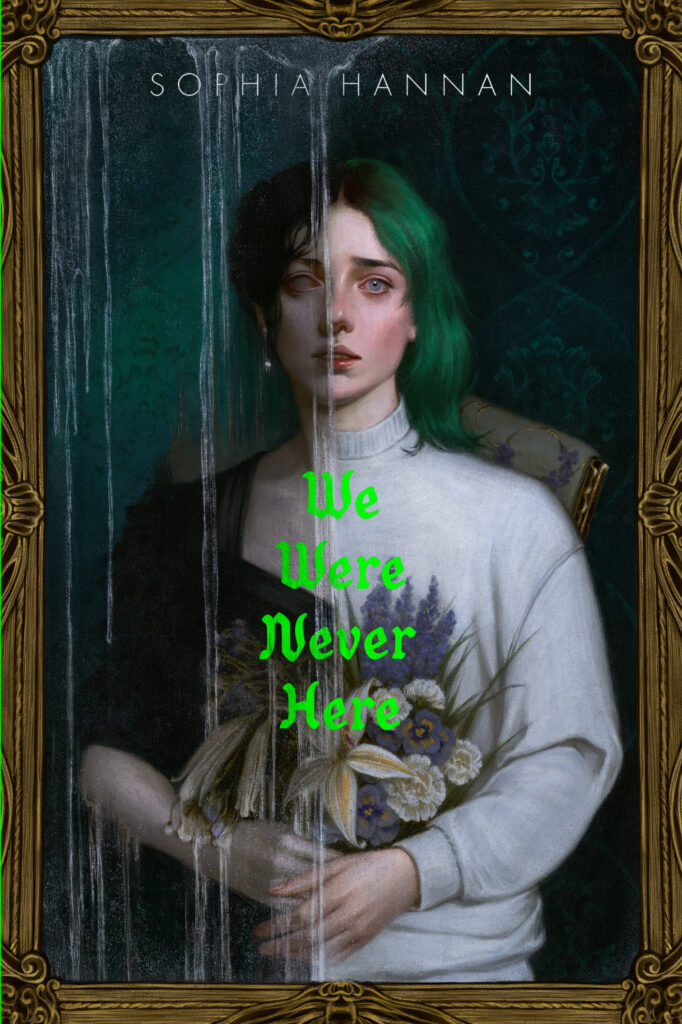
One of my favourite things about gothic horror (compared to, say, a slasher) is that so much of the horror is inherently psychological and atmospheric in addition to being supernatural. There’s a lot of questioning if it’s all in your head; if there’s a reasonable explanation; if that dream was really just a dream, and I wanted to bring all of that to We Were Never Here to balance out the more paranormal ghost-hunting elements. I really liked playing with the contrast between the more modern aspects of the novel and the ‘vintage’ parts, so I looked at a lot of older gothic novels to get a better feel for what makes a horror novel truly scary and offputting. I think that can be really difficult to achieve when it’s just words instead of visuals like in horror movies. I already mentioned The Haunting of Hill House, which has some really amazing atmospheric moments, but I also had the nightmares that take place in Joseph Sheridan Le Fanu’s Carmilla (A.K.A. the original lesbian vampire) in mind while revising this one.
I guess I can’t really answer this question without talking about the painting that got the whole book started—The Lady, Drowned. Without spoiling anything, the portrait that the three main characters are forced to steal was very, very fun to craft. I drew a lot of inspiration from real nineteenth-century portrait painters like John Singer Sargent’s Elizabeth Winthrop Chandler and Eugène Emmanuel Amaury Duval’s Madame de Loynes. I loved the darker, mournful tones of those portraits in particular, and I wanted to emulate that with The Lady, Drowned. When I was first brainstorming the book, I was also super inspired by John Everett Millais’s Ophelia, which is admittedly a very different painting to the other two in terms of composition, but it planted a lot of seeds for the drowning imagery that ended up playing a big role in We Were Never Here.
Your protagonist group is diverse and tightly bonded, with themes of friendship, romantic loss, and trust under pressure. What message or emotional takeaway do you hope readers come away with about connection, healing, and facing the past, even when it feels terrifying?
This group of main characters definitely have definitely seen better days before the beginning of We Were Never Here, but connection in the face of grief is a big part of their journeys in coming back to each other. That’s definitely something I wanted readers to think about while I wrote this book. However, I also really wanted to showcase the stark differences between each character’s grieving process, despite the fact that they’re all reeling from the same event. I wanted to write a story that demonstrated that healing and connection are possible even across what can feel like great distances.
I also think that coming out can be a huge moment for healing and connection for queer people in situations like Georgia’s. In the digital age especially, I think that coming out has become something that feels very publicly broadcasted, which can be really intimidating. Above all, I hope that readers are able to come away from We Were Never Here with the message that coming out can be personal—you can choose who you tell and who you don’t. Hell, you can choose to tell no one if that’s what you want! But that moment should be yours before it belongs to anyone else.
If you could sit down with readers right after they finish We Were Never Here, what would you most hope they’d want to talk about first: the horror, the relationships, or the deeper themes of grief and healing — and why?
I can definitely say that the first thing I’ve been asking my friends as they start to read it is who their favourite character is, which I think means my answer is the relationships? I love getting everyone’s opinions on how these three main characters love and hurt each other, banter, and work together. When I first wrote this book I was actually the main trio’s age—so, in my final year of high school—and they’ve all changed a lot in the edits following that very, very rough first draft, so it’s super interesting to see what readers pick up on there.
While I do love the relationships, I also hope the hauntings will stick with them enough that they want to chat about it. Without spoiling anything too badly, We Were Never Here was a bit self-indulgent in that I got to write some of my favourite horror tropes of all time, most of which come to light during a pretty major plot twist. As someone who has now read this book probably one thousand times and is pretty desensitized to the whole thing, I’d love to sit down with readers and ask them what they saw coming and what they didn’t. I loved writing this book so much—I hope readers have just as much fun with it as I did!
INTERVIEW: YA SH3LF