
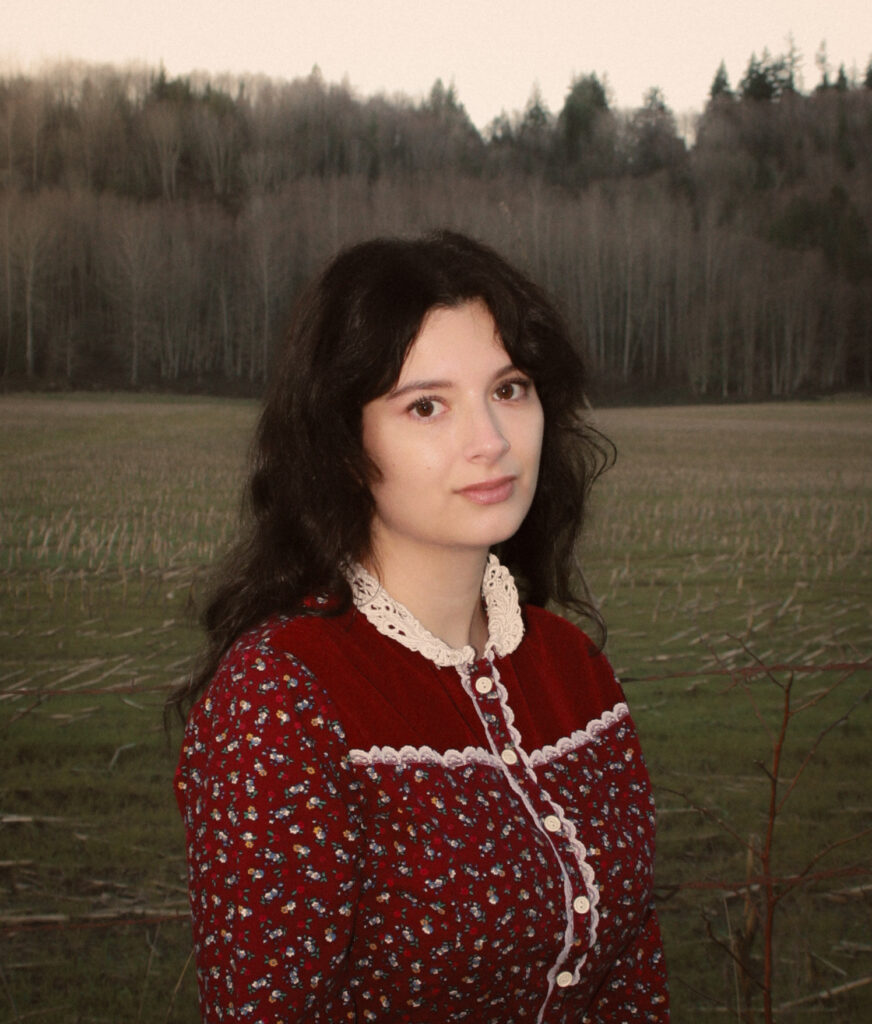
Peyton June is an author and illustrator from the Midwest. She writes about spooky small towns and the messy queer kids who survive them. When she’s not creating, Peyton enjoys riding her fifty-year-old Schwinn bicycle, collecting antique photographs, and ghost hunting. She lives outside Seattle, Washington.
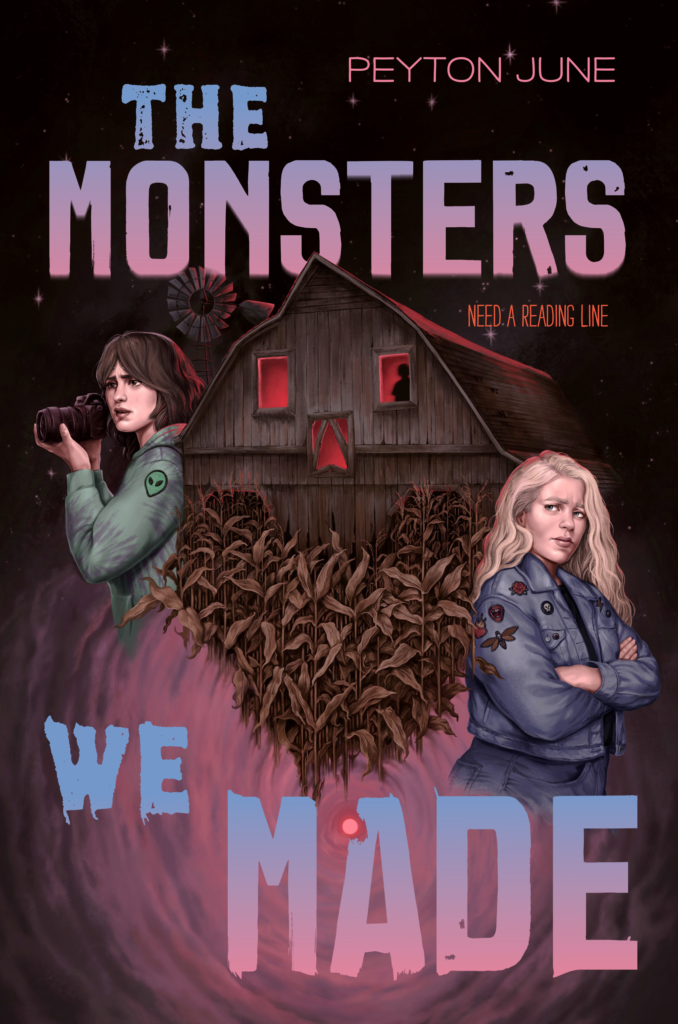
The Monsters We Made follows 18-year-old Claire, who fabricates a cryptid video to save her family’s struggling ranch, only to uncover darker secrets about her town. What inspired you to blend small-town mystery, paranormal folklore, and viral internet culture in this story?
I love ARGs and internet hoaxes! A few summers ago, before selling Bad Creek, I was very bored and considered starting a fake TikTok story about one of my dolls being haunted. I’d seen enough ghost hunting shows to know how to falsify “evidence” and it had been a while since I used my theater kid powers for evil. The challenge of convincing people was so enticing but those pasty morals got in the way. I scrapped the hoax because I couldn’t justify it. But I thought “what would justify it?” and then outlined The Monsters we Made that afternoon.
Claire teams up with paranormal vloggers to investigate the legendary alien cryptid “Old Lucky,” but their relationship is complicated by deceit, danger, and secrets. How did you balance the spooky mystery with the emotional connection and trust between characters?
Things can’t be creepy just for the sake of it. That’s my personal rule. There has to be an emotional truth behind the magical/paranormal elements. It’s always got to be about something juicier. Something more human. Bad Creek’s monster had to be ghosts because it’s actually about nostalgia! Ghosts are the past that won’t go away. In Bad Creek, everyone has this biased view of the past, so the spirits are all warped and uncanny. In TMWM the girls are lying to each other and themselves. The town is lying to itself. This monster exists because of the lies. It can only be slain with the truth. I won’t say what it is because…spoilers.
Your books often involve eerie settings and creepy discoveries — including your debut Bad Creek. How has your experience with ghost hunting and collecting antique photographs influenced the atmosphere and world-building in The Monsters We Made?
It always shocks people when I tell them I don’t actually believe in ghosts! But I love folklore. What people find creepy or threatening (or healing) is so fascinating to me. The made-up setting for TMWM is an amalgamation of places I’ve passed through on road trips. Every time I travel, I try to connect with the local ghost-hunting community. I’m also an antique shop fiend, and most places will have at least a few 19th century photos. They’re basically my souvenirs, but with the context removed. I don’t make note of where I got each one. And I don’t know the names of the people in them. But now we’re connected. Isn’t it beautiful and bizarre that a lady who died in 1878 in Tucson is now pinned to a stranger’s bulletin board in Seattle? Ghost-hunting, and antiquing as taught me we’re not that far removed from the past. People have always been people. And most people are total weirdos.
The novel touches on themes like family survival, small-town legends, and what drives us to create or believe in myths. What do you hope readers take away about truth versus fiction — especially when fear and desire collide?
In both Bad Creek and The Monsters We Made, the protagonists have their beliefs flipped upside down, which I think is part of growing up. You realize your parents were wrong. Your best friend is an asshole. Your evil teacher wasn’t actually so bad. You see ways you were mistreated. You start to see the American myth unravel. Might as well throw some monsters in there. I was raised religious, and I’m openly queer now but was deeply homophobic when I was thirteen. Realizing “wait, gay people aren’t evil and neither am I” was just as scary as seeing a ghost.
One of the most traumatic thing about being a teenage girl is feeling like no one ever believes you. Though Lenny and Claire have very different motives at the beginning of the book, they have that in common.
Paranormal vloggers Lenny and Evan bring internet fame, doubt, and uncertainty into the search for Old Lucky. In a world obsessed with viral content, what questions or commentary were you interested in exploring about authenticity, online personas, and what happens when stories “go viral”?
I started posting my art (and my life) on Instagram and Tumblr in 2012. I never got as much attention as Lenny’s YouTube channel but I felt pressure to conform to strangers’ expectations. I never faked a relationship but I did avoid changing my hairstyle (and coming out) for “brand consistency.” Once I spiraled over a follower saying they wanted my life. I felt like a fraud, because I didn’t even want my life. I didn’t know the difference between my true self and my brand. When everything you do exists online it can feel cringe to change. It’s even worse when your life is monetized. I did not enjoy my time as teenage influencer, and it worries me that so many kids want that job! But it’s become a necessary evil to get your art out there. I don’t have any definitive answers. And I don’t want to be preachy. I mean, my screen time stats are embarrassing. I just hope this book will help readers rethink their relationship with the internet. I hope they question what they believe about themselves.
INTERVIEW: YA SH3LF