
Nashae Jones is an author and an educator. Her books COURTESY OF CUPID and AS YOU WISH have received numerous honors including Kids’ Indie Next selection, a KNEA Reading Circle selection, an Indigo Book of the Month, an Amazon Editor’s Pick, a New York Times Year of Books pick, among others. Her young adult debut THE BECKETT EFFECT will be out summer 2026.

The Beckett Effect centers on Wren’s plan to expose her school’s notorious playboy by making a documentary about him — but things get complicated when she starts seeing a different side of Beckett. What inspired you to blend romantic comedy with documentary filmmaking as a device for storytelling, and how did you develop that concept?
I’ve always loved rom-coms that feel playful, but sharp, stories that are essentially romances at their core, but also ask real questions about power, perception, and who gets to control the narrative. Filmmaking felt like the perfect segue into the metaphorical concept of framing. Narrative framing is intentional in the way you choose what to show and what to leave out. Positioning Wren, a Black girl, as the person in control of the framing and as someone who seizes agency in the book was really important to me. Wren is someone who believes in the truth, but also believes in storytelling as a tool.
Beckett Lane has the reputation of being irresistible — “The Beckett Effect” — yet Wren believes she’s immune. How did you approach writing a character who challenges the “perfect guy” trope, and what themes about perception, reputation, and authenticity were important for you to explore?
Beckett Lane was really fun to write, because the original idea stemmed from a “what if” scenario–what if John Tucker (from John Tucker Must Die) wasn’t the villain? What if he was just misunderstood. So, the idea of Beckett was where the entire story originated. Beckett is also interesting because his reputation does much of the work on the page before he even enters the book, and for teenagers reputation is currency. And even though Beckett has a reputation that “flatters” him in ways, it also flattens his character creating that “John Tucker” stereotype of a playboy or someone who is “perfect.” I love subverting archetypes, because contradictions always help flesh out a character that comes out feeling too singular. Beckett is the trope of “the playboy/the admired guy”, a persona that people have created for him, including Wren. Part of Beckett’s journey in the book is reckoning with who he is outside of the other people’s perception. Themes of authenticity and perception were huge for me with this book. With both Wren and Beckett you get mirroring journeys of who you perform as in front of an audience versus who you actually are.
Revenge plots often begin with a strong emotional motivation but evolve into something more complex. How did you balance Wren’s desire for justice for her sister with her deepening personal feelings, and what did you want readers to take away about hate versus attraction?
Revenge plots are fun with me, because they are Shakespearean at their very core. Wren’s motivation for revenge is deeply selfish, as most revenger’s motivations are (here’s looking at you Hamlet and Inigo Montoya). Even when Wren frames her revenge as righteous or objective, there is still the hint of villany in what she’s doing. With that being said, the contradiction of romance lives side-by-side with Wren’s deeply emotional need to protect and avenge her sister. The balance comes from letting Wren be honest about what she’s feeling. She’s allowed both accountability and space to grow in the book. As for hate vs. attraction, enemies-to-lovers, will forever be my favorite trope. I think both hate and attraction/love are so interchangeable, because they both require passion and vulnerability. Both also require attention and emotional investment. I wanted readers to see growth doesn’t come from pretending one feeling supersedes another in importance, but growth comes when you sit with discomfort of holding both and choosing empathy over revenge.
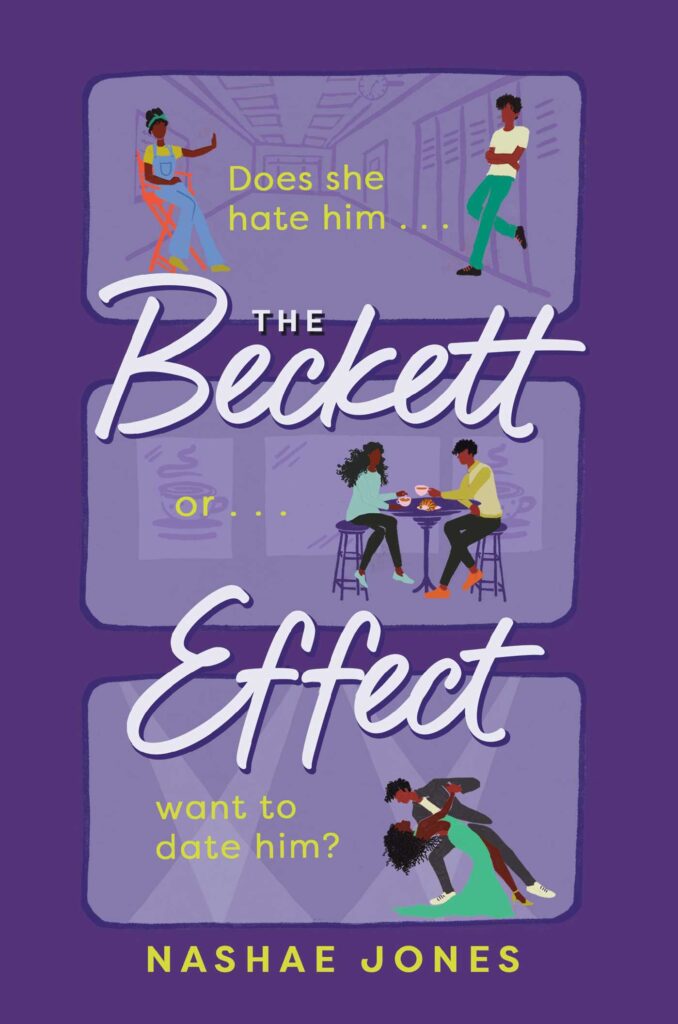
Your background as an educator and advocate for diverse, joyful representation in kidlit informs much of your work. How does The Beckett Effect continue your mission to create fun, character-driven stories — especially with a Black female protagonist navigating romance, family, and filmmaking?
Joy is political, especially during the times we are currently living through. And especially for Black girls. I wanted Wren to exist in a story where she gets to be ambitious, messy, funny, romantic, and talented without her identity being framed as a burden or a lesson.
My background as an educator really shapes how I write teens. I respect their emotional intelligence and try to give them the space to make mistakes and grow. In the story, Wren is navigating family dynamics, creative pressure, romance and the morally gray areas of teenage girlhood all at once. And this felt very true to this age group.
Fans of YA rom-coms often compare new titles to classics like John Tucker Must Die or Clueless. Were there specific pop culture influences or movies that helped shape the tone and humor of The Beckett Effect as you wrote it — and how did you make it uniquely your voice within the genre?
I was definitely heavily influenced by the early noughties rom-com energy. As I said earlier, this whole story idea came from a spin on John Tucker’s character. I appreciate movies like Clueless and John Tucker Must Die for the marriage of humor and the underlying social commentary on what it is to be a teen. I think what makes it uniquely my voice is subversion of the 2000s stereotypes, fleshing out characters that might have felt one-dimensional. I wasn’t interested in nostalgia for nostalgia’s sake. I wanted to remix the rom-com DNA with contemporary conversations about agency and narrative framing.
INTERVIEW: YA SH3LF