
Megan Davidhizar is a young adult author and an English teacher with experience in grades 8-12. She grew up moving around the Midwest and graduated summa cum laude from Purdue University. She now spends her mornings wishing she liked coffee, her days learning from the students in her English classroom, and her evenings reading stories to her three children while her husband tries to convince them the movies are better. Miraculously, they are still happily married.
Your novel Gaslit opens with a seemingly mundane babysitting job that unravels into a life-or-death mystery involving a gas leak and questions about memory and intention. What was the seed of this story and how did it evolve into the full thriller?

I tend to come up with the ending of my thrillers first, and then I have to work backwards to make them work. This book was originally dual POV as well, so when I switched it to one, I had to change it so Ella was the one who entered the house. The idea of gaslighting and gas leaks seemed to work so well together, so the real challenge was placing all the clues in between!
The protagonist, Ella, is dealing with a diagnosis and recurring migraines, which complicates both her self-trust and what others believe about her. Why did you choose this layer of physical vulnerability and internal doubt for your lead character and how did you balance suspense with character empathy?
When I was crafting Ella’s character, I really considered why someone gaslighting her about the gas leaks would hurt so acutely. I’ve had some of my own experiences with medical gaslighting, and I know it’s an issue many people deal with, so it fit together quite easily. I always find myself more invested in stories with emotional depth, so I work to weave that into my stories too. If I can make a reader gasp and cry, I’ve done my job. Executing that is not easy. As much as possible, I try to have Ella’s internal conflicts with her health affect her the most during revelations in the mystery, that way I don’t have to sacrifice one for the other.
One of the core tensions in Gaslit is the question of what is an accident and what is malice. How did you map out the structure of clues, red herrings, and revelation in the story? Did you find yourself rewriting major beats as the mystery sharpened?
I am a big outliner and have to have the big moments of my story mapped out before I begin. The problem is, I am a major underwriter, so I often struggle to write those pieces in between the major beats. And wouldn’t you know it, those are the places clues and red herrings need to fall. I usually have to put place holders in and add clues and red herrings in each subsequent draft. As I mentioned, I took this story from two POVs to one, and then also moved most of the events from the second half to the first half. It picked up the pace in the beginning, but it also meant plotting a lot of new events and red herrings. No wonder it took me over a year! The revelations stayed the same, but nearly all of the events surrounding them changed.
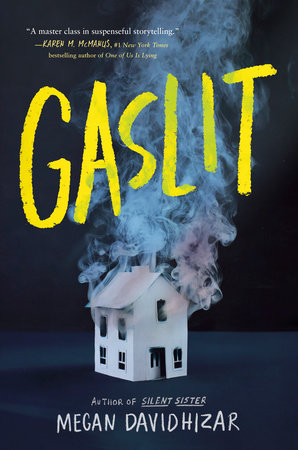
Your previous novel, Silent Sister, also deals with secrets, disappearance, and unreliable perspective. What new challenges did you face with Gaslit compared to your previous work? What did you learn from Silent Sister that helped you with this new project?
I think I started off trying to make Gaslit too much like Silent Sister. I wasn’t sure I had it in me to create a whole book from just one POV. I also loved how the tension of past and present played a role in Silent Sister, so I had some flashbacks and fast forwards in the first draft of Gaslit too. I really stretched myself in the revision by relying on a linear timeline and only Ella’s POV, but it really allowed me to delve into her trauma and experiences. However, I will always love an unreliable narrator. My favorite part was once again crafting scenes where the reader can go back with a fresh perspective after they finish the book.
Thrillers aimed at YA readers often risk either oversimplifying emotional stakes or over-complicating plot mechanics. How do you walk the line between high-tension suspense and meaningful character development? What do you hope young readers take away from Gaslit beyond “what happened”?
As a high school teacher, I have a daily front row seat to students’ emotional depth. I couldn’t sacrifice that if I tried. The bigger challenge for me is the suspense. As I said, I often don’t give myself enough twists in my first outline and drafts; only through multiple drafts and revisions can I keep the pacing taut. While drafting, I struggled to get out of my head. I felt like I had to fix it all on my own. Instead, I found success after repeatedly reaching out to trusted writer friends and getting their feedback. I wrote some of that journey into Ella’s arc, and I hope readers will see the value in trusting others with their struggles instead of trying to carry the burden themselves.
INTERVIEW: YA SH3LF