
Lygia Day Peñaflor is the critically acclaimed author of Creep: A Love Story, All of This Is True, Unscripted Joss Byrd, and Beautiful to See You (Again). Her novels have been published around the world in over a dozen languages. She lives on Long Island with her husband, where she rides horses and flies from a trapeze.
Beautiful to See You (Again) asks a deeply human question: What if you could revisit the happiest time of your life? What was the initial spark for this story, and why did you want to explore grief through the lens of speculative fiction rather than a purely contemporary narrative?

This story came from many different sources, some very personal, some wholly invented. One spark began when I was a student at Columbia Teachers College. I used to imagine a sad girl wandering around campus, missing her lost love. Strange, I know! When I thought of her again in recent years, I knew that I should probably write about her. One day a video popped up on my feed, something like “A Day in the Life of a NYC Dogwalker.” Suddenly, I had the full idea for Tia’s character and was ready to start writing!
I grew up loving movies with time travel like Somewhere in Time, Peggy Sue Got Married, Chances Are, Forever Young, and Back to the Future (which gets a big nod in the book!). I’d never written magical realism before but wondered if I could pull it off. For Beautiful to See You (Again), I felt that Tia’s preoccupation with the past would come across more strongly if she could actually revisit the summer with her boyfriend Natty, rather than have her simply obsess over those memories. It turned out that I loved writing the time travel scenes. And it did serve Tia’s story well—it was definitely the right choice.
Tia finds herself caught between the past she cannot let go of and the possibility of a new future. How did you approach writing a protagonist whose greatest obstacle isn’t simply loss, but her reluctance to move forward?
I knew I had to create an unforgettable first love with an unforgettable boy who was impossible to get over. Thankfully, it was pure joy to write Natty Poole! His voice, his personality, and the way he made Tia feel came very naturally to me. As I wrote Natty’s scenes, I felt sure that my affection for him would translate to the page and readers would adore him as much as I did. If I made Natty lovable, readers would understand Tia’s inability to let him go.
The magical arch in Central Park allows Tia to revisit memories, making time travel feel more emotional than fantastical. How did you develop the “rules” of this speculative element, and what did those limitations allow you to say about memory, regret, and acceptance?
I wanted to keep the “rules” of time travel as simple as possible: no sci-fi lingo, no complicated explanations, no mathematical calculations. I didn’t want to take away from the storyline or the flow of the everyday language, so I needed a natural, plausible portal. I also wanted the magical elements to be as realistic as the rest of the novel. I chose Huddlestone Arch in Central Park because it’s a real place that’s truly magical in person. I barely had to change it at all!
Soon after Tia’s first visit to the past, she becomes determined to change history. She goes back through the tunnel again and again, at the expense of her physical and mental health. This shows that her regrets and her grief are literally killing her. She can’t live this way forever.
Your novels consistently explore complicated emotions with remarkable tenderness, and this book seems especially cinematic – with NY in autumn, filmmaking, and nostalgia woven throughout the story. How did atmosphere influence your writing process, and were there particular films, books, or pieces of music that inspired the emotional tone of the novel?
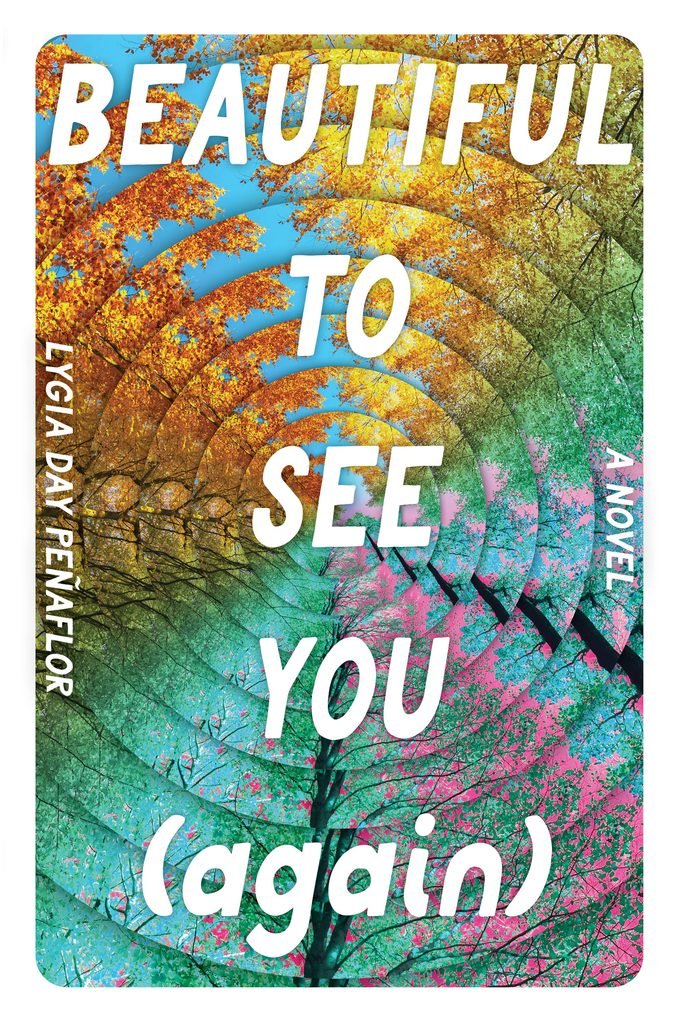
The setting is definitely its own character in this novel. Autumn in Manhattan brings up mixed emotions for me. I love New York City in the fall. But when I was a student there, I was already teaching at the time, so I used to rush to class and then rush right home. I didn’t get to enjoy the campus or the area at all. I really missed out. I’m still sad about that. I guess I brought those feelings into the tone of Tia’s story.
The cinematic feel of the city suits Razor, the film student. He wants the movie he’s making to have a crisp, colorful Reiner/Ephron autumn, so of course When Harry Met Sally . . . was very important to his storyline. As far as music, I had a theme song for each character. When I had trouble focusing on writing, I would play a character’s song to pull me back into their headspace. It worked wonders! Natty’s theme song was “Today” by Smashing Pumpkins, Razor’s was “Got You (Where I Want You)” by the Flys, and Tia’s was “That I Would Be Good” by Alanis Morissette. Tia’s song could really knock me into her dark place. I could feel her emotions and think her thoughts immediately.
Razor enters Tia’s life at a moment when she’s emotionally anchored to someone she has lost. Rather than presenting love as a simple replacement, the novel seems to suggest that healing and new beginnings are much more nuanced. What conversations about love, grief, and second chances did you hope to invite through these relationships?
The moment a book is published, it’s no longer mine alone, so I like to leave any conversations or takeaways up to readers. Tia’s story has deep personal meaning to me, of course, but I don’t know what it might mean to anyone else. But I will say that although Razor has the potential to be a real hero, this is definitely not a “love will save the day” romance. At one point, Tia says that she’s hungry for something. Even at her lowest point, she has an inner desire to live fully again. She has to find healing and courage from within. She has to fight for her own second chance.
You’re written contemporary thrillers, psychological dramas, and now a speculative romance centered around loss and hope. As a writer, how has your creative process evolved over the years, and what do you hope readers will carry with them after turning the final page of Beautiful to See You (Again)?
Writing a novel is hard every time because each book presents different challenges, so I can’t tell how my creative process has evolved. Beautiful to See You (Again) was the most difficult novel for me, so it didn’t feel like my skills had evolved at all!
What do I hope readers will carry with them? I don’t write to teach lessons or instill messages. I only want to tell stories as well as I possibly can. But so much of this novel is about memory, and so I do hope that readers will remember these characters. I would love for someone to walk through Central Park one day and think of Tia, Natty, Razor, and the dogs from Central Bark.
There’s a sign in Central Park that I quoted in the novel: Please carry out what you carry in. I don’t know how it’s relevant here, but your question reminded me of this, and I think there’s something to it. Make of it what you will!
Click here to learn more about BTSYA
INTERVIEW: YA SH3LF