
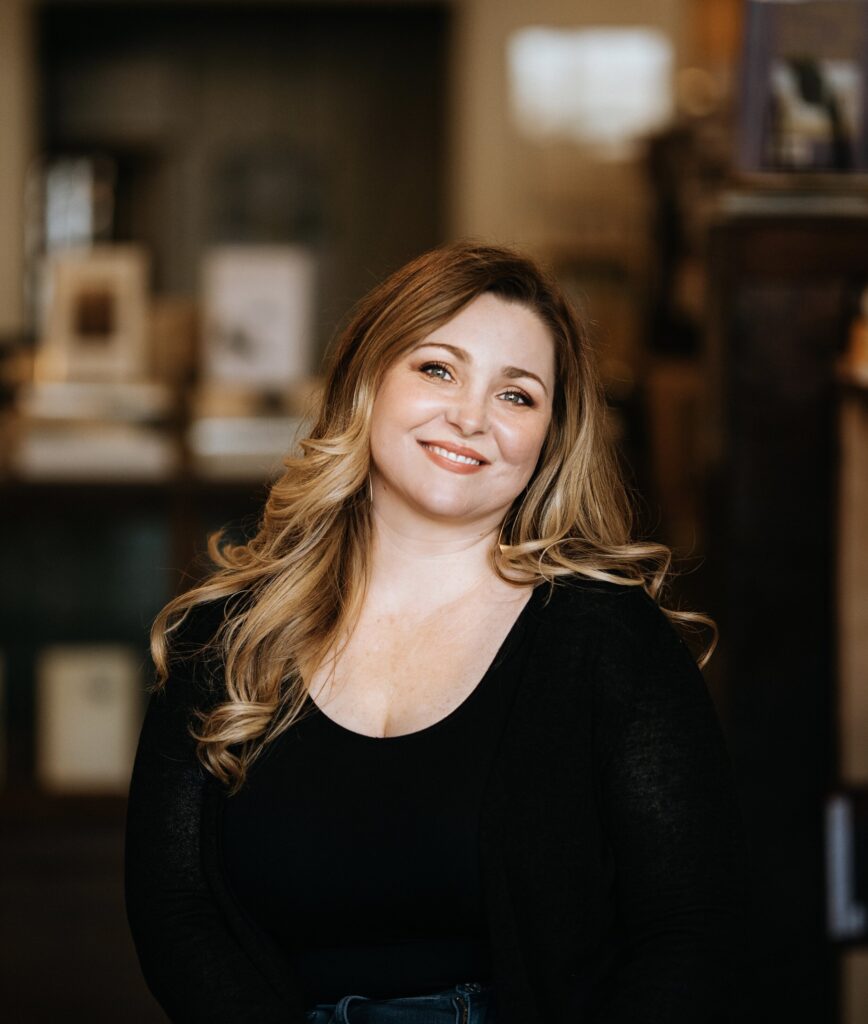
Kristin Dwyer is the author of SOME MISTAKES WERE MADE, THE ATLAS OF US and IN TIME WITH YOU. She grew up under the California sun. She still prays every day for a cloudy sky. When she’s not writing books about people kissing, she and her partner can be found encouraging their four overly opinionated children to get into trouble. Kristin is a part-time hair model and a full time opinion giver disguised as a freelance creative editor. If you get too close to her she will show you photos of her dog, despite you asking her not to. Please do not talk to her about your fandom, she will try to join.
In Time With You blends speculative elements with a deeply emotional romance and grief story. What inspired you to use a time-loop-like mechanism to explore themes of loss, love, and second chances, rather than a strictly realistic narrative?
Doesn’t everyone think about going back in time at least once? The question of, “if I had just done/said something else, would it all be different?” is always something I’ve considered. I hate how final some things are, and I find that it makes us feel like the things that aren’t are permanent. Sorry, that’s really esoteric. Simple answer? Magical sheep are cute.
Nieve’s relationship with her late boyfriend Carter and his best friend Max creates a powerful emotional triangle. How did you approach the delicate balance between honoring grief and allowing new love to grow — especially when the stakes involve time and memory?
When it comes to the way we love another person the stakes are always high. Even if it’s not life or death. I think we are drawn to those kind of concrete stakes because it provides justification for our intense feelings. Love is all consuming. It takes as much as it gives. I feel like the best way to honor that balance is to lean in. I have a quote next to my desk from Charles Bukowski that says, “Find what you love and let it kill you.” I try to live my whole life like that and I try to write books that encompass that completely dramatic quote.
Art, color, and sensory detail are important motifs throughout the book, particularly through Nieve’s perspective as an art student. Can you talk about how you used artistic imagery and symbolism to deepen the emotional experience of the story?
I have two kids who are incredible artists, a sister who is an illustrator, another sister who is a songwriter and musician, another one who is an actress, and another who is an incredible reader. (Yes, I am bragging) I use art a different way, but it’s so clear that art helps us make sense of the world. None of us can help the pieces of ourselves that end up in art. Whether its someone creating or consuming. If you’re the creator, your life influences what you put out, and if you’re the consumer, the lens you see the world through colors all the ways you internalize a story, a song, a painting. That is what is so incredible about art.
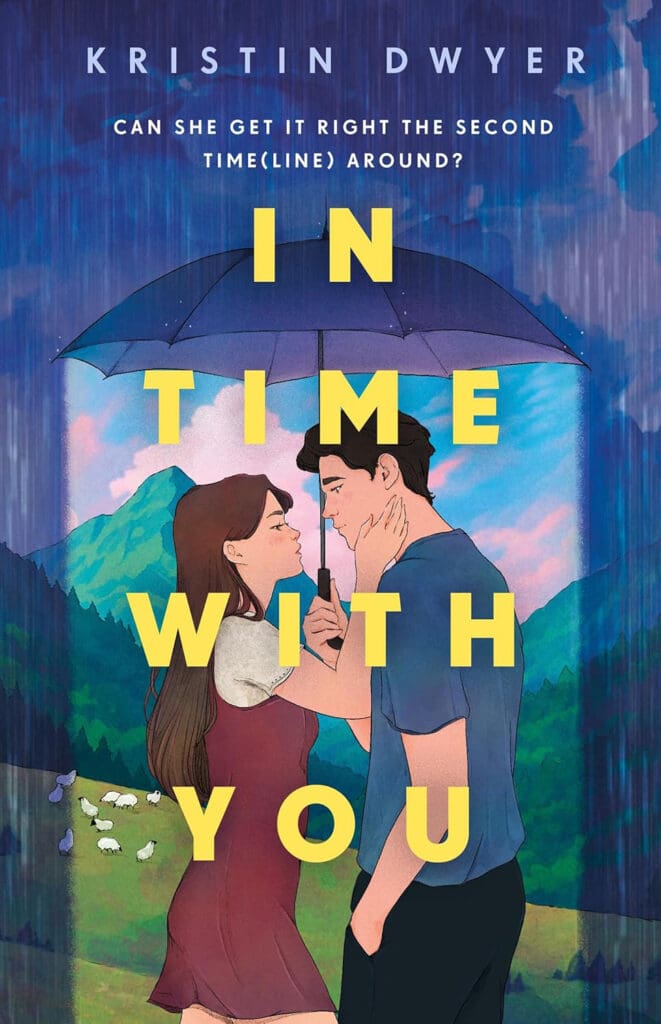
Nieve’s grandmother plays a role in introducing the magical or uncanny elements in the story. How did the idea of family lore and superstition influence the tone and magical realism in In Time With You — and did you draw from any personal experiences or traditions?
I have crocheted for a really long time. I can remember where I was when I made blankets and scarves and beanies. I remember who I was, and what I was thinking, the things I struggled with. I always felt like there was something so final about looping a stich. Like it caught time inside the threads and kept it there. So… I created a whole magic system around it.
This is your third novel following Some Mistakes Were Made and The Atlas of Us. In what ways did your approach to character development or emotional stakes evolve with In Time With You, especially given its themes of grief and healing?
Nieve is so different than Atlas and Ellis. All of my characters are grieving, but in totally different ways. Ellis is angry and guarded. Atlas is… well same. But Nieve, she’s hopeful. She feels responsible in a way the other two didn’t and I just really wanted to write a character who though she knew what she wanted/needed only to realize, sometimes the thing you want isn’t the thing you need.
The book has already been compared to Before I Fall and You’ve Reached Sam for its time-bending and emotional depth. How do you think YA speculative romance allows you to tackle real-world emotions like guilt, regret, and self-forgiveness in ways traditional romance might not?
Like I said earlier, spec-romance lets us take these deep and intense emotions and justify them so that we feel like we have permission to feel them. Books in general give us a safe space to feel all of those things, but then the fantastical tells us we can feel fantastical about them. I love speculative stories because it allows us to go to the end of our big feelings without being embarrassed, but also, I hope one day, people give themselves permission to feel like that, no matter the circumstances.
INTERVIEW: YA SH3LF