
What happens when the person who has always felt like an outsider suddenly finds herself in a world where survival is everything?
That’s the question at the heart of Jo Salazar’s YA horror novel If We Survive the Night. Originally self-published as The Dead Weight, the novel follows sixteen-year-old Quinn as she tries to survive a zombie outbreak alongside her best friend, Keisha.
Salazar grew up in west-central Illinois and has had a lifelong love of horror and zombies. After self-publishing her first two novels, her work caught the attention of Sourcebooks Fire, leading to a three-book publishing deal. If We Survive the Night is being released under its new title on August 25, 2026.
If We Survive the Night places the beginning of a zombie apocalypse inside a residential treatment center for “troubled” girls, which immediately gives the story a very different emotional perspective from traditional survival horror. What inspired you to center the novel around girls who are already marginalized before the apocalypse even begins?
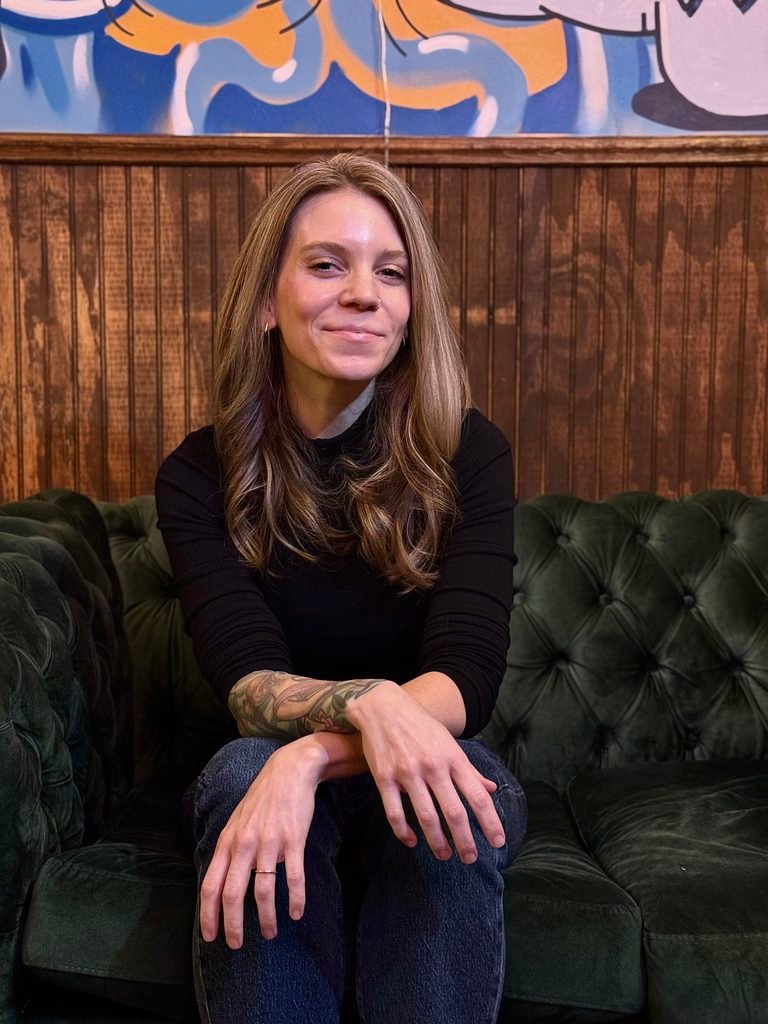
I’ve always loved rooting for the underdog and stories about unlikely survivors. Most of those stories tend to give us a hero’s journey with a main character we can empathize with and cheer for, which I adore! But when I was thinking about the story I wanted to tell, I imagined characters who were hard to love, impossible to look away from, and uniquely suited for the end of society as we know it. That’s how If We Survive the Night’s cast of characters was created. These girls push the readers’ empathy to the brink, and I think that makes for great discussions and debates and teaches us a lot about ourselves as we read. I’ve always loved the moral dilemmas that zombie apocalypse stories present to us—that’s why it’s my favorite genre!
Quinn is a fascinating protagonist because she enters the story already feeling disconnected from the expectations society places on her emotionally and psychologically. How did you approach writing a character who begins to feel more “alive” and capable precisely as the world is collapsing around her?
In an apocalyptic scenario, I always imagined that most people would cling to the way things used to be and feel desperate to get their old lives back. But Quinn has spent the last few years feeling caged, suppressed, and thrown away. She’s spent her whole life trying to fit into the world and failing. So, when I imagined how Quinn would feel when the world failed instead of her, I pictured her being activated, not damaged by the apocalypse. To Quinn, watching all the rules of society crumble is a relief. For me, personally, that’s a terrifying idea, so in order to write from Quinn’s point of view, I often had to ask myself, “Okay, Jo what would you do/think/say in this situation?” and then write Quinn doing or saying the exact opposite, haha!
The novel has been compared to both The Last of Us and Yellowjackets, but it also seems deeply interested in the psychology of survival and the moral compromises people make under pressure. When developing the story, were you more drawn to the external horror of the apocalypse or the internal horror of what survival can reveal about people?
I’m always thinking about what hard times reveal about people, so the psychology of survival was definitely my primary focus. While I’m no longer practicing, at my core, I’ll always be a social worker. I’ve seen what hard times can do to us. I’ve watched people unravel and self-destruct, and I’ve also seen them rise above it all. It’s fascinating to me. I think a zombie apocalypse is the perfect backdrop to explore all the intricacies of that.
You’ve spoken previously about your background in social work and your experience working in residential treatment settings. How did those real-world experiences shape the emotional realism of the characters and the group dynamics inside the facility?
My early-career experiences definitely shaped this story. I’ve worked in a residential treatment center and I think that helped me create an imaginary setting that still feels authentic. While none of the girls in this story are based on actual patients I’ve worked with, years of supporting teenagers helped me patch together characters who, while often exaggerated to the extreme, felt very real and familiar to me.
The relationship dynamics were especially interesting to write. In a confined environment like a residential treatment center, I’ve seen girls become close, like sisters, and sometimes vicious enemies. I’ve seen them take on parental roles with younger girls. I’ve also seen them fall deeply in love with one another. I wanted to capture all of that as I shaped the dynamics of the Pegasus Center. It felt important to represent that as accurately as I could. I’ve had a few young people who have lived in residential treatment centers reach out to me to tell me how real the Pegasus Center felt. That meant so much to me!
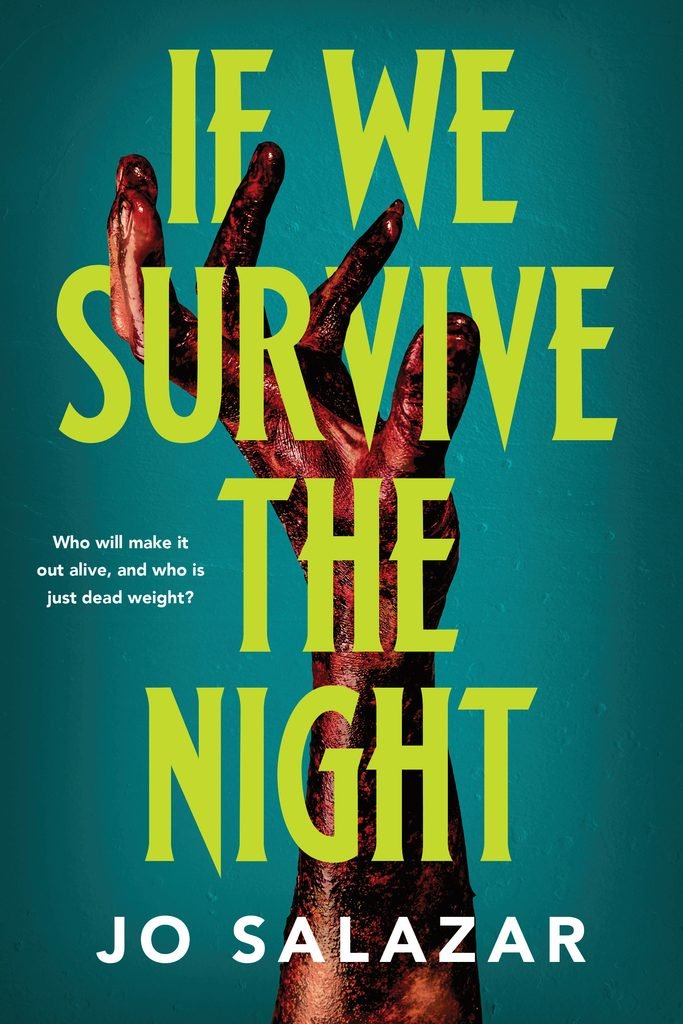
The idea of “dead weight” becomes both literal and symbolic throughout the story, especially as Quinn questions how much she is willing to sacrifice to survive. What conversations or ethical questions were you hoping readers would wrestle with as the characters’ choices become increasingly extreme?
A lot of Quinn’s choices are unsettling, but she always seems to have a logical reason for doing what she does. My hope is that readers find themselves in debate over Quinn’s decisions. Is she a villain or not? Was she justified, or did she take things too far? Are Quinn’s feelings for others genuine, or are all her relationships self-serving? Can she grow and change? Should she? One of my favorite things is hearing from readers, and they’ve had no shortage of thoughts about Quinn! Some readers talk about her as if she’s a total badass. Some are repulsed by her. Others feel deep empathy for her. Those strong feelings—one way or another—were exactly what I was hoping readers would feel.
When writing If We Survive the Night, what inspired you creatively during the drafting process, what do you hope readers ultimately take away from this story, and what kinds of stories or themes are you most excited to explore in your future work?
I had so much fun drafting this story and I was very inspired by the places I was raised. I spent my entire childhood growing up on the Illinois River and the places mentioned in this book were very real places I’ve visited over and over. Each location had history. That made this story so much more personal and that drove me to keep going. I love writing about places that feel familiar to me, and I think I’ll keep doing that. In the future I have more story ideas that take place in Illinois and a few that take place where I currently live in Chicago. Maybe someday I’ll branch out beyond zombie apocalypse stories, but I don’t think that day is coming anytime soon. I love it here, and it feels like home.
Ultimately, I hope readers close this book and wrestle with their feelings about it for a good long while. I hope it feels unsettling. I hope they want to talk with their friends about it. And I hope it leaves them wanting more… because the sequel comes out soon!
INTERVIEW: YA SH3LF