
Daniel Tawse grew up on the northeast coast of England, specifically in Northumberland, where he spent his childhood exploring the outdoors and writing diaries about his experiences. He studied Musical Theatre at the Arts Educational Schools in London and holds a master’s degree in History from the University of Northumbria. His personal experiences and reflections often inspire his writing, particularly in the context of queer representation.
This Book Will Make You Cry centers on Iggy retracing a Mediterranean holiday after a traumatic drowning accident and memory loss. What inspired you to write about memory, trauma, and reconciliation in the context of a queer summer romance?
I think that memories are essentially stories we tell ourselves about who we are, so I thought it would be interesting to create a character who is suffering from memory loss and has lost themselves at this fundamental level. I guess that’s where I began: the idea of this big mystery hanging in the sky. The trauma element appeared as I got to know Iggy better. It hadn’t occurred to me they were suffering from PTSD until I was about halfway through telling their story and realised their behaviours coincided with this condition. It’s funny how a character can show you things this way. I guess reconciliation felt necessary after so many dark themes and the romantic element provided a good balance of light and dark within the story. I like to think of TBWMYC as a story that includes darker subject matter told in an accessible way, and a queer summer romance felt like the right space to tell it in.
The journey in the book takes Iggy and their parents through places like St. Tropez, Rome, and Paris. How did you choose these European settings, and what role do they play in reflecting Iggy’s internal landscape and healing process?

I chose these destinations because I love them. I’ve spent many a happy summer in the south of France, and I have the best holiday memories in Rome. For me, the setting of a summer holiday plays a big part in Iggy’s healing process. Like Iggy, I was lucky enough to go on holidays when I was younger and so summer always represented a time for change, a time when I could perhaps be someone else. Everything was different, from the scenery to the people, the friendships to the daily routines, and so I could be different too. I think that once Iggy’s external landscape changes their internal landscape can do the same. Summer forces Iggy to think differently and this shift in consciousness allows them to begin their healing journey.
Iggy’s physical vulnerability (their near-drowning) and emotional uncertainty intertwine deeply with their queer identity. How did you approach writing a protagonist who is both fragile and resilient, and why was it important for you to give them that complexity?
I always begin journaling as a character. Then I might sketch their bedroom or imagine their first time on a bike. I might draw their favourite pair of woolly socks and the pins they wear on their school tie, or I might write a poem they wrote in English Lit class when they were in year seven or paint a picture of their first Christmas memory. If I really know a character then whatever situation I create for them I believe I’ll know how they’ll respond. It’s so important they feel real to me; I want every decision, every heartbeat and every eyelash flutter to feel authentic, this way all of their vulnerabilities and strengths are there for me to see before I begin plotting. I spent a long time getting to know Iggy before I wrote a single word of TBWMYC. It was important to make them seem real because creating authentic, queer characters is important to me.
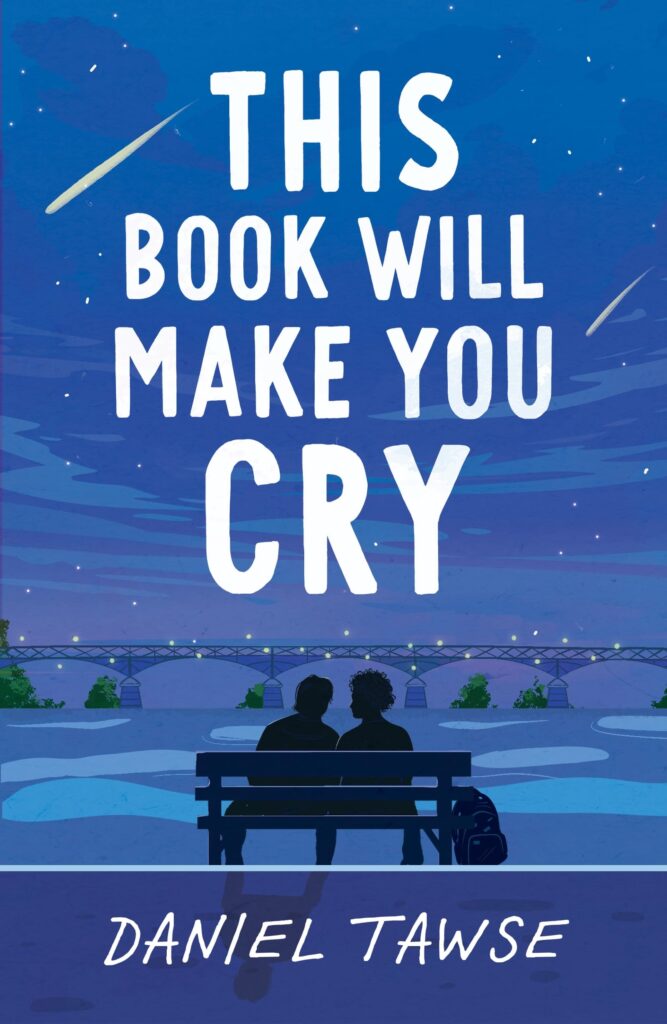
The book deals with grief, memory, and self-discovery – and it has been described as “heart-wrenching” by readers. What was your process for balancing emotional intensity with moments of joy and hope? Were there scenes you found particularly difficult to write?
As far as process goes, I tend to cobble together a first draft and then feel my way through the manuscript, getting a sense of when I can be lighter and when more drama is need, and I add and subtract as necessary. I actually tried something different this time and started at the end. I wrote the moment where the character learns the truth and then went back to the moment they began their quest to find it. Once I had something down for the bigger plot points, I then identified where quieter moments were needed. I guess the hardest scenes to write were the anticlimactic scenes where Iggy has discovered the truth. It’s such a huge truth to uncover, and the journey to get there has been so intense, and so the aftermath had to be the right balance of information and resolution. Iggy is undoubtedly changed but they also have to be OK in the new place they’ve found themselves in. It was tricky to get it right. I hope I did.
You’ve said in past interviews that you turned your teenage diaries into stories and write to increase queer representation. How does This Book Will Make You Cry reflect your own journey or beliefs about visibility, belonging, and the way queer identities evolve through trauma and healing?
I certainly still rely upon my teenage diaries for inspiration, and queer representation in fiction for young people is certainly very important to me, but I look forward to a day where queer storytelling isn’t wholly focused on identity. For me, visibility is about representing a full spectrum of experiences so that a character’s identity isn’t the main focal point. I believe the more queer characters that exist the less the focus will be on identity. This is what I hope anyway!
INTERVIEW: YA SH3LF