
Alex Sanchez has published ten novels, including the American Library Association “Best Book for Young Adults” Rainbow Boys and Lambda Award-winning So Hard to Say.
His novel Bait won the Tomas Rivera Mexican-American Book Award and the Florida Book Award Gold Medal for Young Adult fiction. You Brought Me the Ocean, his graphic novel from DC Comics, was illustrated by Julie Maroh. Alex’s newest book, The Greatest Superpower, came out in 2021.
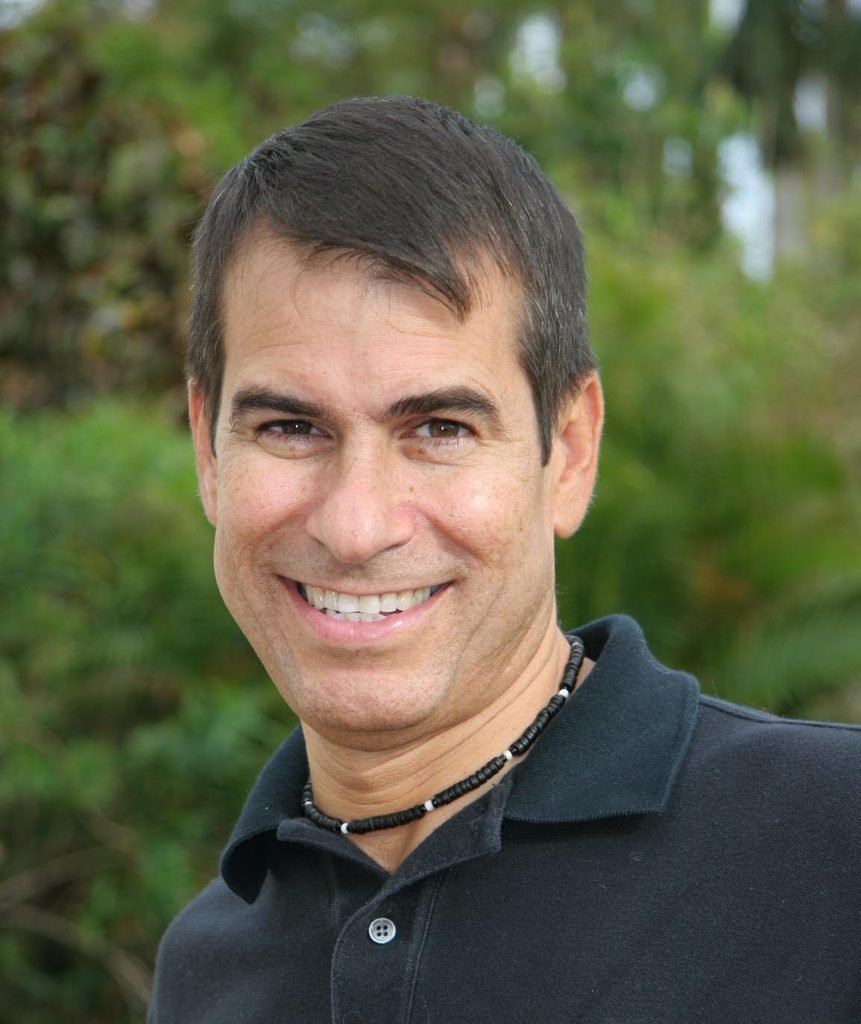
Alex has a master’s degree in guidance and counseling and worked for many years as a youth and family counselor.
Rainbow Boys was first published in 2001 at a time when LGBTQ+ characters were rarely portrayed positively in young adult fiction. Looking back 25 years later, what do you remember about the moment you realized the book might be groundbreaking for YA literature?
Within weeks of Rainbow Boys release, other YA writers emailed me saying the book had broken publication barriers to their own LGBTQ+ books. It was then I realized my book was setting off something much bigger than itself. I was amazed. I hadn’t tried to be groundbreaking, I was just writing a positive and honest portrayal of queer young people. As it turned out, Rainbow Boys helped create the seismic shift in YA lit where today it seems like almost every teen novel has at least one LGBTQ+ character.
The novel follows Jason, Kyle, and Nelson as they navigate identity, friendship, and first love in high school. What inspired you to tell the story through three different perspectives, and how did that narrative choice help you explore the complexities of coming out?
I knew that for many queer kids, coming out is a gradual process–first we realize we’re different, then we often wrestle with those differences, until eventually-hopefully we come to accept and love ourselves for who we are. One way to dramatize that gradual process was by portraying three boys at different points in their coming out. Jason realizes he’s attracted to guys but is struggling to accept himself, Kyle is out to himself and friends but not to his family, and Nelson is out to anybody and everybody. Those three different perspectives allow readers to experience what growing up queer can be like.
You’ve said that you wrote the kind of book you wished you had when you were a teenager. How did your own experiences and internal struggles shape the emotional core of Rainbow Boys?
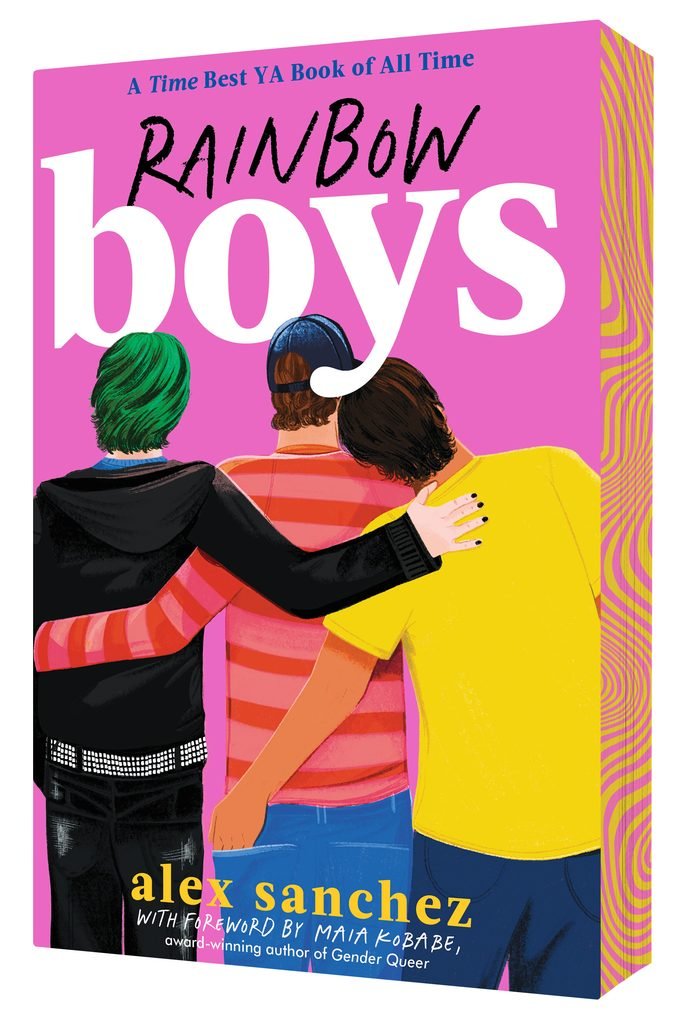
The book is all about me! (Just kidding, well, sort of.) When I was growing up I was Kyle, wanting to find someone to love, in my case a boy like me. I was also Nelson, wanting to find someone who would love me. And I was Jason, longing to be able to love myself. Those three universal aspects of being human form the book’s emotional core. They’re what readers connect with, regardless of age, gender, or sexual orientation.
Over the years, the book has received both praise and challenges or censorship in some communities. How have those reactions influenced your perspective on the power of young adult literature to spark conversations about identity and acceptance?
The praise has been wonderfully validating. It’s what every writer yearns for. But I never expected my books, along with other writers’ positive portrayals of LGBTQ+ young people, to have so much power to spark challenges, protests, and even legislation to limit free speech and access to books. Our stories simply portray the reality of queer kids. Despite efforts to suppress that reality, we need to keep supporting all of our kids with access to stories that present an honest and true picture of our diverse world with books that inspire, empower, and give hope.
As you celebrate the 25th anniversary of the novel, what has it been like to see how LGBTQ+ representation in YA literature has evolved since Rainbow Boys first appeared on shelves?
It’s been exhilarating and fascinating! In a way, the story’s three boys are analogous to the evolution of YA’s LGBTQ+ characters. Jason is representative of the first queer characters to appear in teen books, lonely and believing something was wrong with him. Kyle is typical of characters in Rainbow Boys’s cohort, books with positive queer portrayals that accurately identify the true problem as homophobia. And Nelson’s character is perhaps YA lit’s earliest example of a LGBTQ+ teen who is out and proud of who he is and doesn’t care who knows it!
If today’s teenagers are discovering Jason, Kyle, and Nelson for the first time through this anniversary edition, what message or feeling do you hope they carry with them after finishing the story?
Have courage and be true to who you are.
Read more about Rainbow Boys HERE
INTERVIEW: YA SH3LF