
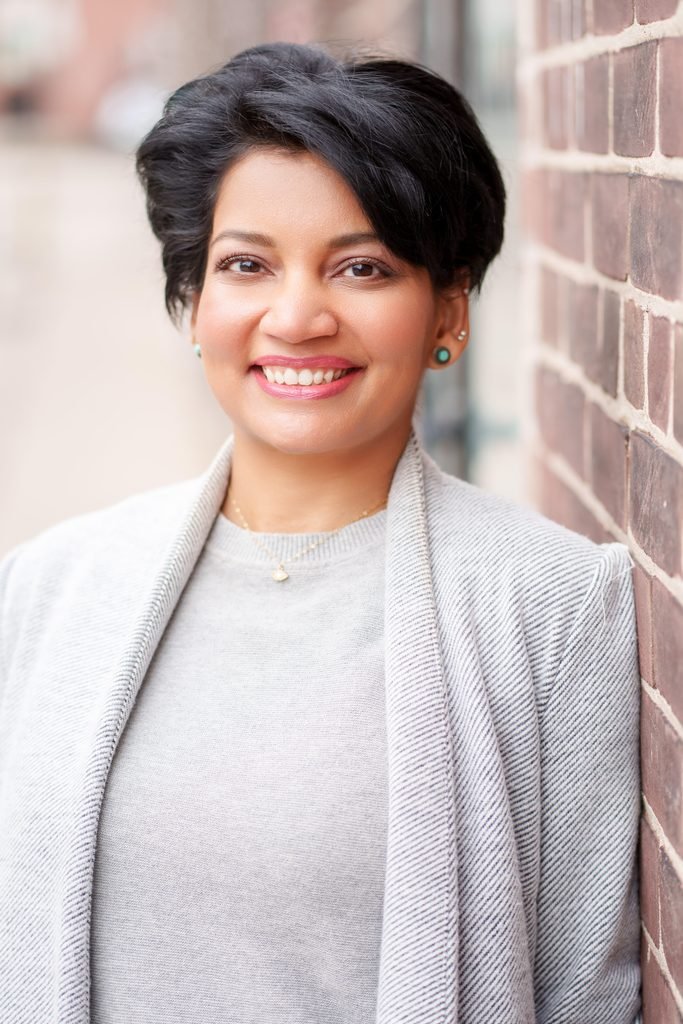
Salma Hussain is a Canadian writer based in Toronto. She holds a B.A. (Hon.) in English Lit. (with a concentration in creative writing), as well as a LL.B and LL.M in law.
In addition to writing her own widely-published prose and poetry, Salma also writes reviews and interviews emerging & established writers, almost exclusively championing writing by underrepresented voices from indie presses. She volunteers her time as a Grants Director for Canthius literary journal and is a fiction reader at Ex-Puritan.
Her writing has received funding from Toronto Arts Council, Ontario Arts Council and the Canada Council of Arts. She has served as a jury member for both the Toronto Arts Council and the Canada Council of Arts. In the summer of 2020, she was selected for the BIPOC TV & Film program led by John May and Nathalie Younglai which led to a position in the writer’s room for Potluck Ladies (Yes TV). She was also a panelist for Toronto’s inaugural Muslim Literary Festival in 2023.
She currently co-hosts an international podcast with Upasna Kakroo on South Asian children’s literature (Peerbagh: Zubaani podcast).
It’s Not Over Yet follows Wali Khan as he faces a life-altering brain surgery and the possibility of permanent hearing loss, all while navigating the ordinary challenges of being a teenager. What first inspired this story, and what drew you to explore such profound questions about mortality and identity through the perspective of a fifteen-year-old boy?
I wish I could tell you that I pulled this story from thin air. Really wish so! Unfortunately, I went through two serious surgeries myself. When I was first diagnosed with my benign tumour and told that I needed emergency surgery, I entered a very scary, dark place. Recovery from my first surgery took place during Covid19 – at a time when everything already felt more intense.
During that time, I confided in a former neighbour, who told me that her daughter, Natasha, had undergone three major brain surgeries before the age of sixteen.
Natasha and I started talking and bonding over our experiences, though we were decades apart. Then I started writing scenes and snippets, and Natasha became my first reader. I chose to tell the story from a fifteen-year-old boy’s POV because the scenes and emotions were too close for Natasha and myself. Initially, I wasn’t even sure that I’d share the completed manuscript with anyone outside Natasha. I thought maybe this is a story just for the two of us. However, by the time I completed a solid first draft, it was clear that the story no longer belonged to either of us. It had become Wali’s story, and it felt right to let it find its readers.
Wali is a passionate film buff who begins to “turn the lens” on his own life as his surgery approaches. Why was filmmaking such an important part of his character, and how did that creative perspective influence the way you structured or narrated the story?
I wasn’t all that confident that I could write a fifteen-year-old boy. But what I did feel more confident about writing was a fifteen-year-old boy who was interested in film-making. That I could do!
Film-making is an important part of Wali’s character because it reveals him as someone who is not only a sensitive thinker, but a thoughtful creator. Like many teenagers, he’s trying to make sense of his place in the world and what better way to showcase that than by making him someone who is interested in artfully arranging sliced up scenes into some semblance of ‘story.’ For me this was an analogy about how we assemble our memories to make sense of a life.
Wali’s interest in film-making allowed me to pull in Bollywood movies and his inner conflict with his ‘mother tongue’ and identity. It also let me play with readers’ expectations about what a story centred on illness and trauma should look like. Wali is not defined by his diagnosis – he still thinks about movies, language, family, friends, crushes and everything else that makes up a life.
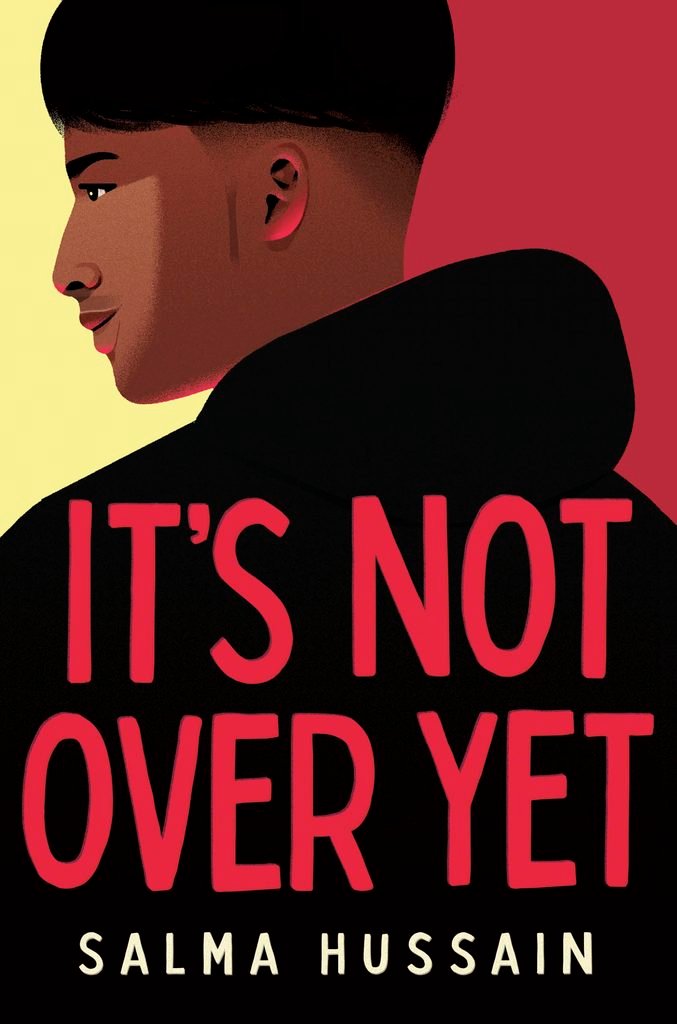
One of the novel’s most compelling aspects is its balance of humor and heartbreak. Despite dealing with serious medical uncertainty, the story is described as warm, witty, and hopeful. How did you approach finding that emotional balance during the writing process?
I don’t set out to be overtly funny in my writing. It just somehow happens. Anytime a scene gets too sad or intense, my brain naturally goes toward levity, and I feel compelled to write in a joke or introduce some comedy. The older I’ve gotten, the more I’ve needed to balance out the serious with the silly on the page. How or why this happens is honestly just as much a mystery to me as it is to you.
Wali comes from a multicultural family with a Muslim father, a Christian mother, and two older twin sisters who are equal parts loving and exasperating. How important was it for you to portray family not only as a source of support, but also as a complicated, imperfect, and deeply human force in a young person’s life?
I personally feel that it’s such a disservice to young people when writers conjure up perfect families in literature. The representation of perfect families is not why the vast majority of young readers turn to books – most young people who turn to books are looking for stories that function as mirrors for the messy complications in their own lives. This is certainly why I read books voraciously as a child. I was looking for someone to say ‘you’re not alone in this; you can get through this; it’s going to be ok.’ Family dynamics are messy, flawed, human. Why not show the full picture? It could quite literally save someone’s life, and this is why I choose to do it.
Your previous novel, The Secret Diary of Mona Hasan, was praised for its authentic voice and emotional honesty. As a writer, what did you learn from that experience that you carried into It’s Not Over Yet, and how has your writing process evolved between books?
Great question! The Secret Diary of Mona Hasan was my first book baby! I had so much fun writing it because it’s told in the feisty, funny, inquisitive voice of young Mona Hasan. I learnt so much from this experience. So far, each novel has taught me what I can do well and what I still have yet to learn. For my second book, I wanted to challenge myself to do a few things differently – this time around, I built a richer ensemble cast, I gave each character their own depth and backstory (this was less possible with TSDMH because it was in diary format and thus focused on Mona’s POV), I created more “plot” and “conflict” in this story, and while It’s Not Over Yet is very much Wali’s story, there are also very compelling subplots with the supporting characters and their own emotional journeys. Overall, the novel is more layered and though there are a lot of serious topics in here, it’s oddly more joyful (or feels that way to me, anyhow).
My writing process evolved to welcome in many more beta readers, to welcome feedback and criticism with more of an open-mind and to read more from the subgenre I’m writing in (i.e., I read a lot of recently published YA novels that explore themes of surgery and emotional trauma).
At its heart, It’s Not Over Yet seems to ask how we continue living fully when the future suddenly feels uncertain. What do you hope readers – especially young readers facing their own fears, challenges, or unexpected detours – take away from Wali’s journey by the final page?
I hope all readers (but especially young readers) find this book to be a safe space for the feelings that come up if (and/or when) they’re ever hit with a health crisis (either their own or a loved one’s). When you’re dealt with a health crisis or encounter a loved one’s, there’s anger, shame, and a lot of fear.
However, what I also know to be true is that with time and perspective, one moves through and past those emotions toward a new normal. I hope the takeaway from this book is that if you give yourself enough time, if you just keep going – you will move past the darker feelings. Along the way, there will be moments of deep joy that will progressively get longer and longer until joy and gratitude become more or less a constant baseline. Past the darkness is an appreciation for what one has weathered and survived (or is still actively weather-ing and surviv-ing), and there is a deeper empathy for the struggles of others.
More than anything, I hope readers close the book feeling a little more hopeful about their future.
INTERVIEW: YA SH3LF