
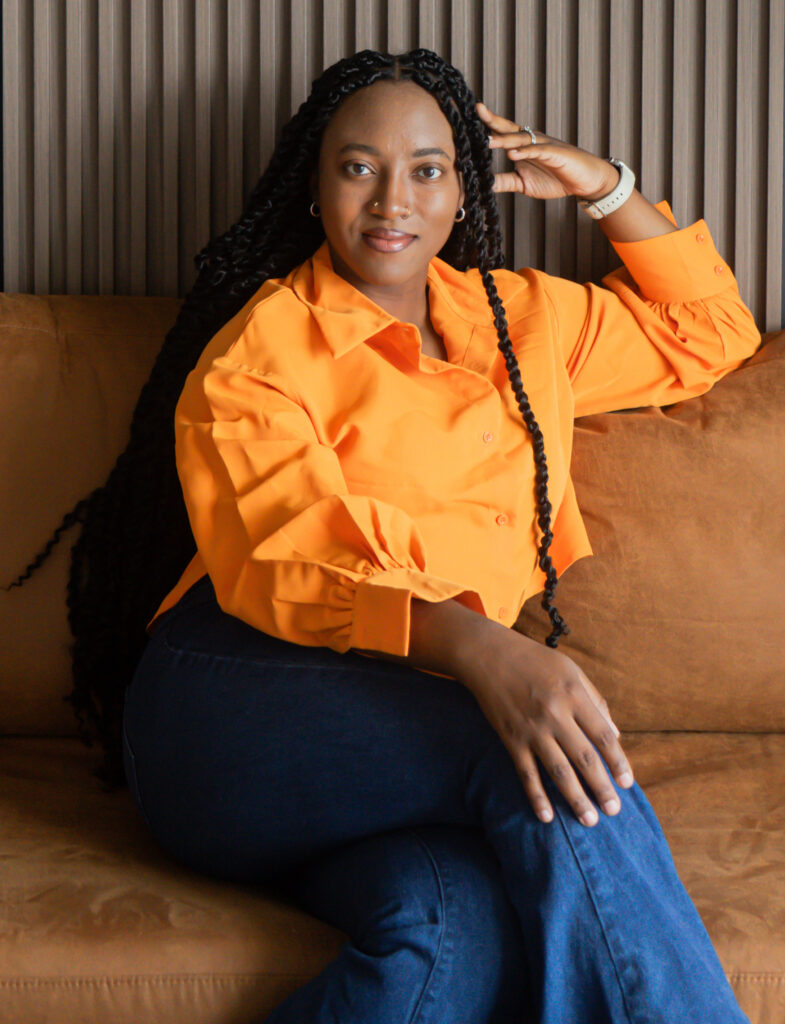
DeAndra Davis is an award-winning neurodivergent, Jamaican-American author who lives somewhere in the mountains. Her critically acclaimed books include ALL THE NOISE AT ONCE and THE LOVERS, THE LIARS, AND ME. When she isn’t 100%’ing video games and reading worlds more interesting than the one she lives in, she’s being distracted by her too many kids, dogs, and songs from Wicked on her phone. Her claim to fame is that her Florida man birthday headline features an alligator and a drive-thru and that is very on brand for her.
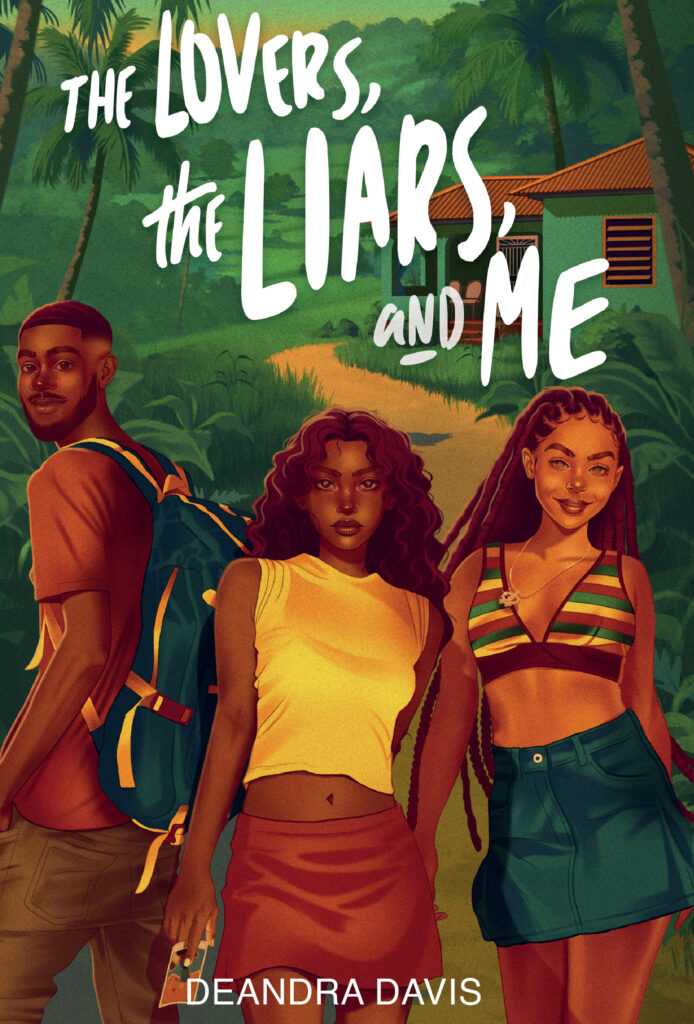
Your novel The Lovers, the Liars, and Me follows Jaliya Powell as she travels to Jamaica to uncover answers about her absent mother, only to discover much more about herself — and fall into a complicated love triangle. What inspired you to set this story in Jamaica, and how did the island’s culture and landscape influence Jaliya’s journey of identity and self-discovery?
I’m actually Jamaican, though most would officially say Jamaican-American because I was born in the United States, I have identified more strongly with being Jamaican because my entire family on both my maternal and paternal sides are Jamaican immigrants. I’m the first-generation to be born in the States, and though I was raised here, I was never raised in a traditional “American” sense. My family was still so rooted in their culture having come from Jamaica, that them being here didn’t do much to change them. That created an interestingly singular experience for me growing up that I wanted to explore with Jaliya’s character.
I knew it needed to be in Jamaica because of the things I wanted to question and confront, like homophobia and diasporic isolation. What does it feel like when you identify with something that others you? That was a question I wanted to answer.
Jaliya starts the summer as someone who has “never had a real adventure” and is used to fading into the background, yet this trip challenges her in every way possible. How did you approach writing her growth from a reserved valedictorian into someone willing to take risks — both emotionally and personally?
I talked a lot to people that are a bit more reserved than I am. It’s funny, as I’m actually an introvert but I am still adventurous. I’m not the type to not take a risk. I’m willing to push boundaries and step out of line, so Jaliya isn’t like me at all. It was very interesting getting in her head, but I have had moments of wanting to stick to something safe even when I knew I deserved more. So, I really focused on who I could put around her and what situations I could put her in that would push her, not into being someone else, but into being the person she was always capable of becoming if she simply unshackled herself a bit. She really had to learn what she was willing to cling to and let go of, and that’s an important lesson for anyone healing. She had to heal to let go of her fear.
The book weaves together Jaliya’s search for family history, her evolving relationships with her cousin and childhood crush, and her unexpected connection with India. How did you balance these intertwined themes of family, romance, belonging, and secrets, and what do you hope readers take away from how Jaliya navigates them?
I thought a lot about how those things didn’t need to be separate from each other. Truthfully, it’s all based in love. Jaliya loves her mother, her cousin, her friends, her culture—all of the things. It was her learning how to love all of those things in a way that was healthy and right and safe for her while also realizing that she needed to learn to love herself as much as she was loving everything and everyone else.
My hope is that readers come to understand living in your truth no matter what that looks like. Even if it’s quiet or private. Even if you aren’t in a space where you can be loud. You’re still you, and you still need to love and accept you. You don’t have to perform queerness or culture to prove it to others. Do it however you want to so that you can feel safe and loved (by others and yourself).
Representation of diverse identities — including neurodiversity, Blackness, and queer relationships — is an important part of your work as an author. How did your own background and perspective shape the way you portray characters and relationships in The Lovers, the Liars, and Me?
I thought a lot, for this story, about my first queer relationship which was in high school. And it was stressful, because my family is very religious. We were raised deeply in the church and my brother attended school with me—he was older. I had to figure out how to hide that relationship from him when our circles were so close. How to dodge not just him, but his friends, in school. I was stressed and I hated it. I wanted something different for Jaliya without removing the reality.
I think that’s kind of my brand. How can I give my characters maybe a hope or even a potential future that I wasn’t able to access while still confronting the realities and difficulties of the situation. How can we find safe spaces, safe people? How can we be brave when it’s hard and when we’re scared? How can we show up even when we may not want to? How can we set boundaries to protect ourselves? (Plot twist: I was a horrible boundary setter in my teens).
This is your second YA novel following All the Noise at Once, which dealt with family, identity, and systemic challenges. In what ways did your approach to character development or thematic focus evolve with this book, especially given its coming-of-age and romantic elements?
The first time I drafted this book, I got the plot right. The second time, I got the character right. I think, especially because my first book didn’t have as many romantic elements, I had to figure that plot out properly before building out the character. When I figured out Jaliya’s fixations, dependencies, and flaws, I was able to then go back and build more depth into the story with that in mind. It altered a few things, but it made it much richer. She wasn’t tarot obsessed in the first draft. She wasn’t as anxious. With my debut, Aiden came to me so clearly and his voice was so strong. With this book, I had to learn Jaliya more and that was a fun experience for me. I felt her voice was important especially for kids in that stage of transition when you’re going from being dependent to a life of independence (like graduating high school).
Jaliya faces complicated relationships with family, old crushes, and new love interests — all while confronting unanswered questions about her mother. What was your process for creating authentic emotional tension in these relationships, and were there particular scenes or moments that were especially meaningful for you to write?
I think a lot of my favorite scenes are with India, Andre, and Shevaughn. Which feels like a cop out, because they’re all over the book, but I really do think of this book as a found family endeavor. She’s looking for love while being surrounded with it. I had to do a lot of revising to get the love triangle right. That was the hardest part, but I will say two of my favorite scenes are the ice cream heist and Shevaughn’s confession. They’re very different tonally.
The ice cream heist is just beyond hilarious. I had a ton of fun writing it. I love the dialogue and interactions and the way they come together in such a silly way to get themselves out of trouble. I also love the little romantic moments in that scene that build that tension. It was a blast to write.
The Shevaughn scene is harder, but heartfelt, honest, and raw. It confronts some difficult truths that some may not want to admit. It also required me to be critical of my own culture that I adore. It made me have to say, hey, this is something we are still lacking with. Sometimes it’s hard to do that, and on page. But he and Jaliya connect so deeply after that. I’m also a huge fan of their later conversations related to that, particularly the “test drive metaphor”. 🙂
Read more about The Lovers, the Liars, and Me HERE
INTERVIEW: YA SH3LF