
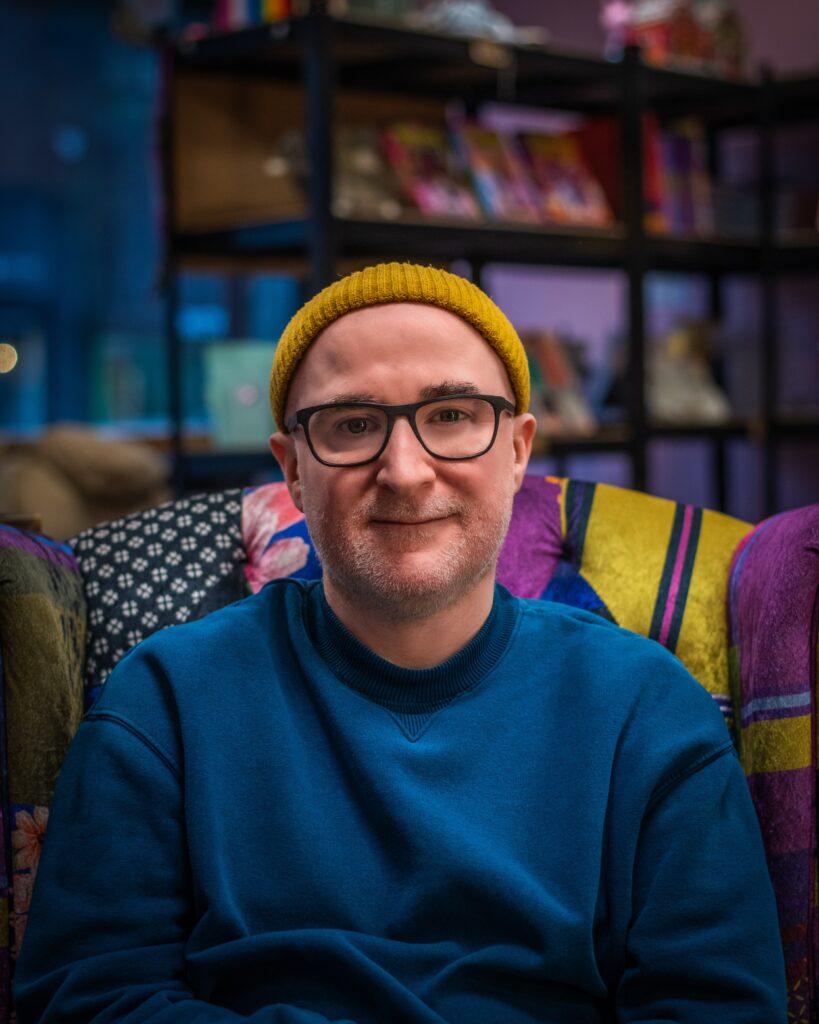
Stephen Daly is a queer author and photographer from Belfast, who has always been passionate about how people make sense of who they are and where they are from. He grew up around stories and worked as an actor before many other jobs in theatre. Eventually he realised he was circling what he actually wanted to do – tell stories.
He loves writing for teens and young adults, as that is the time in life when we start to make sense of our place in the world, and begin to see it as it is or how we want it to be. He hopes his stories give an insight into the world of people that are like you, or a way to learn something about how others might see the world.
Urban fantasies like The Last Death Poet allow a reader to imagine what could happen if there was a little magic in the world, and how folklore and the old stories continue to flow in our veins.
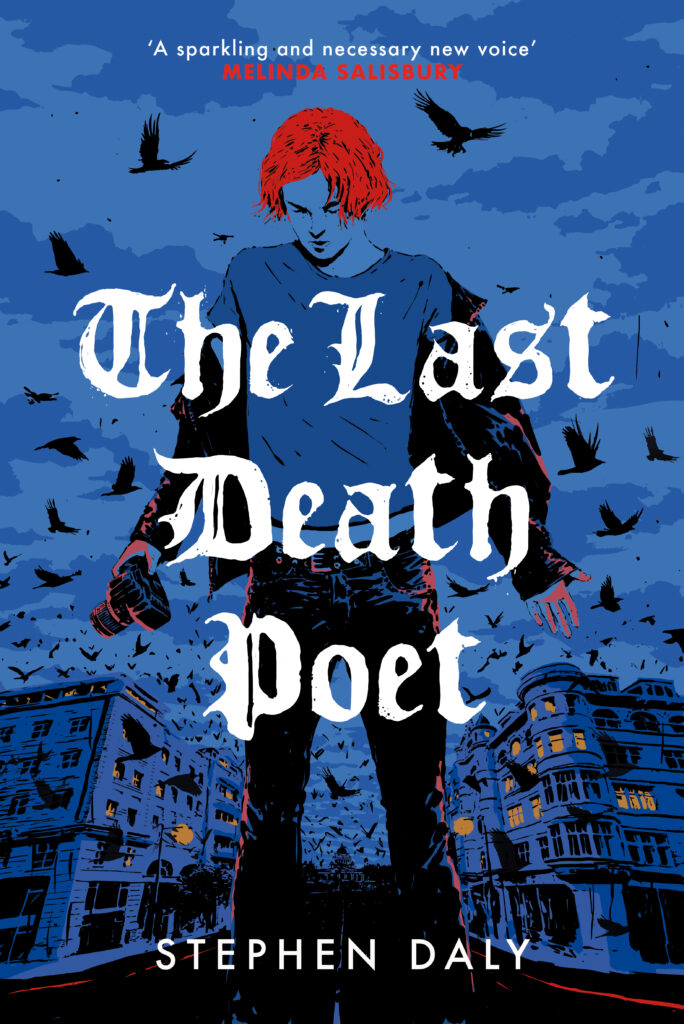
The Last Death Poet blends queer coming-of-age, paranormal elements, and the historical weight of Belfast. What first inspired you to tell a story where personal identity and supernatural visions intersect with the city’s political past?
I never thought I would write a story about the Troubles or the politics here; a big part of my early adult life was spent trying to get away from that (just like Michael’s parents). It’s a part of me though. It’s impossible to write a story here without it being political, as our identities are politicised from birth. I love the supernatural, and it’s a huge part of Irish culture. Ghost stories and tales of goddesses, giants and fae were part of my upbringing. I wanted to bring together these two aspects of culture to see how a folklore rich in battle and blood would intersect with the violent echoes on the streets of Belfast.
Michael experiences visions of Belfast’s troubled history while searching for answers about his father’s disappearance. How did you approach weaving together a family mystery with the broader historical memory of the city?
The book is about the emotional and mental toil that comes from keeping secrets. I was interested in how that ‘say nothing’ culture during the Troubles continues to police our culture on the macro and micro level and how that can be an aspect of transgenerational trauma. Michael’s family are hiding things that they are unable to speak about. That’s not every family’s story here, but it’s enough to see that together we have a city filled with unanswered questions and unhealed wounds. The perfect place for someone with the power to see what people have tried to hide.
You’ve mentioned that the idea for the novel began after seeing news reports about unrest near where your family lived in Belfast. How did that moment shape the themes of history, generational memory, and unresolved conflict in the story?
I had a very visceral reaction to that news story. I was filled with concern for my nieces and nephews, not for their physical safety, but for the fact that they would have to normalise civil unrest and violence. Belfast has changed so much, but it’s haunted by the horrors of the past and that anger can resurge in ongoing generations. I wrote the story to explore the Belfast that young people here have inherited, as well as what they are carrying within them from the generations who lived through the conflict.
Irish mythology and supernatural elements play a significant role in the narrative. What drew you to incorporate folklore into a modern Belfast setting, and how did you balance myth with contemporary realism?
I love myth and folklore. It tells you so much about a culture; how our ancestors made sense of the world and how that in turn formed the culture we inherit. We have a rich tradition of storytelling here, and magic and the supernatural were part of my upbringing. I am a huge fan of urban fantasy, in which the supernatural bleeds into the contemporary because it can heighten the tension and themes of a story. This a book about death, family and storytelling; these are ancient themes, so calling back on their link to ancient powers raises the stakes and I hope it can give a sideways view on a lived reality that could otherwise be hard to look at.
As a queer writer reflecting on growing up in Northern Ireland, how did your own experiences influence Michael’s journey of identity and belonging in the novel?
While the book is not autobiographical, I did gift Michael with a few of my issues, then helped him start to work through them. Michael keeps his sexuality a secret not because he doesn’t trust his family to support him, but because he has learned to hide parts of himself, to people please, to pass. That is something I experienced in my own life, and I know can be a big part of the queer experience for many young people (and adults). This carried in to even the choice of partner he has and who he is attracted to. When we meet Michael, he is in a ‘situationship’ with his ‘straight’ best friend who insists that Michael keeps it a secret. He accepts this, as he feels he doesn’t really deserve more than that and is used to keeping himself in the shadows. I’ve been there, it’s painful and I wanted Michael to learn how detrimental it can be to be someone’s secret, and for any readers who might find themselves in that pattern.
Your novel mixes mystery, romance, history, and paranormal fantasy. What does your writing process look like when bringing together such different genres while maintaining a strong emotional through-line for readers?
My writing process is writing way too much, drawing on what I love from various genres and then trying to include everything that interests me. It is then my agent and editor who have to help me reduce and streamline that into a story that can fit into one 300-page book. The key thing though is to create a fully formed character, with flaws, wants, needs, passions and fears. If I know everything about that character and the ones around them and what they would do, then they can react in a believable way no matter what I throw at them. So, character first, and then I can let my imagination run. I plot loosely, go deep on character and then see what happens to them.
INTERVIEW: YA SH3LF