
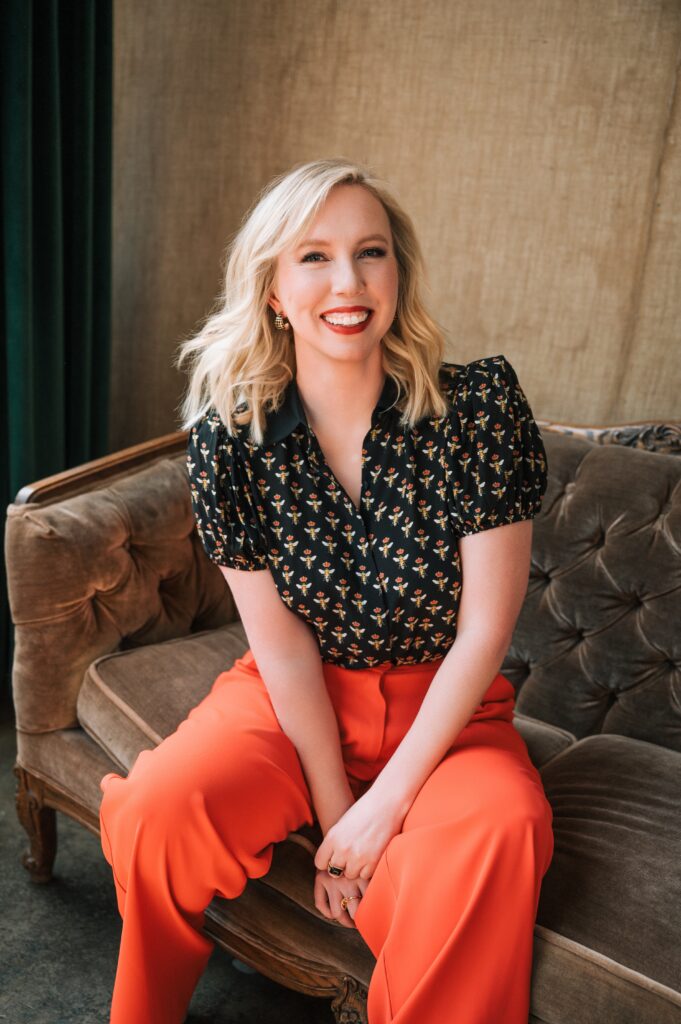
Rebekah Faubion is a queer author and screenwriter living in Los Angeles. Author of rom-coms The Lovers and The Sun and the Moon, the chilling young adult speculative thriller Lost Girls of Hollow Lake, and the spine-tingling horror What a Nightmare, out fall 2026. She enjoys reading tarot, bingeing horror novels way past her bedtime, and thinking up places to bury the body—for the plot, of course.
“Lost Girls of Hollow Lake” features a group of teens returning from a horrific school trip and gradually discovering that someone—or something—is hunting them. What inspired you to combine teen drama, survival horror, and mystery in one story, and why did you choose the setting of a remote island in the Pacific Northwest?
From the beginning, I always saw this book as a young adult story, so the angst, the emotion, anger, all that teenage drama really just existed by the nature of writing a book about teenage girls who get lost together on an island. Getting to know them through main character Evie’s eyes was so fun, because she’s an introvert loner but she is also extremely observant, which made her a great protagonist to take us on this journey where every detail matters.
The setting and the survival horror really go hand-in-hand. I wanted to create my own fictional national park because I wanted to make the setting exactly what I needed it to be for my story—create my own mythology, my own history, without worrying that I was getting anything wrong. The Pacific Northwest felt like a place where this kind of national park could exist. I love the moodiness that location brings, the air of enchantment about those old growth forests. When the girls get lost, they’re dealing with not only the bizarre mechanics of this island that seems to exist only some of the time, but the actual real danger of being lost without food and water or any survival skills themselves. There was much to work with, and it all really drew us back to the themes of survival and isolation that permeate this mysterious tale.
I have always been drawn to stories that have mystery at their heart—so this was a dream come true for me to write. Lost Girls of Hollow Lake has a lot of layers meant to keep you guessing. It’s all driving the narrative forward, and, I hope, keeping readers on the edge of their seat.
The narrative alternates between the traumatic events on the island and the tense aftermath back home, with a mix of psychological and supernatural terror. What influenced your decision to use this dual-timeline structure, and how do you think it affects suspense and the emotional impact on readers?
I love when dual-timeline is used to not just keep the reader in suspense, but also when each timeline can stand on its own as a narrative. This book had to be a dual timeline because I knew I wanted to show readers what happened to the girls when they were lost in the island, while also giving them this punchy, pacey slasher story in the present.
I think this timeline structure serves to keep the reader—not only in suspense— but a little untethered, their footing in the story not as sure, and hopefully helping them connect more viscerally to the confusion and terror of the island. I wanted it to feel disorienting for readers, like it was for the girls to be lost. Those long stretches of time on the island, the wobbly way time passes there, the languish of being stuck, is then juxtaposed against the present timeline which moves fast and takes place in like three days.
The survivors — the “Lost Girls” — carry guilt, secrets, and trauma, and find themselves haunted both by memories and external threats. How did you approach writing trauma, grief, and guilt realistically in a YA thriller context?
Everybody experiences grief, guilt, traumatic events differently, so I had to first think about each of the Lost Girls as individuals. I never wanted to get too bogged down in the nitty-gritty of telling you what they were thinking or feeling. I felt like it was more important to show it through little digs at each other, lashing out, pushing each other away, laying blame, or even suspicion, until all of that created the image of five girls dealing with super intense stuff in different, potent ways.
There’s something about being a teenager that is so alive; everything feels permanent, like the biggest deal ever, and, to be honest it is the biggest deal. For a teenager often this is the first time they’ve had the experience they are having, and I don’t think they have to react reasonably or how an adult would. It’s not required. When I write teen characters I try to remember that as rule, and approach it from that perspective.
Your book blends horror, mystery, and even touches of queer romance, while featuring a diverse cast. How important is representation — in identity, sexuality, backgrounds — for you in this story, and what do you hope that diversity brings to the themes of trust, betrayal, and belonging?
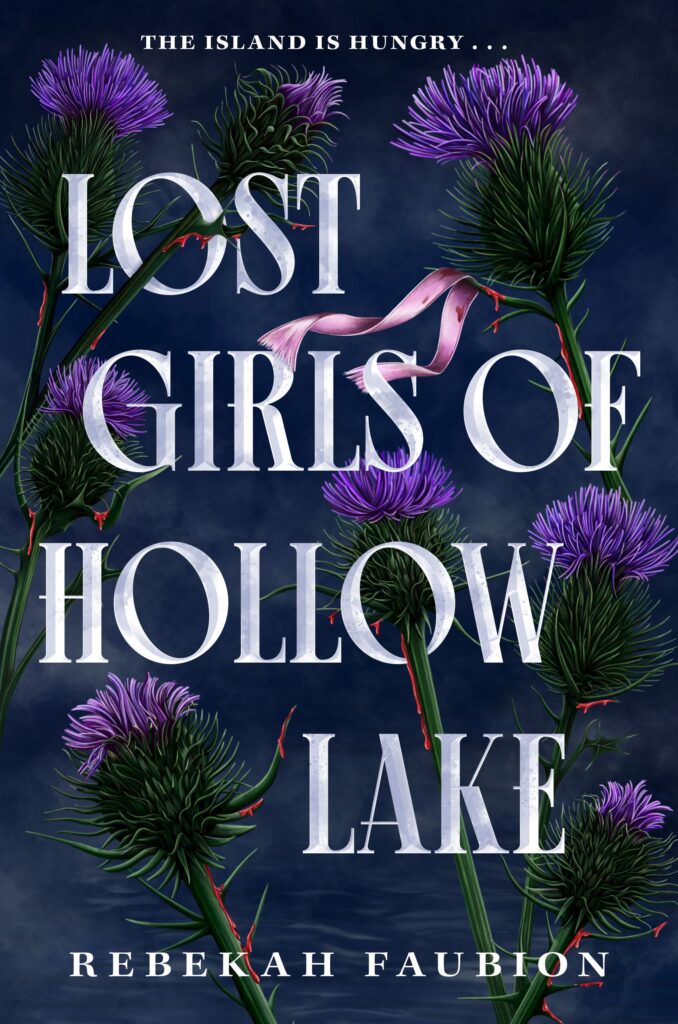
Representation is super important to me, not only because I’m queer, but because the world that we live in is diverse, and I’m not interested in writing a book that I don’t feel like is authentic, or that intentionally leaves anybody out. When I was creating the cast of Lost Girls of Hollow Lake, I knew there needed to be eight girls. I knew that was a big cast, and it was going to be a lot to juggle, but I felt it would be worth it so the cast could also be intersectionally diverse. I worked with sensitivity readers to make sure I was creating fully realized characters outside my own experience and wasn’t causing harm with the representation by leaning on stereotypes.
I think, especially in the present timeline as you see the girls come together to figure out who is hunting them the themes of trust, betrayal, and belonging fully come into play. As each of the characters interact, they are forced to examine who they are within the dynamic of the group, what they believe about each other, and what they believe about friendship. It allows a lot of growth for all of them, not only the POV character, Evie.
Writing horror and thriller often involves balancing fear, suspense, and character development. What were some of the biggest creative challenges while writing “Lost Girls of Hollow Lake,” and how did you decide what horrors to show vs. what to leave to the reader’s imagination?
I think the biggest creative challenge was the narrative structure. This book is a dual-timeline, as we’ve already discussed, which meant there was a lot of plotting and planning, but then I made it extra hard for myself because I added in these creepy third-person POV interstitial chapters to show the kills and some of the other things happening around town in the present timeline. I loved writing those. They were so much fun! But I wanted to make each of them feel unique to the character we were following, which included having to write from a dogs perspective.
Evie, the main character, has a dog named Tiger who plays a huge role in the story. I decided to give him some third-person POV chapters, and it was HARD. I had never written from a dog’s perspective, it is not like writing from a human’s.
Writing scares in a novel is challenging because you can’t rely on a camera to deliver a jump scare. You have to build that suspense and tension, you have to startle or surprise, but you have to do without being able to have something jump out. When I was working on those third-person POV interstitial chapters, I wanted them to be suspenseful, to get your heart rate going, make you uneasy, but how much gore was shown was based on how gruesome I wanted the death to be, and where the death or violence, fell in the plot. In horror your kills or violence tends to get progressively more intense as the story goes on.
Given your background in rom-coms and lighter stories, what attracted you to writing a dark, horror-mystery like this? How did shifting genres affect your writing process and your view of what stories you want to tell going forward?
The simple answer is that I’m a Scorpio and I love in dark, horrific things that are full of mystery, but the more nuanced answer is that I have always loved horror, always counted horror movies and horror novels within my favorites, and it was a dream of mine to get to write this book.
The biggest writing process shift from rom-coms to horror comes in through tone and narrative purpose. In a dark horror or thriller, the voice needs to grip the reader’s throat and drag them, it needs to evoke dread. Even in the quieter moments you never want the anyone to feel safe. In rom-coms, the voice is different because the goal is different. You still want readers on the edge of their seat as the plot moves, but you want them to feel anxious with a smile on their face. You promise them a happy ending, you make no such promise in horror.
I am firmly in my horror era now! My next releases are both horror/thrillers. In the fall of 2026, I have my adult horror debut with What a Nightmare, which follows a young woman who can dream nightmares into reality who, after almost killing her boss, must return home to seek redemption but instead goes for revenge. And in 2027 I have another YA releasing with Delacorte that’s a twist on a haunted house story.
INTERVIEW: YA SH3LF